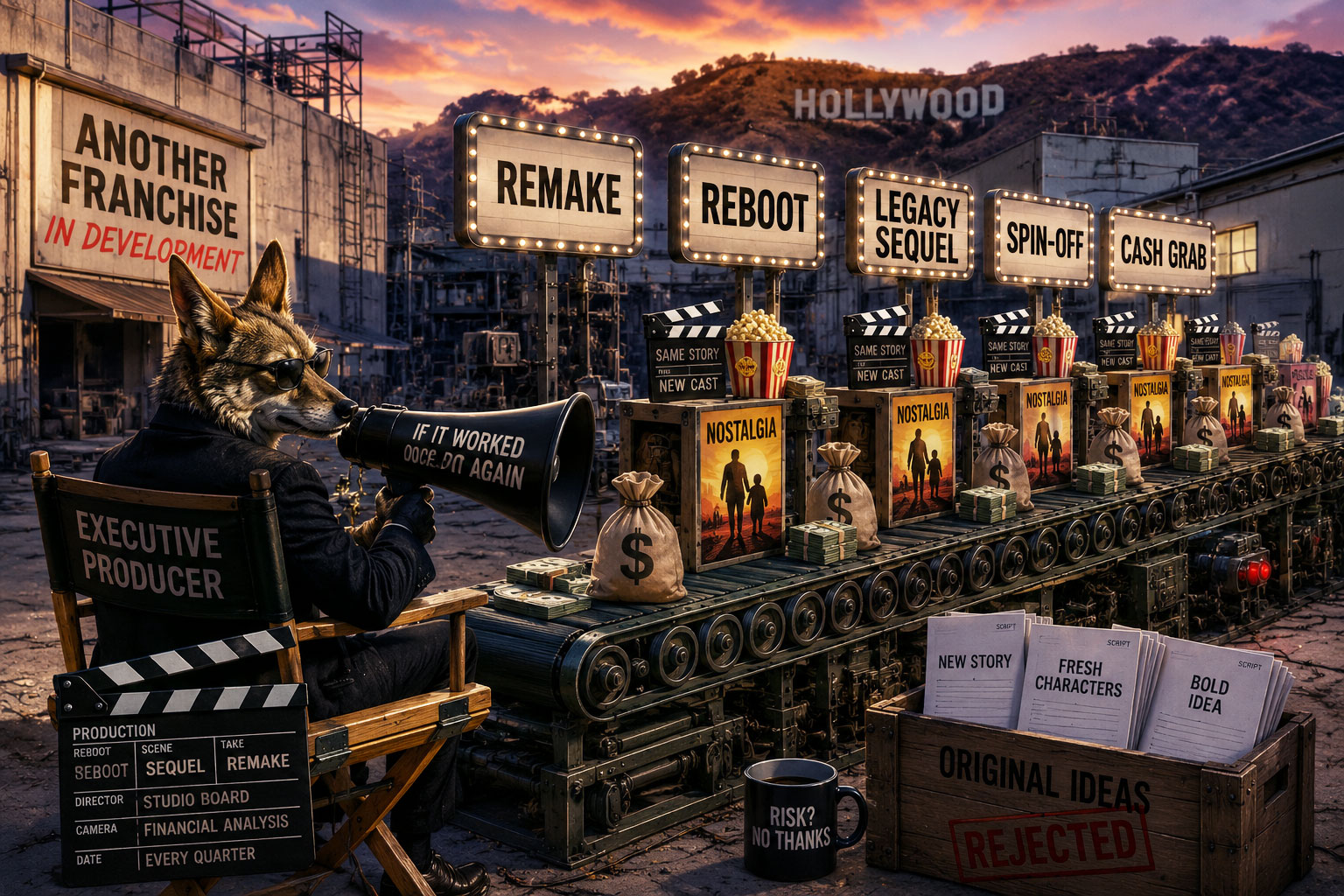
If you’ve walked into a movie theater or opened Netflix, Disney+, Max, or Prime Video recently, you’ve probably experienced a strange sense of déjà vu. Another remake. Another reboot. Another legacy sequel. Another live-action adaptation of an animated classic that somehow convinced an executive it was a brilliant idea.
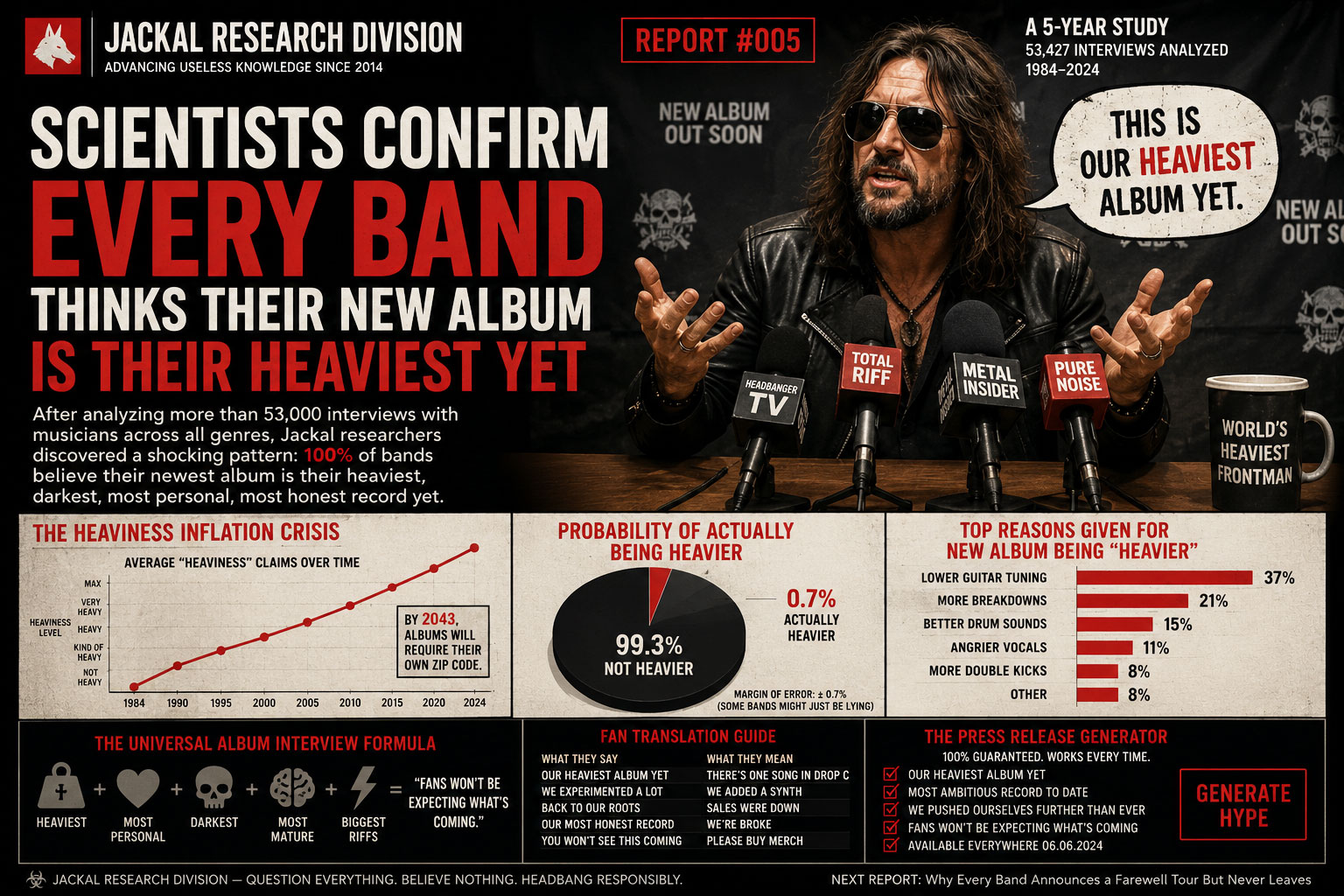
JACKAL RESEARCH DIVISION #007
The internet’s favorite explanation is simple: Hollywood has run out of ideas.
The truth is less dramatic—and far more interesting.
Hollywood isn’t suffering from a creativity shortage. It’s following money.
Familiarity Is the Safest Investment
Making a blockbuster has become incredibly expensive. Between production, visual effects, and global marketing campaigns, major studios regularly spend hundreds of millions of dollars on a single release.
When that much money is on the line, executives naturally ask one question:
“What’s the safest bet?”
An original screenplay written by an unknown writer might become the next cultural phenomenon.
Or it might disappear after one disappointing weekend.
A recognizable franchise, however, already comes with an audience, decades of brand recognition, and millions of people who at least know the title—even if they’ll spend the next six months complaining about it online.
From a financial standpoint, familiarity reduces uncertainty.
Audiences Say One Thing and Buy Another
Movie fans love saying they want fresh ideas.
Box office numbers often tell a different story.
Original films frequently receive praise on social media, while sequels, superhero movies, and franchise installments dominate opening weekends.
Many viewers complain that Hollywood keeps recycling the same stories—and then immediately purchase tickets for the latest installment in a series they’ve already watched twelve times.
Studios don’t ignore internet comments.
They follow ticket sales.
As long as familiar brands continue generating reliable revenue, familiar brands will continue receiving green lights.
Franchises Are Bigger Than Movies
Today’s studios rarely think in terms of individual films.
Instead, they build entire entertainment ecosystems.
One successful intellectual property can generate:
- Multiple sequels
- Television series
- Streaming exclusives
- Video games
- Merchandise
- Theme park attractions
- Books and comics
- Licensing partnerships
- Collectibles
A single hit can produce income for decades.
Creating an entirely new universe every year is simply a much riskier business decision.
Nostalgia Is One of Hollywood’s Most Valuable Assets
Nostalgia isn’t just an emotion.
It’s an incredibly effective marketing tool.
People naturally enjoy revisiting characters, worlds, and stories they loved growing up. Familiar names immediately create emotional connections that completely new properties need years to establish.
That’s why studios constantly revisit classics from the 1980s, 1990s, and early 2000s.
Sometimes those projects become genuine successes.
Sometimes they simply remind audiences that the original still exists.
Either way, everyone remembers the title.
Streaming Changed the Game
Streaming platforms introduced another important factor.
Algorithms prefer recognizable content.
A viewer who recently watched one superhero movie is statistically more likely to click another superhero movie than an unfamiliar independent drama with no recognizable actors.
Recommendation systems aren’t trying to discover the next cinematic masterpiece.
They’re trying to maximize engagement.
Recognizable brands help accomplish exactly that.
Original Movies Never Disappeared
Despite the endless stream of sequels and remakes, original filmmaking is very much alive.
Independent studios continue producing innovative films.
International cinema constantly introduces fresh ideas.
New directors regularly emerge with unique voices and unexpected stories.
The problem isn’t that originality disappeared.
The problem is visibility.
A brilliant independent film with a modest marketing budget has to compete against franchises capable of advertising on nearly every billboard, streaming platform, sporting event, and YouTube pre-roll in existence.
That’s an uphill battle.
Risk Management, Not Creative Bankruptcy
It’s tempting to blame Hollywood for lacking imagination.
Reality is considerably more practical.
Studios answer to investors.
Investors expect predictable returns.
Predictability usually favors recognizable brands over untested concepts.
That doesn’t mean executives dislike original ideas.
It means original ideas must overcome significantly higher financial expectations before receiving approval.
The Audience Holds More Power Than It Thinks
Hollywood reacts to consumer behavior far more than internet outrage.
If original films consistently outperform sequels, studios will produce more original films.
If audiences continue rewarding nostalgia with billion-dollar box office returns, nostalgia will remain one of the industry’s favorite business strategies.
Consumers vote with wallets—not tweets.
Final Verdict
Hollywood hasn’t run out of ideas.
It has discovered that familiar ideas are easier to sell.
As long as recognizable franchises continue delivering reliable profits, studios will keep revisiting them. The occasional breakout original film proves creativity never disappeared—it simply has to fight much harder for attention.
Jackal Research Division concludes that Hollywood’s biggest addiction isn’t remakes. It’s predictable return on investment. And unlike movie critics, quarterly earnings rarely complain about sequel fatigue.

Finn McFrame, celebrated satirical mastermind and self-proclaimed “Emperor of Irony,” started his illustrious career as a cinematographer, where his expertise in capturing every single frame of a squirrel stealing a baguette earned him accolades at obscure film festivals.
Born in the glamorous town of Boring, Oregon, Finn grew up with dreams of being a Hollywood director until he realized that satire, not cinema, was his true calling—or at least the one that let him sleep until noon.
Finn McFrame: changing the world, one satirical lens flare at a time.