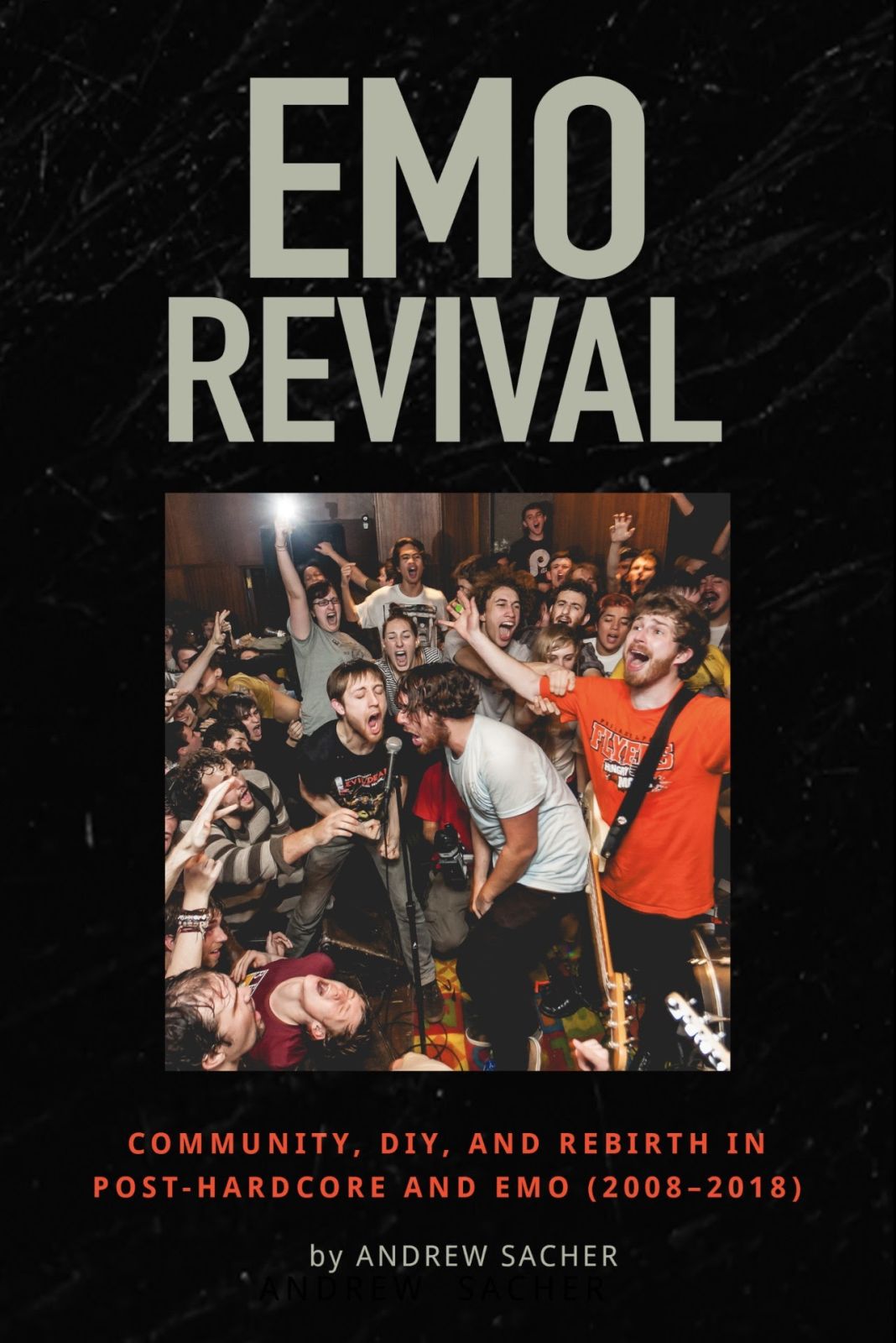
A new book titled Emo Revival: Community, DIY, and Rebirth in Post-Hardcore and Emo (2008-2018) has just been released, taking a look at the reinvention of emo music during the late aughts through the 2010s. It’s written by Andrew Sacher, who is sharing an exclusive excerpt from the book with CONSEQUENCE. Sacher, a longtime editor for BrooklynVegan, hones in on the 10 years from 2008 through 2018 where emo music was defined by such bands as Title Fight, Modern Baseball, Joyce Manor, Touché Amoré, and The Hotelier. The book features interviews with members of those bands, among dozens of other acts.
Emo Revival Book Excerpt
Andrew Sacher touches on the trend of emo bands straying away from their emo roots and exploring new sonic directions in the excerpt below, from Section Nine: 2015-2016, Chapter 1, Emo Is Holding Us Back. On their fall 2014 tour with Circa Survive, Title Fight began road-testing “Chlorine,” the first single from what would become the band’s first album for ANTI-, 2015’s Hyperview.
Anthony Green of Circa Survive recalls, “Getting to hear their transition from Shed/Floral Green era to the Hyperview era was so cool.” Breaking away from emo is just as much a part of emo as being an emo band in the first place. Whether it’s born out of a desire to distance yourself from the word “emo,” or out of a desire to grow and experiment musically outside of genre confines, or a mix of both, emo has had a contingent of bands with genre-transcending ambitions since almost the very beginning.
Evolution of Emo Music
Sunny Day Real Estate, whose 1994 debut LP Diary was the blueprint for so much of the emo that followed, set their sights on something closer to art rock with 1998’s How It Feels To Be Something On, and that set almost as much of a tone as Diary itself. Jimmy Eat World did something similar with 1999’s Clarity, and they did it multiple times again after breaking through with 2001’s streamlined Bleed American.
The Get Up Kids did it with On A Wire, The Promise Ring did it with Wood/Water, The Appleseed Cast did it incrementally on pretty much every record after their first, and so many of the bands who helped popularize emo in the early 2000s did it by the middle of that decade: Saves the Day on In Reverie, Thursday on A City By the Light Divided, Thrice on The Alchemy Index, Brand New on The Devil and God Are Raging Inside Me, The Early November on The Mother, the Mechanic, and the Path, Alexisonfire on Crisis, John Nolan and Shaun Cooper after leaving Taking Back Sunday and forming Straylight Run. The list goes on.
Legacy of Emo Music
One reason why this trend is so common is that a lot of people find emo and pop punk when they’re young and it becomes their gateway towards a lifelong exploration of underground music. Within the “revival” generation, it’s hard to think of a band that embodied that journey more than Title Fight. And when they made their most drastic musical departure yet with Hyperview, it—like every Title Fight record before it—signaled a sea change within the community and left so many other bands scrambling to catch up.
Hyperview is more or less a full-blown shoegaze record, and when it came out in February 2015 via ANTI-, people could hear right away why Title Fight had wanted to sign to Epitaph’s non-punk-oriented sister label. Its spirit and its beating heart are informed by punk ethos, but the vast majority of its songs are not what the average listener would call punk rock songs.
Jordan Dreyer of La Dispute says, “I think you see its influence pretty acutely when you look at the landscape now in emo or punk or whatever.” Emo Revival: Community, DIY, and Rebirth in Post-Hardcore and Emo (2008-2018) is out now on paperback and Kindle, and available to order via Amazon.
In conclusion, the release of Emo Revival: Community, DIY, and Rebirth in Post-Hardcore and Emo (2008-2018) provides a comprehensive look at the evolution of emo music during the late aughts through the 2010s. With its in-depth analysis and exclusive interviews, the book is a must-read for fans of emo and post-hardcore music. The legacy of emo music continues to shape the music industry, and this book is a testament to the genre’s enduring influence.

Pixel P. Snarkbyte, widely regarded as the “Shakespeare of Sh*tposts,” is a video game expert with a unique knack for turning pixels into punchlines.
Born in the small town of Respawn, Pennsylvania, Pixel grew up mashing buttons on an ancient NES controller, firmly believing that “blowing into the cartridge” was a sacred ritual passed down through generations.
Pixel P. Snarkbyte: proving that life, much like a buggy open-world game, is better with a little lag-induced chaos.