
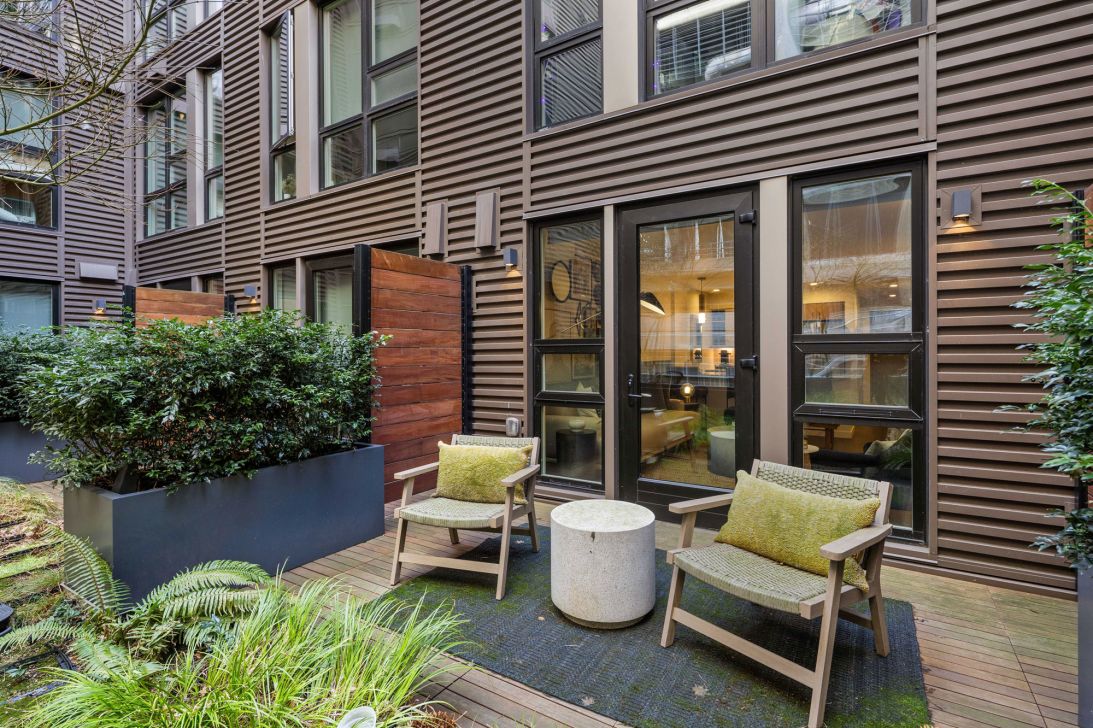
I was sipping my coffee and reading the news when I stumbled upon a story that made me raise an eyebrow. The city of Seattle has embarked on an experiment to create social housing, and it’s definitely an interesting approach. They’ve purchased a sleek apartment building in the trendy Belltown neighborhood, called the Elara, for $61 million. What’s unique about this building is that it was initially designed for high-end renters, with amenities like a gym, wine storage lockers, and a rooftop deck overlooking the Puget Sound.
The building, which has 150 units, was previously home to many Amazon workers who paid over $2,000 a month for a one-bedroom apartment. However, the city’s plan is to use this building as a model for social housing, where rents are frozen for existing tenants, and vacant units are filled through a lottery system for people making up to 50% of the area’s median income. It’s not your traditional public housing, nor is it affordable housing built with government subsidies and tax credits. Instead, it’s a social-housing model inspired by Vienna, where roughly half of residents live in government-subsidized homes.
The idea behind this experiment is to address the issue of middle-class households who earn too much to qualify for housing lotteries but too little to pay for market-rate apartments. Seattle believes that the affordable housing model has left a void for these households, and they’re trying to fill it with this social-housing approach. The city plans to acquire more than 1,000 apartments and build 600 new units of social housing for mixed-income households over the next five years.
The Seattle Social Housing Developer, the city’s newly established public development authority, will be overseeing this effort. They’ve already held a lottery to fill 15 vacant units at the Elara, and the response was overwhelming, with over 10,000 applicants. The new owners have also frozen rents for existing market-rate tenants for two years, which is a welcome relief for tenants like Bilal Durrani, who works as a manager at Amazon and has lived in the building for a year.
However, not everyone is convinced that this approach is the best solution. Critics argue that the social developer’s strategy is ineffective and that the funding could be better spent on building new homes or preserving existing affordable apartments for lower-income renters. Jamie Madden, an affordable housing development consultant in Seattle, believes that the Seattle Social Housing Developer has “wasted three years and $60 million” and delivered rent control for residents who are not low-income, along with just 15 new apartments.
Despite the criticism, Seattle’s experiment with social housing is an interesting approach to addressing the city’s housing crisis. The city’s model represents a sharp break from the federal government’s traditional approach to funding affordable housing, which relies on tax credits for private companies that construct housing for lower-income residents. Social housing advocates believe that this model is broken and that it’s time to try something new.
As I finished reading about Seattle’s social housing experiment, I couldn’t help but think that it’s a bold move. Whether it will succeed or not remains to be seen, but it’s definitely a step in the right direction. And who knows, maybe one day we’ll see a shift in how we think about housing, from a private commodity to a public good, like libraries and roads. Now, that’s a thought to ponder over my next cup of coffee!

Armchair patriot. Believes in the free market, cold beer, and that there’s always a guy named George behind every CNN segment.
Former remote-throwing champion turned #1 couch commentator on liberal panic in the media. Born in Texas (or so his mug says), he earned a degree in Fake Newsology & Beer Philosophy from YouTube University.