
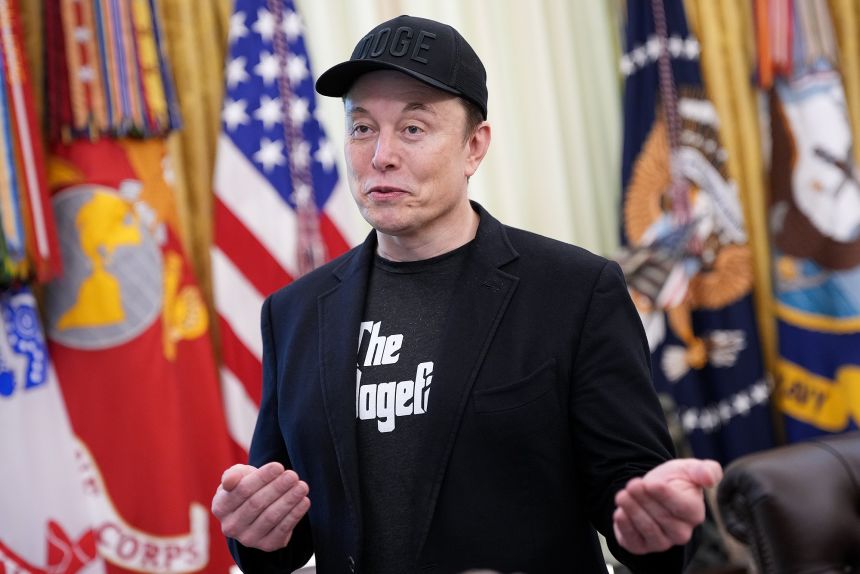
Folks, I almost spilled my coffee reading this one. The Supreme Court has agreed to take up two appeals from President Donald Trump’s administration, and let me tell you, they’re doozies. One case involves the Department of Government Efficiency, which was once run by Elon Musk, because that’s exactly what you want – a billionaire CEO running a government agency. And the other case is about a Nigerian man who was denied asylum because he used to cook meals for a terrorist organization. I mean, who hasn’t cooked for some shady characters at some point, right?
The two cases are a reflection of Trump’s return to power and his efforts to crack down on immigration and slash government spending. Because, you know, that’s what America needs – less government and more deportations. The DOGE case raises questions about the power and transparency of the entity, which was tasked with cutting government agencies with “unusual speed” last year. A left-leaning watchdog group sued to gain access to documents related to DOGE’s activities, and lower federal courts have ordered the agency to produce information to help decide whether the law applies.
The asylum case, on the other hand, centers on a Nigerian national who served as a cook for a separatist group carrying out terrorist attacks. An immigration judge denied his asylum claim under a federal law that bars sanctuary for any migrant who provided “material support” to a terrorist organization. The Trump administration argues that providing meals to a terrorist organization is no less a material form of support than providing gasoline for its vehicles. I mean, I guess that’s one way to look at it, but it seems like a bit of a stretch to me.
The Supreme Court has increasingly made immigration a central theme of its new term, and it’s already reviewing Trump’s push to deport migrants to countries they have no connection with. Because, you know, that’s not a recipe for disaster or anything. The court will decide whether the more pared-down requests for documents related to DOGE were proper, and whether Ozurumba’s six-month stint cooking meals for the separatist group constitutes “material support” under the law.
The Trump administration told the justices that the particulars of Ozurumba’s case don’t matter, and that the law “does not distinguish between guns and butter.” But Ozurumba’s lawyers argue that their client didn’t realize what he was getting into when he sought the job and was then forced to continue to perform it against his will. They also argue that under the government’s reading, seemingly any interaction with a terrorist organization could be characterized as material support. A priest who hears confession to all comers, they argue, would be viewed as providing spiritual counsel. A doctor who treats a patient affiliated with a terrorist organization, they argue, could also be punished.
Decisions in both cases are expected by next summer, so stay tuned, folks. It’s going to be a wild ride. And who knows, maybe by then we’ll have a better idea of what exactly DOGE does and why it’s so important to the Trump administration. In the meantime, I’ll just be over here, sipping my coffee and wondering what other surprises the Supreme Court has in store for us. Bless their hearts.

Armchair patriot. Believes in the free market, cold beer, and that there’s always a guy named George behind every CNN segment.
Former remote-throwing champion turned #1 couch commentator on liberal panic in the media. Born in Texas (or so his mug says), he earned a degree in Fake Newsology & Beer Philosophy from YouTube University.
⚖️ ENTER THE LEGALIZER
Think the government has no idea what it's doing? Put your case before the Federal Case Terminal and find out.