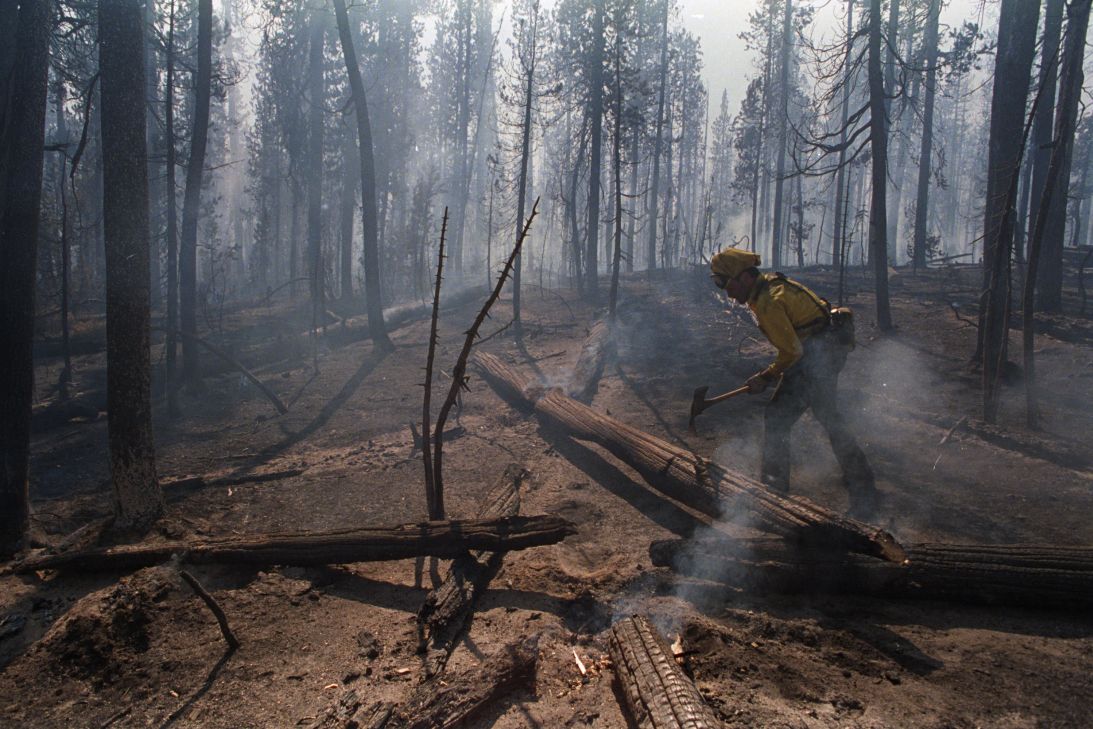
Folks, I almost spilled my coffee reading this one. Researchers are seeing a trend where forests that are historically adapted to fire are now often being obliterated by fast-moving, high-temperature wildfires. I mean, who wouldn’t be concerned about that? It’s like the forests are getting hit with a double whammy – they’re not only dealing with the fires themselves, but also with the changing climate. Bless their hearts, it’s a tough time to be a tree.
As I was reading about Monica Turner’s research in Yellowstone National Park, I couldn’t help but think about how much things have changed in just a few years. I mean, this woman has been studying the park’s ecosystems for years, and she’s seen some crazy stuff. Like, did you know that the 2016 Maple Fire burned through a huge chunk of the park, leaving behind a whole lot of nothing? It’s like, you expect to see trees and greenery, but instead, it’s just a bunch of charred earth and twigs. You can’t make this stuff up, folks.
Now, I know some of you might be thinking, “But Big Elephant, what about the whole ‘fires are natural’ thing?” And you’re right, fires have been a part of these ecosystems for centuries. The problem is, these new fires are different. They’re hotter, they’re faster, and they’re leaving behind a whole lot of destruction. It’s like, the forests are used to dealing with fires, but these new ones are like nothing they’ve ever seen before.
I was also interested to learn about the research being done by Derek Young in Plumas National Forest, California. This guy’s been studying the area for years, and he’s seen some big changes. Like, the forests are turning into shrublands, and it’s not just because of the fires. It’s because of the way the ecosystems are adapting to the changing climate. It’s like, the trees are getting outcompeted by these hardy shrubs that can handle the drought and the heat.
And then there’s the story of Rae Crandall, who’s doing some amazing work in Florida. She’s all about prescribed burning, which is like a controlled fire that helps keep the ecosystem healthy. It’s like, the forests need fire to thrive, but they need it in a controlled way. Otherwise, you get these huge, destructive fires that just wipe everything out.
As I finished reading this article, I couldn’t help but think about the uncertain path forward. I mean, these researchers are doing some great work, but it’s clear that we’re in for some big changes. The forests are going to keep changing, and we’re going to have to adapt. But hey, as Turner said, “There may be more capacity to adapt than we give it credit for.” So, let’s keep our fingers crossed, folks. And maybe, just maybe, we’ll figure out a way to save these amazing ecosystems. After all, as Guiterman said, “Life keeps going,” even in the face of all this change. 🌳💚

Armchair patriot. Believes in the free market, cold beer, and that there’s always a guy named George behind every CNN segment.
Former remote-throwing champion turned #1 couch commentator on liberal panic in the media. Born in Texas (or so his mug says), he earned a degree in Fake Newsology & Beer Philosophy from YouTube University.
⚖️ ENTER THE LEGALIZER
Think the government has no idea what it's doing? Put your case before the Federal Case Terminal and find out.