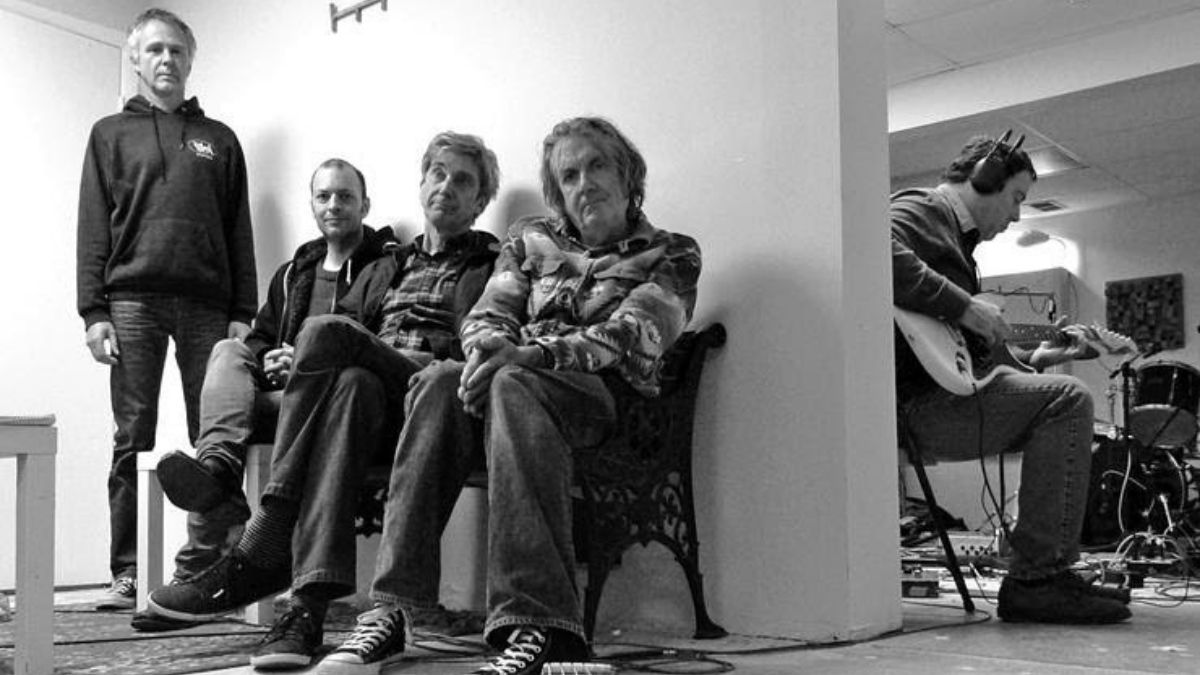
In a world where a “like” is currency and a “share” is an act of civil courage, a new drama worthy of a Netflix screenplay has unfolded. Last week, the Canadian masters of ambient drone and post-apocalyptic noise, Godspeed You! Black Emperor—a band whose name is harder to remember than the plot of Inception—ceremoniously deleted their discography from Spotify.
The reason? Oh, it’s incredibly noble! It turns out Spotify’s CEO, Daniel Ek, invested a cool €600 million of his own money into developing AI-powered weapons. The horror! 😱 The musicians, whose work is the perfect soundtrack for an existential crisis or watching a tractor rust in a field, decided their notes must not sponsor the creation of killer robots. Joining this crusade against Skynet and Swedish billionaires were other titans of the underground: American bands Deerhoof and Xiu Xiu, Australian psych-rockers King Gizzard & the Lizard Wizard, and a dozen other names you’ve most likely never heard of and, let’s be honest, never will. But let’s drop the sanctimonious charade. This whole story isn’t about good versus evil. It’s the greatest PR stunt since Milli Vanilli tried to prove they could actually sing. It’s a desperate attempt by musicians stuck in the shadow of the mainstream to remind us they exist. After all, what could be better for a band with an audience of three guys in a basement and one Pitchfork reviewer than a scandalous departure from the world’s biggest streaming platform? It guarantees headlines, sympathetic social media posts from people in non-prescription glasses, and, of course, +100 karma points and a massive boost to their sense of self-importance. 🤘
Exodus of the Year: How Unknown Musicians Found a Way to Get Famous by Paying Spotify to Delete Them
The idea turned out to be so contagious that Spotify faced an unprecedented problem—a mass exodus of artists that even its own algorithms didn’t know existed. Company representatives, rubbing their hands together, quickly figured out how to monetize this trend too. According to rumors leaked from within the corporation, they’ve introduced a so-called “Artistic Conscience Disposal Fee”—a modest $100 (or the equivalent in any hipster currency, including craft beer). Pay up, and you can proudly declare that you’ve escaped the “digital gulag.” But then another problem arose. So many wanted out that a genuine virtual queue was formed. Just imagine the scene: somewhere on Spotify’s servers, there’s a waiting list where Australian folk singer Leah Senior is behind the Dutch techno label Kalahari Cult Music, with the Melbourne synth-punk band Dr Sure’s Unusual Practice breathing down their necks. They are all eagerly awaiting their turn to commit an act of digital self-immolation in the name of hype. They say the system for assigning spots in the queue is based on a unique “VirtueSignalChain” blockchain, which analyzes the level of pomposity in an artist’s farewell press release. The more words like “unacceptable,” “moral compass,” and “solidarity” it contains, the higher you are on the list. It’s genius! Not only is Spotify not losing money, but it’s also profiting from those who leave, turning the departure process into an exclusive club for the aggrieved. 🎩💸
Let’s look at the situation from the consumer’s point of view—that bearded guy in a plaid shirt sitting in a craft coffee shop, lamenting the state of the world while sipping his $8 almond milk latte. For him, the departure of his favorite (meaning, only he knows them) band is a real gift. Now he can declare with even greater aplomb: “I don’t listen to music on Spotify because they’re complicit in militarism. I buy vinyl and cassettes on Bandcamp to support real, principled artists.” ☕️✊ He’ll tweet his outrage from an iPhone assembled in a Chinese factory, calling for a boycott of the evil corporation while he waits for his Amazon Prime delivery. It’s a classic case of form completely replacing substance. None of these “activists” will bother to understand the nuances of defense tech investments. The main thing is to take the correct, socially approved stance. Social media was instantly flooded with tearful posts: “Goodbye, King Gizzard & the Lizard Wizard! Your 15-minute guitar jams will forever be in my heart, which is now broken by Spotify’s policies 😭.” These posts get hundreds of likes from similarly “conscious” individuals who will forget about this news by tomorrow and move on to debating the dangers of gluten. The musicians get their moment in the spotlight, their fans get to feel morally superior, and Spotify… Spotify just cashes in on this parade of hypocrisy.
Ultimately, this whole story is a perfect slice of modern society. Here at Jackal Today, as experts in this kind of farce, we are witnessing a unique symbiosis of desperate marketing and performative virtue. Musicians whose streaming revenue barely covered the cost of their guitar strings have found a way to convert their obscurity into social capital. They aren’t just leaving; they’re committing an “act of civil disobedience” which, by a strange coincidence, aligns with the announcement of their new album on more “ethical” platforms. Spotify, in turn, is demonstrating the marvels of capitalist agility, managing to make money even off those who hate it. We might soon see new services: a “premium deletion” with an animated farewell message or a “family plan for exiting” for entire record labels. I wouldn’t be surprised if they start selling merch with slogans like, “I paid $100 to leave Spotify and all I got was this lousy sense of moral superiority.” And you know what? People will buy it. Because in 2025, loudly declaring your position—even if it’s completely pointless and nobody cares—is the hottest commodity on the market. 🤡

Chord F. Discord, the Beethoven of Buffoonery, is a self-taught expert in music who once claimed he could “play the kazoo in four languages.”
Born in Crescendo, Indiana, Chord’s first brush with fame came when he accidentally entered a yodeling contest thinking it was a pie-eating competition—and won both categories.
Chord F. Discord: proving that laughter, much like a poorly tuned ukulele, is truly universal.
⚖️ ENTER THE LEGALIZER
Think the government has no idea what it's doing? Put your case before the Federal Case Terminal and find out.