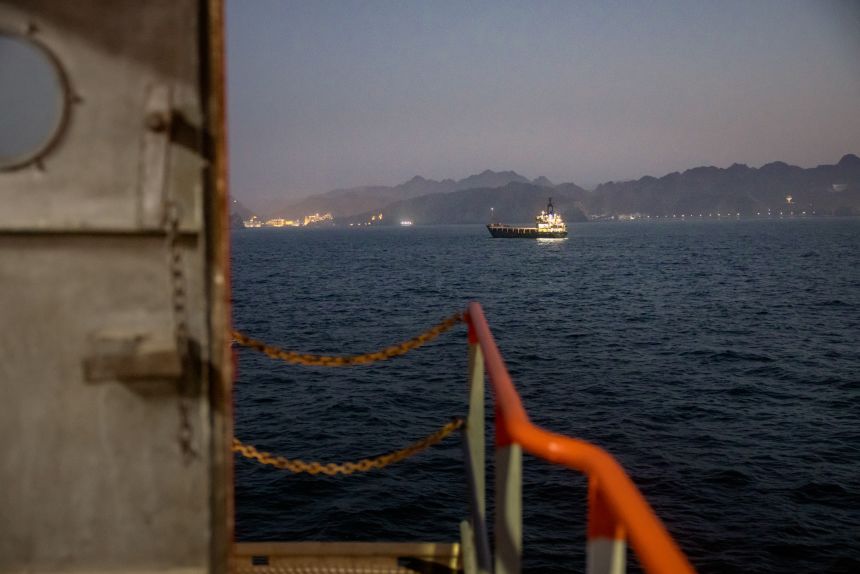
Folks, I almost spilled my coffee reading this one. An apparent agreement between the US and Iran to pause the latest outburst of violence has stabilized a truce that could be the first step to permanently ending the war. I mean, who wouldn’t want to avoid more conflict in the Middle East? It’s not like we haven’t been down this road before. According to the article, the accommodation comes after days of clashes around the Strait of Hormuz and the Persian Gulf, which were reportedly the two foes wrestling to define their vague memorandum of understanding and shape looming talks on critical issues, including Tehran’s nuclear program.
The US and Iran have agreed to meet in Qatar on Tuesday, and they will “stand down for now.” I guess that’s a good thing, but I’m not holding my breath. The article states that four days of Iranian attacks on merchant ships, US reprisals, and Tehran’s follow-on strikes on US bases and Gulf allies risked an escalation into broader fighting and jeopardized global economic relief as oil begins to move through the strait. Sounds like a real mess.
Iran was seeking to defend its new leverage – the capacity to manage traffic through a waterway critical to the global economy. Its missile strikes on Gulf states and US assets suggested an attempt to set a new postwar regional strategic paradigm. Tehran also seemed to be turning a political screw against President Donald Trump, testing how far his patience will stretch as he seeks to preserve what he has characterized as a triumphant deal to end the war. You can’t make this stuff up, folks.
But Washington could not allow Iran to control shipping through the strait. To do so would suggest it was defeated in a war it started. The Islamic Republic would acquire the capacity to take the global economy hostage and exert political pressure on the US at any moment it chose. In the process, US power in the region, expressed by its capacity to protect allies, would weaken. It’s a bit of a delicate balancing act, if you ask me.
The conflict and its aftermath have raised questions over the administration’s understanding of the political and historical forces driving Iran’s revolutionary government and its habitual hardline negotiating tactics. Middle East ceasefires often don’t halt all military exchanges, even if they establish a ceiling that can prevent the return to all-out war. And wars in the region often end up emboldening new generations of hardliners – like those in Iran who may be orchestrating its efforts to cement its new leverage over the Strait of Hormuz. Bless their hearts.
It’s worth noting that former Biden administration national security adviser Jake Sullivan predicted that recent events were the prelude to a tense period as negotiations take place. He thinks the Iranians will “dribble out very small concessions bit by bit, then pull them back, then put them forward, then pull them back” to keep the United States at the table. Sounds like a real game of cat and mouse.
In the end, the war’s endgame is up for grabs. Renewed clashes in the Middle East are likely to reignite partisan rancor in Washington over the agreement. Democrats have styled Trump’s MOU as a humiliating defeat for the United States, while Republicans are downplaying the recent exchanges between the US and Iran. What happens next in the Middle East will have serious political and strategic implications. Let’s just hope they can all get along and avoid another war. And if they can’t, well, I’ll just be over here sipping my coffee and shaking my head.
Armchair patriot. Believes in the free market, cold beer, and that there’s always a guy named George behind every CNN segment.
Former remote-throwing champion turned #1 couch commentator on liberal panic in the media. Born in Texas (or so his mug says), he earned a degree in Fake Newsology & Beer Philosophy from YouTube University.
⚖️ ENTER THE LEGALIZER
Think the government has no idea what it's doing? Put your case before the Federal Case Terminal and find out.