Folks, I almost spilled my coffee reading this one. NASA is using a modified version of the U-2 spy plane, created during the Cold War, to study one of Earth’s least understood weather phenomena: wildfire generated storms. I mean, who wouldn’t want to repurpose a Cold War-era spy plane to fight wildfires? It’s like something out of a action movie. The jet, which NASA calls the ER-2, contains a flying laboratory of scientific instruments rather than military defenses and has different wiring. I guess you could say it’s gone from being a “spy” plane to a “science-y” plane.
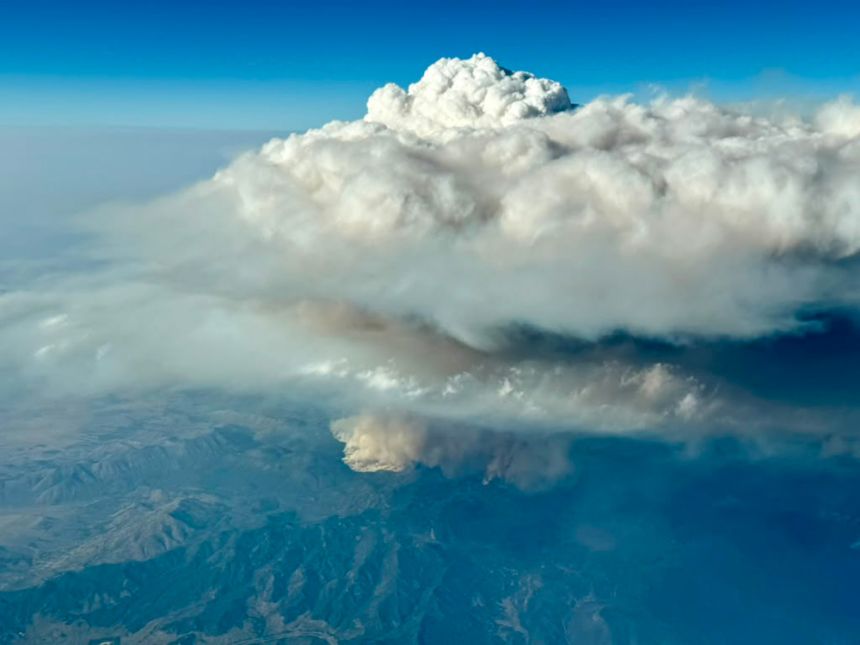
The aircraft’s newest mission is to study weather generated storms, specifically pyrocumulonimbus storms, which are gigantic thunderstorms produced by wildfire heat. These storms can include lightning, strong winds, and in some cases, fire tornadoes. Because, you know, regular tornadoes just aren’t scary enough. According to David A. Peterson, a meteorologist at the Naval Research Laboratory, “It’s kind of like a chimney where the smoke from the fire is being pushed upward into the thunderstorm, accelerated through that vertical column, and then released.” Yeah, that sounds like a real blast.
The ER-2 plane is flying over wildfires in northern Oregon and western Canada, collecting data on the fire clouds. And let me tell you, it’s not just flying over them, it’s getting up close and personal. The plane is equipped with all sorts of fancy instruments to measure the fire energetics of the plume, including radars that can tell you how big the plume is, the altitude it’s at, and even the air motion within it. It’s like a flying weather station.
But what’s really cool is that NASA is also flying a Gulfstream 5 jet inside of the clouds, collecting even more data. The idea is that the data they collect can inform each other, kind of like a big game of scientific telephone. The goal of this mission is mainly to one day be able to predict these storms, which would be a huge deal for firefighters and people living in areas prone to wildfires.
Now, I know what you’re thinking, what’s the deal with the U-2 plane? Well, it’s got a pretty cool history. The U-2 spy plane, nicknamed “Dragon Lady,” was specifically designed to fly at extremely high altitudes over the Soviet Union during the Cold War. And let me tell you, it was a real game-changer. But, as with all good things, it eventually got shot down by the Soviets, proving that the US underestimated their capabilities. Whoops.
Despite that, the U-2 continued to provide critical intelligence during the rest of the Cold War, Cuban Missile Crisis, the Vietnam War, and even modern conflicts. And now, more than 70 years after the first flight, the U-2 “Dragon Lady” is still flying, and NASA’s ER-2 is in the air working to defeat what it calls the “fire-breathing dragon of clouds.” I guess you could say it’s come full circle, from fighting the Soviets to fighting wildfires.
In conclusion, this is a pretty cool story about how NASA is using a modified U-2 spy plane to study wildfire generated storms. I mean, who wouldn’t want to read about a Cold War-era spy plane being used to fight wildfires? It’s like something out of a movie. And the fact that they’re making progress in predicting these storms is a big deal. So, the next time you hear about a wildfire, just remember, there’s a “Dragon Lady” flying overhead, trying to save the day. And that’s a pretty cool thought to end on.

Armchair patriot. Believes in the free market, cold beer, and that there’s always a guy named George behind every CNN segment.
Former remote-throwing champion turned #1 couch commentator on liberal panic in the media. Born in Texas (or so his mug says), he earned a degree in Fake Newsology & Beer Philosophy from YouTube University.
⚖️ ENTER THE LEGALIZER
Think the government has no idea what it's doing? Put your case before the Federal Case Terminal and find out.