Folks, I almost spilled my coffee reading this one. Law enforcement technology company Flock is trying to clean up its act after a string of police officer resignations and arrests for misusing its license plate reader cameras. I mean, who hasn’t used a camera to stalk an ex or romantic interest, right? Okay, maybe that’s not a thing, but apparently, some police officers thought it was a good idea. Bless their hearts. Flock’s CEO, Garrett Langley, is now introducing new safety controls to curb this kind of behavior, because, you know, trust in law enforcement is at an all-time low.
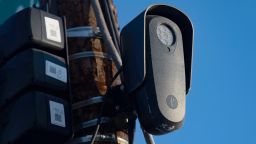
Flock’s got a nationwide network of automated license plate readers (ALPR) cameras that take images of passing vehicles’ plates, color, and other characteristics. Police departments contract with the company to search the database, which is supposed to help solve crimes. But, as we’ve seen, some officers have been using it for their own personal gain. Or, you know, to stalk people.
A recent string of police officer resignations or arrests for alleged abuses of Flock’s license plate reader camera system has added to nationwide concerns about the technology. Some cities have even canceled their Flock contracts, and some critics have gone so far as to vandalize the cameras. I guess that’s one way to get your point across.
Flock’s CEO, Garrett Langley, was motivated to update Flock’s safety controls after realizing just how many people lack trust in law enforcement. He said, “I’ve spent a lot of time in the last two years talking to individuals, and a lot of them have said, ‘Well, I don’t trust the police,’ and I go, ‘Why?’ ‘Oh, well, the police have abused their power so many times.'” Yeah, that’s a pretty good reason not to trust them.
The company is now requiring all customers to use its “Audit Assistance” tool by the end of this year. The tool flags abnormal search behavior, like if an individual officer is searching for the same plate number over and over again. When the system detects unusual searches, the user will be locked out of the system pending an administrator review. Flock says around a third of its agency customers turned on the Audit Assistance before it became mandatory.
Flock is also reducing its standard data retention policy from 30 days to seven days. However, agencies can adjust that retention period based on state or local policy. The company is adding an “evidence mode” feature that will allow agencies to preserve data longer than the retention policy allows when a search is tied to a specific case number. And, Flock will give local jurisdictions the option to limit how outside agencies can search data from their cameras.
Langley called the misuse of Flock cameras by police officers “completely unacceptable,” adding that building guardrails in the technology can help address surveillance concerns. He’d also like to see state regulators mandate more accountability from police, requiring audits and tools to detect unusual behavior across all technology used by law enforcement, and harsher penalties for abuses of power.
Rebuilding trust in the company’s products — and in law enforcement’s responsible use of them — may be crucial for Flock’s business. Some cities that canceled contracts with Flock have recently inked deals with competitor Axon. Langley said, “Our customers are the community… Police might pay the bills. Police might make the decisions, but our customer is the community, because that’s who actually receives the benefit of the product.”
In the end, it’s all about trust, folks. Flock’s trying to regain it, but it’s an uphill battle. I mean, who thought it was a good idea to give police officers access to license plate readers without any real oversight? Somewhere in Atlanta, a producer thought this sounded like a great idea, and now we’re dealing with the consequences. Anyway, let’s just hope Flock’s new safety controls work, or we’ll be reading about a lot more police officers getting in trouble for misusing these cameras. 🙄
Armchair patriot. Believes in the free market, cold beer, and that there’s always a guy named George behind every CNN segment.
Former remote-throwing champion turned #1 couch commentator on liberal panic in the media. Born in Texas (or so his mug says), he earned a degree in Fake Newsology & Beer Philosophy from YouTube University.
⚖️ ENTER THE LEGALIZER
Think the government has no idea what it's doing? Put your case before the Federal Case Terminal and find out.