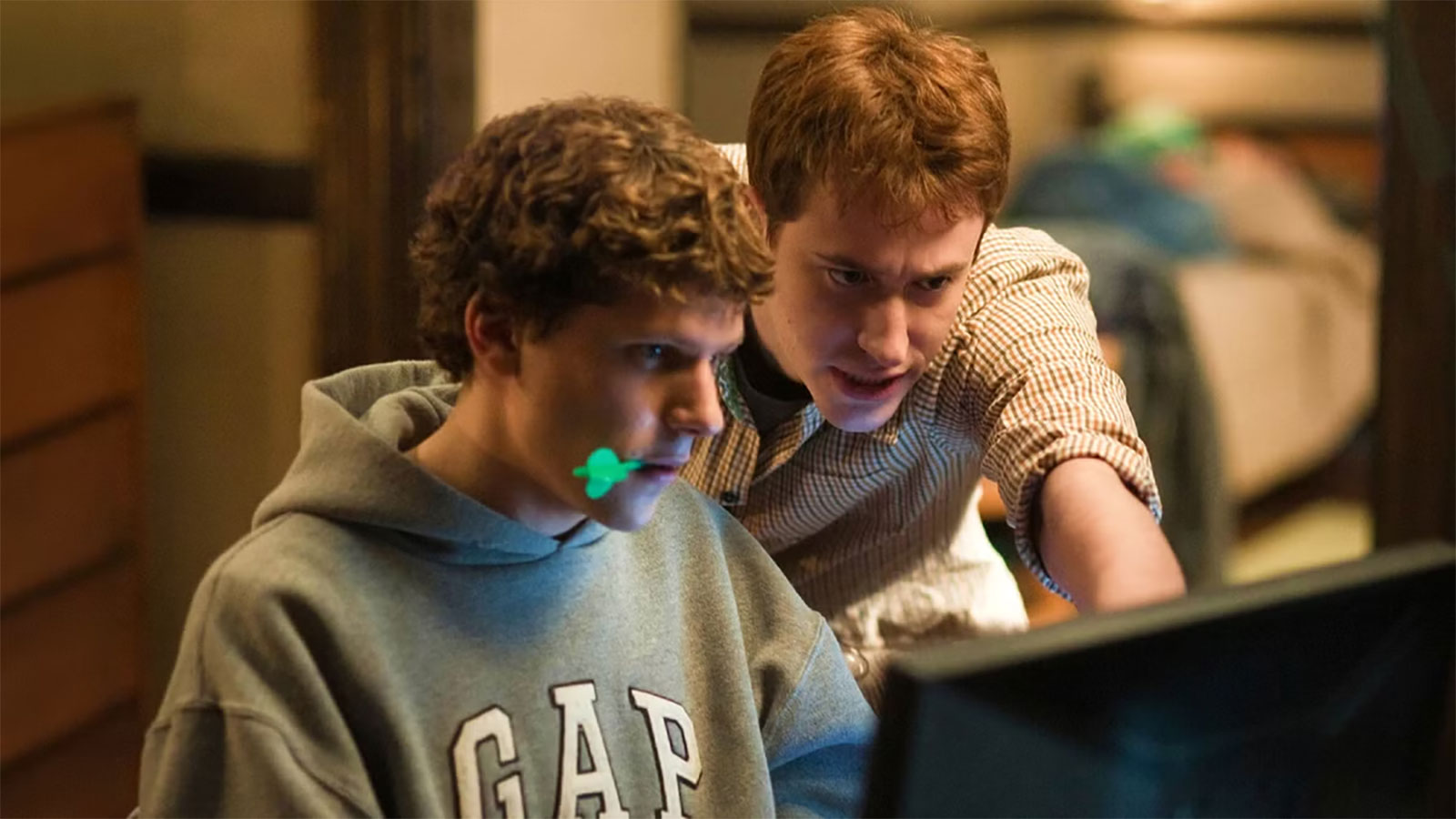
Rejoice, you apostles of “positive thinking” and agro-coaches of personal growth! Hollywood has finally heeded your mantras and is preparing to unveil the world’s first completely sterile and immaculate cinematic product. We are, of course, talking about the long-awaited sequel to “The Social Network,” which, as Sony Pictures thunderously announced the other day, has been titled “The Social Reckoning” and given a release date of October 9, 2026.
It would seem like just another news story: another biopic about the thorny path of a billionaire who no longer knows what to do with his money or how to make humanity even happier. But the devil, as always, is in the details, and in this case, in a brilliant marketing decision capable of changing the entertainment industry forever. You won’t be able to comment on the Facebook movie, and only positive emojis will be permitted. Yes, you heard that right. No more “dislikes,” angry emoticons, or, God forbid, constructive criticism. Only love, only adoration, only a unanimous “excellent.” The lead role, by the way, will be played by Jeremy Strong, replacing Jesse Eisenberg, symbolizing the transition from a neurotic startup founder to a stern corporate deity. And this, friends, isn’t just news; it’s a diagnosis of our times.
So, let’s break down this magnificent initiative, handed down, according to rumors, from Mount Olympus itself—that is, from Mark Zuckerberg’s personal office. According to insiders close to the production, as well as the man of the hour himself in his rare but pointed statements, such a move is intended to make the discussion of the film “more inclusive, transparent, and positive.” Can you smell that delightful aroma of freshly cut grass on the corporate campus lawn? “Inclusivity” in this context means the complete exclusion of any opinion that deviates from rapturous praise. If you happen to not experience a catharsis from Jeremy Strong’s performance depicting the existential torment of a man deciding what color to make the “Buy” button—that’s your problem. Your opinion is not inclusive. It’s toxic, abusive, and most likely a manifestation of white cisgender privilege, even if you are a transgender woman of color. Transparency, apparently, consists of making the wall between creators and the audience as impenetrable as the glass at Meta’s headquarters. And positivity… well, that’s self-explanatory. If you can’t say anything bad, all that’s left is good. It’s like North Korea, but with a Hollywood budget. 🤩
One can only imagine the applause this idea is receiving from all the offended and triggered folks out there. Finally! No more reading snarky comments from armchair film critics who dare to question the genius of a script written by an AI based on the three most popular Wikipedia articles. No more trolls, haters, or just people with a sense of humor who might notice that the new Zuckerberg played by Strong looks suspiciously like their tyrannical boss. Imagine a world where, under the movie trailer, there are only 👍, ❤️, 🥰, and 💯. Not a single “What is this cringe?” not one “Bring back Eisenberg!” not a single “Where’s the beef?” It’s a paradise for marketers and SMM managers! They can report 100% positive feedback to their superiors with a clear conscience. And if someone tries to voice their “meh” on other platforms, they can always be branded as a regressive and an enemy of all things progressive. After all, they are encroaching on sacred ground—the right to create in an atmosphere of absolute love and adoration, without being distracted by such trivialities as consumer opinion. This is a new level of care for the mental health of creators. The poor dears are so tired of the public’s “dislike” that they decided to simply cancel it. Brilliant!
But that’s not all. According to rumors that are looking more like truth every day, the rating system itself will also be re-imagined. Forget the ten-point or five-star scale. In this brave new reality, the minimum rating for “The Social Reckoning” will be “excellent.” That is, you will have a choice: “excellent,” “genius,” “divine,” and “all-time masterpiece.” A scale worthy of a true work of art, isn’t it? It’s like an election with only one candidate, but what a candidate! Thus, Sony Pictures and Meta are not just making a film; they are setting a precedent. They are building a digital sanctuary for their creation, where there will be no predators in the form of critics or venomous commenter-snakes. It’s a safe space, where the film can grow and develop without being traumatized by harsh reality. And who are we to judge them? After all, it’s “very important in our troubled times.” When the world is falling apart, when negativity is pouring in from all sides, it’s so nice to have an island of stability. An island where everything is great, the movie is a masterpiece, Zuckerberg is a genius, and your only right is to silently hit “like.” 👍 And God forbid you get the idea that you’re just being treated like an idiot incapable of critical thought. That thought isn’t positive. And therefore, it has no place in the beautiful new world.

Finn McFrame, celebrated satirical mastermind and self-proclaimed “Emperor of Irony,” started his illustrious career as a cinematographer, where his expertise in capturing every single frame of a squirrel stealing a baguette earned him accolades at obscure film festivals.
Born in the glamorous town of Boring, Oregon, Finn grew up with dreams of being a Hollywood director until he realized that satire, not cinema, was his true calling—or at least the one that let him sleep until noon.
Finn McFrame: changing the world, one satirical lens flare at a time.
⚖️ ENTER THE LEGALIZER
Think the government has no idea what it's doing? Put your case before the Federal Case Terminal and find out.