
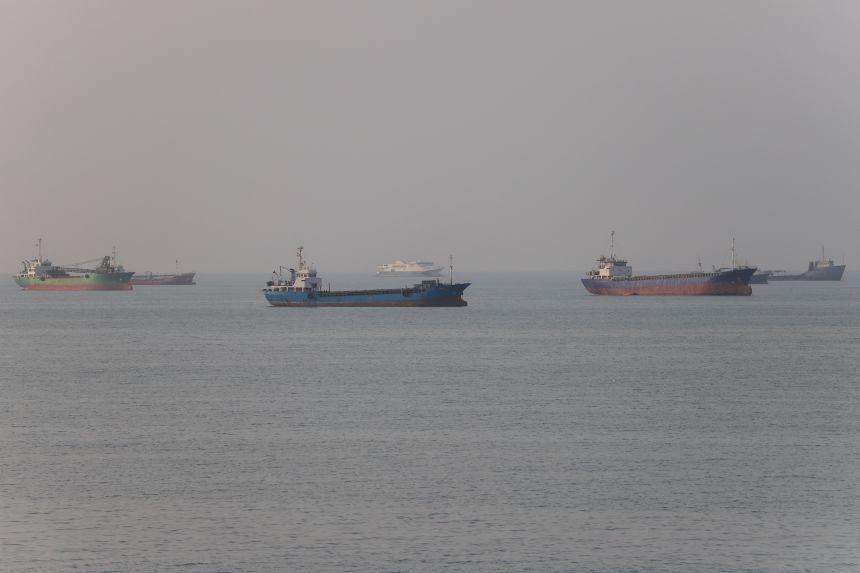
Folks, I just about spit out my coffee reading about the latest developments in the Strait of Hormuz. It seems like the waterway has seen a significant increase in traffic, with 70 vessels transiting the critical area on Wednesday, which is a 105% increase from Tuesday. I mean, that’s a whole lot of ships moving through a relatively small space. According to Marine Traffic, this is the highest number of vessels to pass through the strait since the war with Iran began in late February.
I have to wonder what’s behind this sudden surge in traffic. Is it because the United States lifted sanctions on Iranian oil earlier this week as part of the ceasefire agreement? Or is it just a coincidence? Gene Seroka, executive director of the Port of Los Angeles, seems to think it’s a combination of both, saying that the ships that were sitting in the Gulf for an elongated period are now starting to move out with a focus on humanitarian aid.
It’s interesting to note that before the war, experts estimate that 110 to 160 vessels used to sail through the passage between Iran and Oman daily. But since the fighting started, the average number of vessels per day has been fewer than ten. That’s a significant drop, and it’s no wonder that shipping companies have been hesitant to move cargo and personnel through the mine-laden waters.
The International Maritime Organization (IMO) has been working to evacuate 11,000 stranded seafarers and 500 vessels from the strait, but their plans have been put on hold after a vessel was struck in the Gulf of Oman. IMO Secretary-General Arsenio Dominguez said that the precaution was taken even though the vessel that was attacked did not transit under the IMO’s evacuation framework.
I have to chuckle at the fact that shipping companies have been in “wait and see” mode, carefully calculating the risk of moving ships through the strait. It’s like they’re trying to decide whether to take a chance on a roulette wheel. And with at least 46 strikes on vessels and 14 deaths, according to the IMO, it’s no wonder they’re being cautious.
Sanne Manders, president of Flexport, a global shipping logistics company, seems to think that the traffic levels will drop in the coming days during the pause in the IMO’s evacuation effort. And Gene Seroka expects the same, saying that the ships actually transiting Hormuz this week are still mostly Iranian-flagged and some Taiwanese Evergreen ships, but the major global carriers haven’t returned yet.
The IMO plans to reconfirm that the necessary safety guarantees continue to be in place for the ships on their evacuation list and all those in the region. Let’s hope they can get things back on track soon, or else we might see a whole lot of ships stuck in the strait.
In the end, it’s clear that the situation in the Strait of Hormuz is still pretty volatile, and it’s going to take some time to get things back to normal. But hey, at least the coffee is still flowing, and I get to read about all the excitement in the comfort of my own home. And who knows, maybe someday we’ll look back on all this and laugh, saying “remember when the Strait of Hormuz was the most exciting place on earth?” Yeah, right, and maybe I’ll win the lottery too.

Armchair patriot. Believes in the free market, cold beer, and that there’s always a guy named George behind every CNN segment.
Former remote-throwing champion turned #1 couch commentator on liberal panic in the media. Born in Texas (or so his mug says), he earned a degree in Fake Newsology & Beer Philosophy from YouTube University.
⚖️ ENTER THE LEGALIZER
Think the government has no idea what it's doing? Put your case before the Federal Case Terminal and find out.