
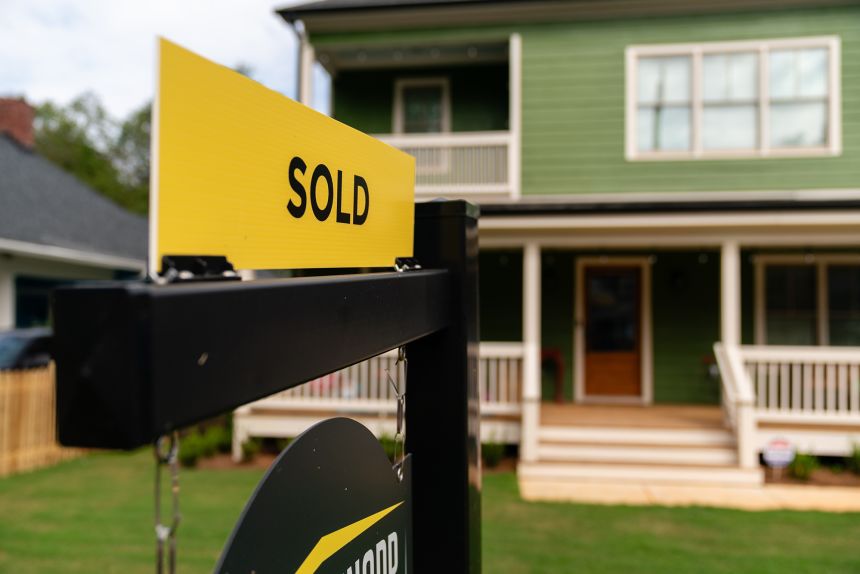
Folks, I almost spilled my coffee reading this one. The federal government is finally taking steps to limit large investors’ ownership of single-family homes. I mean, it’s about time, right? After years of backlash against Wall Street landlords, the 21st Century Road to Housing Act is aiming to make housing more affordable. But, let’s be real, this provision is just a drop in the bucket. The biggest institutional investors own a whopping 0.66% of the nation’s single-family homes. Yep, you read that right, 0.66%. I’m not sure if that’s a typo or just a really small number.
The law is supposed to help by increasing the supply of homes on the market and encouraging local governments to ease permit and zoning restrictions. But, most landlords are smaller mom-and-pop investors who aren’t impacted by the law at all. So, it’s unlikely to make a huge difference in housing affordability. I mean, the US housing market is short millions of homes, so any additional competition can push prices higher. It’s like trying to solve a puzzle with a missing piece.
Institutional investors became a flashpoint in the housing affordability debate after prices soared during the pandemic. But, their push into the single-family housing market began more than a decade earlier, in the wake of the 2008 financial crisis. Firms like Blackstone bought thousands of single-family homes at steep discounts and converted them into rentals. It’s like they were playing a game of Monopoly, but with real houses.
The new housing affordability law bars investors that currently own 350 or more single-family homes from buying more. But, they don’t have to sell their existing inventory, even if it exceeds 350 homes. It’s like giving them a free pass. Even before the law, many mega-investors began to slow purchases and sell more of their existing inventory. Purchases by mega investors with 350 or more homes are down almost 70% this year compared to their peak in 2021.
The Sun Belt areas will likely feel more impact from the new restriction than most of the country. For example, large-scale investors own roughly one in seven single-family homes in some areas of Atlanta. Real estate professionals in Atlanta told CNN that the post-pandemic years were hard on their buyers, who were often left competing with corporations in all-cash deals. But, today, with hundreds of those homes hitting the market, buyers aren’t biting.
Daryl Fairweather, Redfin’s chief economist, told CNN that the reason first-time homebuyers are not buying as large a share of homes as they used to is not because of large investors, but because home ownership has gotten so unaffordable. It’s like trying to afford a luxury car on a budget. Juli St. George, an Atlanta-area real estate agent, recently helped a smaller investor buy a home from a large institutional investor. The property had sat on the market for weeks, and the home needed cosmetic updates, giving her client room to negotiate the price down by thousands of dollars.
In conclusion, the new housing affordability law is a step in the right direction, but it’s not a magic solution. With mortgage rates still above 6% and home prices hovering near record highs, many first-time buyers are wary of properties that were cheaply renovated by large investors. It’s like trying to find a needle in a haystack. As I finish my coffee, I’m left wondering if this law will actually make a difference in the housing market. Only time will tell, but for now, it’s just a drop in the bucket. And, who knows, maybe someday we’ll have a housing market that’s actually affordable for everyone. Wouldn’t that be something? 😊

Armchair patriot. Believes in the free market, cold beer, and that there’s always a guy named George behind every CNN segment.
Former remote-throwing champion turned #1 couch commentator on liberal panic in the media. Born in Texas (or so his mug says), he earned a degree in Fake Newsology & Beer Philosophy from YouTube University.