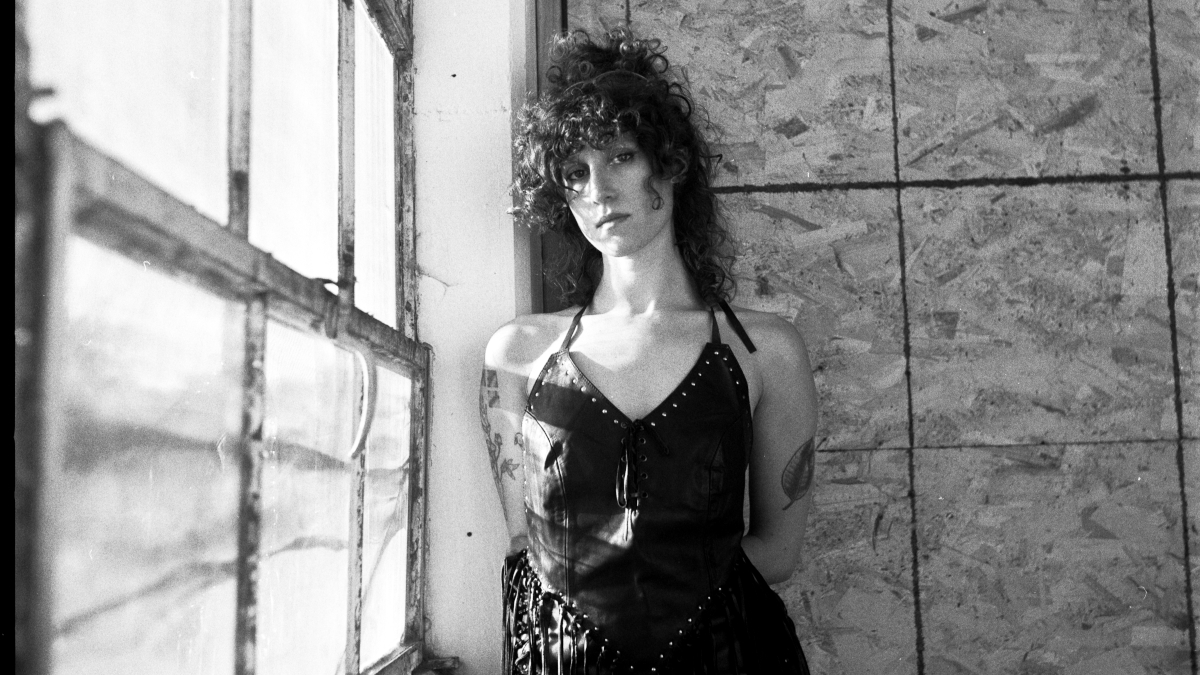

Gracie Abrams wields quite the instrument. The singer and songwriter, now 26 and a touring vet, sounds better than ever on her new album Daughter from Hell. She’s got range: soaring soprano melodies and booming belts, intimate whispers and delicately-sung meditations cracking through like the morning sun. She’s got a very raw quality to her voice, which is often reduced to rasp or rendered with imperfections, so as to be presented with more truth and grit than her prior work. Listening to Daughter from Hell, her vocal versatility is the primary quality of her artistry on display.
If only her songwriting had the same range! Too often on Daughter from Hell, Gracie Abrams courts the idea of being a little unserious but very, very rarely pushes her sound towards the unexpected. This is an album called Daughter from Hell — a dramatic, funny title — with lyrics that are occasionally (you guessed it) dramatic and funny. She even seems to be aware that she takes everything too seriously and essentially makes fun of herself for it, especially on the standout title track “Look at My Life.”
Album Highlights
But even with the confessional outpour that is now inseparable from her sound, Daughter from Hell is desperately in need of more levity, of musical choices that go hand in hand with the vulnerability of her lyrics instead of functioning as a blank slate to lament on top of. Really, it sounds like Gracie Abrams has a hard time getting out of her own way.
There are a few moments where Abrams snaps out of it and leaps from the trap set by Aaron Dessner, a producer and songwriter who specializes in a kind of muted, weightless indie folk presentation that, I would argue, is ultimately holding Abrams back. “Look at My Life” is one of them, and funnily enough, it’s co-produced by Dan Nigro, Olivia Rodrigo and Chappell Roan’s main man. Across a racing instrumental, Abrams sings pretty candidly about the tension between being famous and still being stuck in her own bullshit. “Got what I wanted/ It doesn’t sit right,” she declares in the chorus as the song swells and bursts.
“Minibar,” co-written with her good pal Audrey Hobert, is another bright spot, as she sings about always feels like an outsider looking in, whether that’s with other famous people or within the general public (“Someone perceived me/ Kinda scarred” goes one great line). Along with “Look at My Life,” it’s got the same messy outpour that defined Abrams’ biggest hit, “That’s So True,” where there’s a real willingness to lay bare in a way that feels like a friend oversharing instead of a curated diary entry.
Ballads and Collaborations
But with 16 songs, Daughter from Hell can’t be all restless fun or self-aware, half-ironic anthems. Just like the last album, The Secret of Us, there are a lot of ballads — dare I say too many ballads — and you best believe these ballads are serious. Heartbreak is a very present theme on this album, especially on the wispy “Good Reason,” the T-Swiftian “Broke My Heart,” and the car-themed “Mews.” It’s a whole lot of yearning for one person, so Abrams often gives her lonesome melodies some company and adds rich harmonies atop; it really works on “Imaginary Friend,” a track she co-wrote with her boyfriend Paul Mescal, as well as the penultimate cut “What if It’s Right,” a country-leaning Marcus Mumford collab that sounds a short skip away from a Kacey Musgraves song.
It’s well known now that Abrams comes from a showbiz family, and that’s very apparent in her understanding of drama and stakes within a song. A big reason that her vocals are so strong on this album is because Abrams is acting the part very well, scaling the size of her delivery to try and convey the gravity of her feelings. She can do the righteous fury of ‘this song is all about how you hurt me’ better than most; the metaphor-heavy lyrics on “Mews” may be a bit stale (“You swore you’d go right but you went left instead”), but the heartbroken tones she provides on the mic are evocative and affecting. And like her musical hero Taylor Swift, Abrams loves a Crucial Bridge™, where the stakes of the song reach their highest point and she tumbles through lyrics in a fit of passion. Even without watching her perform, you can tell Abrams really means what she sings — which is maybe her best quality in addition to being a generally skilled singer.
In conclusion, Gracie Abrams’ new album Daughter from Hell is a showcase of her incredible vocal range and emotional delivery. While the songwriting may not always match the level of her vocal talent, there are moments of brilliance throughout the album, particularly in the songs “Look at My Life” and “Minibar.” With Abrams’ unique voice and perspective, she is sure to continue to make waves in the music industry, and Daughter from Hell is a compelling addition to her discography.

Pixel P. Snarkbyte, widely regarded as the “Shakespeare of Sh*tposts,” is a video game expert with a unique knack for turning pixels into punchlines.
Born in the small town of Respawn, Pennsylvania, Pixel grew up mashing buttons on an ancient NES controller, firmly believing that “blowing into the cartridge” was a sacred ritual passed down through generations.
Pixel P. Snarkbyte: proving that life, much like a buggy open-world game, is better with a little lag-induced chaos.
⚖️ ENTER THE LEGALIZER
Think the government has no idea what it's doing? Put your case before the Federal Case Terminal and find out.