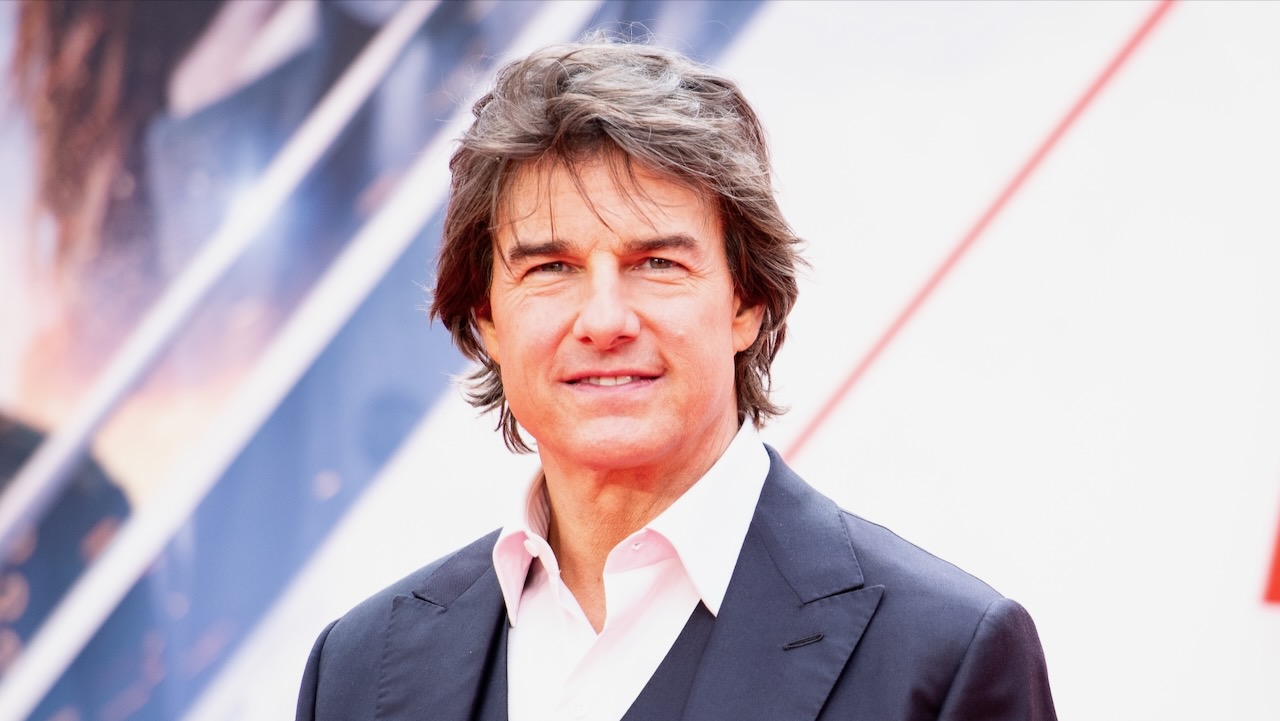
Tom Cruise has thrown his support behind Paramount’s proposed $110 billion acquisition of Warner Bros. Discovery, applauding CEO David Ellison’s promise to release at least 30 movies per year across the two studios. “I think it’s awesome,” Cruise said during an appearance on The Pat McAfee Show. “They’re going to deliver 30 movies.” The actor also described Hollywood as “a community” and “family” rather than an industry and shared he had confidence that Ellison would make good on the ambitious roll-outs.
Cruise’s enthusiasm for the merger is not surprising, given that Paramount has released many of his films, including Mission: Impossible, Top Gun, Days of Thunder, The Firm, Vanilla Sky, Collateral, War of the Worlds, and Jack Reacher. A sequel to Days of Thunder is also currently planned for 2028.
Concerns About the Merger
However, not everyone in Hollywood shares Cruise’s excitement. Speaking at the Venice International Film Festival on Wednesday, George Clooney voiced concern about what another major studio consolidation could mean for workers. “I always worry whenever big companies are consolidating because it means a lot of people are going to lose their jobs,” he said.
Mark Ruffalo has also been an outspoken critic of the merger, arguing that combining Paramount and Warner Bros. could cost jobs, further concentrate control of major media properties, and threaten editorial independence. His criticism has also focused on the Ellison family’s ties to Oracle and the company’s work with the Israeli military.
Response to Criticism
Paramount responded to Ruffalo by accusing him of invoking antisemitic tropes and said the company does not tolerate prejudice. Ruffalo rejected the characterization, saying his criticism was aimed at the Ellisons’ corporate and political relationships. More than 170 Jewish artists, academics, and public figures have since signed an open letter supporting Ruffalo and rejecting the accusation of antisemitism.
Legal Obstacles
Beyond the debates in Hollywood, the merger still faces a larger legal obstacle. California and 11 other states have sued to block the acquisition on antitrust grounds, arguing that combining the companies would give the resulting media giant greater power to raise prices and reduce competition in film and television. The Writers Guild of America has separately challenged the deal.
The Justice Department has already cleared the acquisition, and Paramount says regulators representing at least 68 countries have approved or declined to challenge it. The state lawsuit is now the final major roadblock, with the deal paused while the case plays out. If it remains unfinished after September 30th, Paramount is on the hook for a roughly $7 million per day ticking fee in payments to Warner Bros. Discovery shareholders.
Cruise, however, appears considerably less worried about the uncertainty surrounding the merger. “I know we’re going to get those 30 movies,” he said. Despite the concerns and legal obstacles, Cruise’s support for the merger is a significant endorsement from one of Hollywood’s biggest stars. As the deal continues to move forward, it will be interesting to see how the rest of the industry responds to the potential consolidation of two major studios.

Pixel P. Snarkbyte, widely regarded as the “Shakespeare of Sh*tposts,” is a video game expert with a unique knack for turning pixels into punchlines.
Born in the small town of Respawn, Pennsylvania, Pixel grew up mashing buttons on an ancient NES controller, firmly believing that “blowing into the cartridge” was a sacred ritual passed down through generations.
Pixel P. Snarkbyte: proving that life, much like a buggy open-world game, is better with a little lag-induced chaos.
⚖️ ENTER THE LEGALIZER
Think the government has no idea what it's doing? Put your case before the Federal Case Terminal and find out.