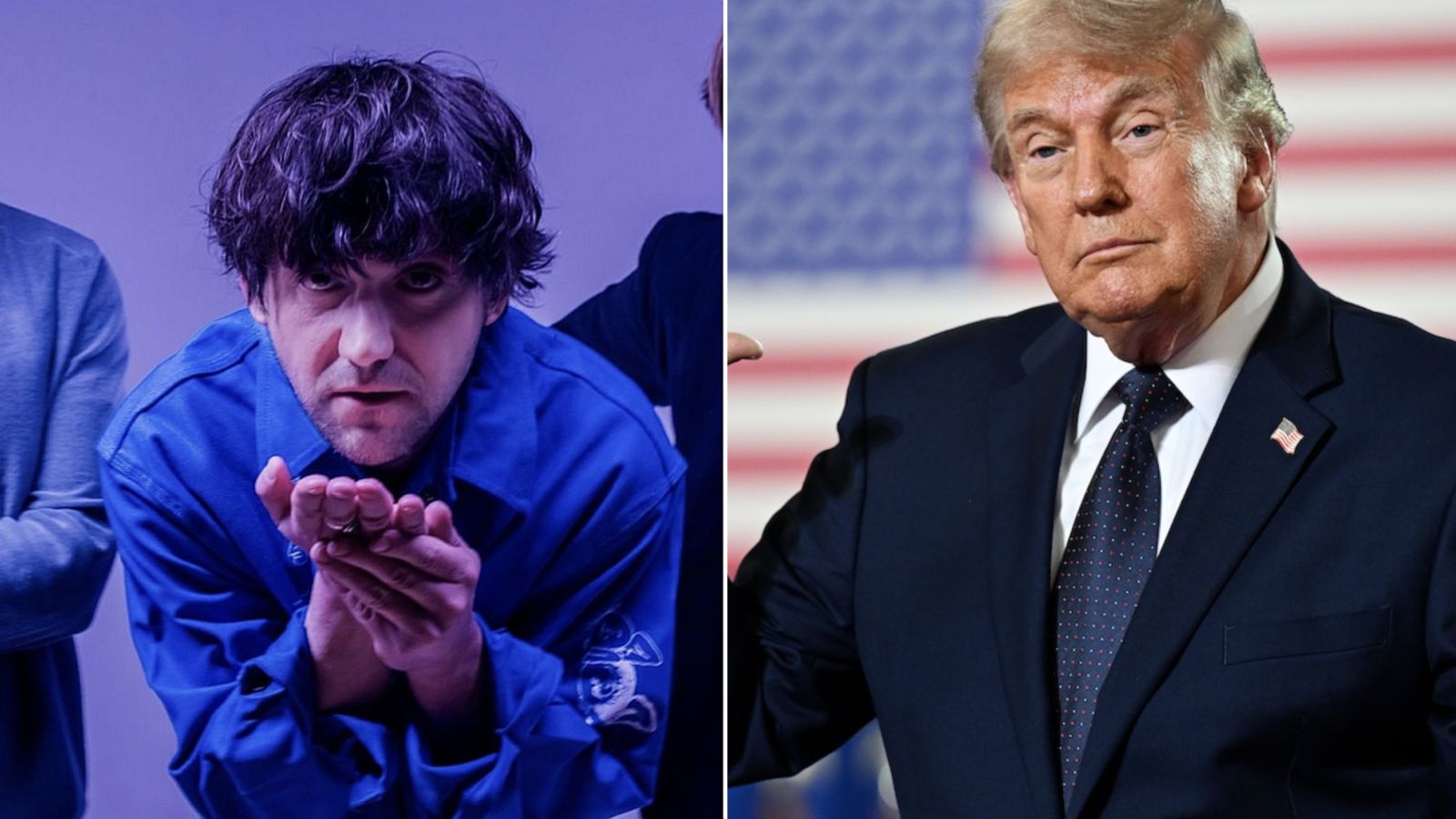
Conor Oberst, the singer-songwriter behind Bright Eyes, is finding it “almost impossible” to bring out his early 2000s protest songwriter voice in the Trump era, he said during a recent talk. In an interview with the New York Times’ “Popcast”, Oberst was asked how his attitude towards folk and protest songs differs under President Donald Trump than under the last Republican U.S. executive George W. Bush.
Oberst explained that it’s really hard for him to even articulate the Trump era, adding maybe at some point he’ll be able to express his thoughts on the current president in song, but, thus far, how “absurd” our political environment is makes it difficult to write about. “You can’t satirize, or whatever, what’s already like a parody” or a “disgusting, gross cartoon,” Oberst explained.
Protest Music in the 2000s
In the 2000s, Oberst vocally tackled social issues in his music and onstage, routinely incising Bush’s policies and the war in Iraq. The song “When the President Talks to God” by Bright Eyes was an exemplar of that moment, and Oberst’s performance of the polemic on late night television was seen as a moment defining opposition to the presidential administration as well as a continuance of an American protest song tradition. But Trump and his actions have Oberst befuddled.
Back then “When the President Talks to God” felt like it meant something, Oberst told listeners. “Now, I guess the bar has been lowered to such a degree societally in every kind of aspect of our lives.” Oberst said he has contemplated and tried to write the protest songs of today, and the current political climate “permeates like everything I write.” But “to write directly towards it . . . I found it almost impossible.”
The Challenge of Writing Protest Music Today
Plenty of people have asked him where’s the new “When the President Talks to God.” And Oberst seems to be asking himself the same question. “I don’t know,” he said. “It’s such just an avalanche of insanity.” Beyond being inundated with insane political acts, Oberst gave another reason for a lack of protest music at large. “I think people are scared,” he said. “I think they have gone out of their way to try to intimidate all of us.”
Bright Eyes will hit festivals in August and September before embarking on a U.S. tour. Fans can look for tickets via Vivid Seats, where they can save $20 on their first order of $200 or more with promo code CONSEQUENCE20 at checkout.
Bright Eyes 2026 Tour Dates:
08/08 — Omaha, NE @ Maha Festival
09/18 — Chicago, IL @ Riot Fest 2026
10/03 — Minneapolis, MN @ First Avenue *
10/05 — Detroit, MI @ Majestic Theatre *
10/06 — Cincinnati, OH @ Bogart’s *
10/07 — Philadelphia, PA @ Union Transfer *
10/09 — Washington, DC @ 9:30 Club *
10/10 — Asheville, NC @ The Orange Peel *
10/11 — Atlanta, GA @ Variety Playhouse *
10/12 — Nashville, TN @ Brooklyn Bowl *
10/13 — New Orleans, LA @ Tipitina’s *
10/15 — Austin, TX @ Stubb’s Waller Creek Amphitheatre *
10/16 — Dallas, TX @ Studio at The Factory *
10/17 — Kansas City, MO @ The Truman *
10/18 — St. Louis, MO @ The Sovereign *
* = w/ Lullaby for the Working Class
In conclusion, Conor Oberst and Bright Eyes are facing a new challenge in the Trump era, where the absurdity of the political climate makes it difficult to write protest music. Despite this, Oberst continues to create and perform music, and fans can look forward to the Bright Eyes tour in the coming months. As Oberst navigates this new era, his music and message remain an important part of the American protest song tradition.

Pixel P. Snarkbyte, widely regarded as the “Shakespeare of Sh*tposts,” is a video game expert with a unique knack for turning pixels into punchlines.
Born in the small town of Respawn, Pennsylvania, Pixel grew up mashing buttons on an ancient NES controller, firmly believing that “blowing into the cartridge” was a sacred ritual passed down through generations.
Pixel P. Snarkbyte: proving that life, much like a buggy open-world game, is better with a little lag-induced chaos.
⚖️ ENTER THE LEGALIZER
Think the government has no idea what it's doing? Put your case before the Federal Case Terminal and find out.