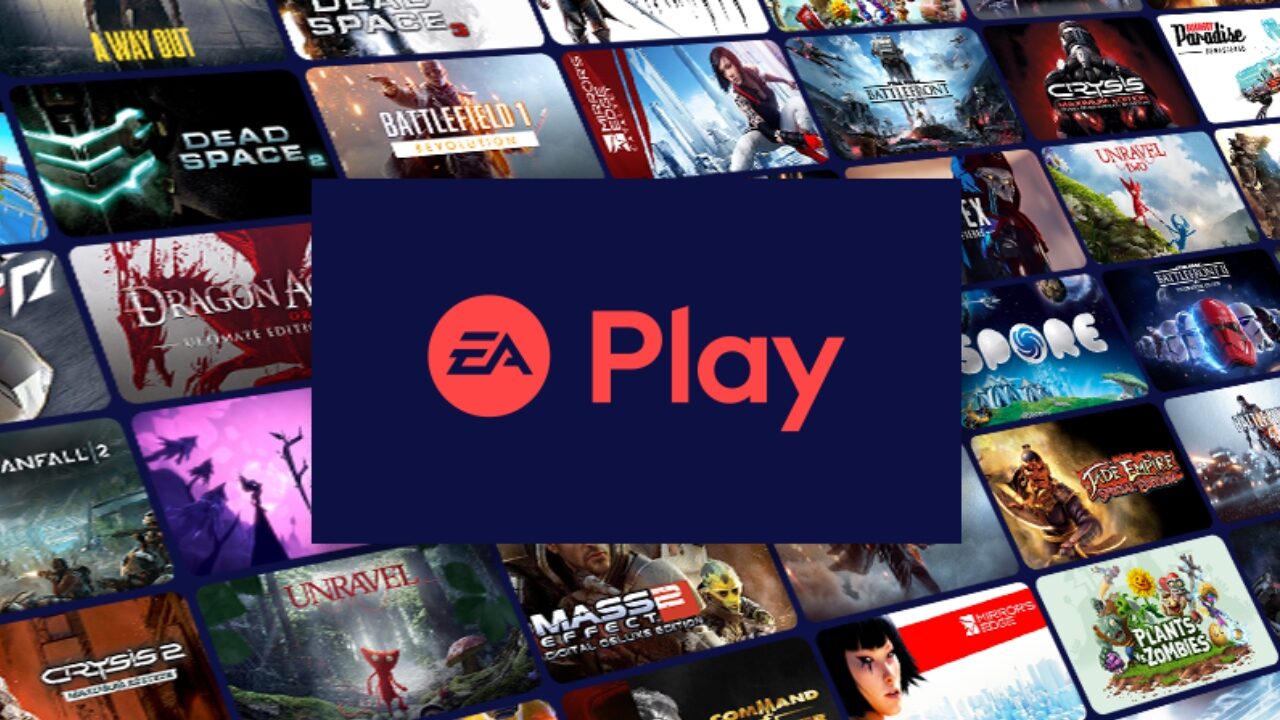
The gaming world is still reeling from the news that Electronic Arts, one of the oldest and most iconic publishers in the industry, has been acquired by Saudi Arabia’s Public Investment Fund and two other private equity firms, Silver Lake and Affinity Partners, for a whopping $55 billion. Yep, you read that right – $55 billion. That’s a lot of cash, and it’s not like EA was struggling to make ends meet or anything. But hey, who needs creative freedom when you can have a fat paycheck, right? The deal, which was announced back in September 2025, has finally closed, and EA is now the second-largest gaming acquisition in history. Every existing shareholder walked away with $210 per share in cash, because who doesn’t love a good payday? But what’s left behind is a company that will never operate the same way again.
What Actually Happened and Who Now Owns EA
So, let’s get down to business. EA first announced the deal on September 29, 2025, and shareholders voted to approve it at a special meeting just before Christmas. Because, you know, what’s a better Christmas present than a fat stack of cash? The transaction then moved through regulatory review, and the deal closed four days after the final sign-off came through. Saudi Arabia’s Public Investment Fund is now the dominant owner, holding over 93 percent of the company. Jared Kushner’s Affinity Partners and Silver Lake hold the rest, because why not? Goldman Sachs advised EA throughout the process, while J.P. Morgan advised the buyers and arranged a reported $20 billion loan intended to help fund the transaction. That loan is now sitting on EA’s balance sheet, and it changes everything about how the company will function going forward.
The Debt Is the Story, Not the Price Tag
The $55 billion headline number gets all the attention, but the $20 billion loan is the detail that will actually shape the next decade of EA games. This is reportedly the single largest leveraged buyout in history, meaning a significant portion of the acquisition was funded with borrowed money that EA itself must now repay. That’s not an abstraction; it’s a direct constraint on every budget decision the company makes from this point forward. Paying back debt of that magnitude requires predictable, consistent revenue every quarter without exception. That financial reality makes experimental projects extremely difficult to justify. Games that take four years to build, carry significant production risk, and might not deliver immediate returns become hard to greenlight when the company needs reliable income streams to meet loan obligations. The freedom to take creative swings shrinks dramatically when borrowed money is funding the entire operation.
The Broader Shift This Signals for the Gaming Industry
This acquisition does not exist in isolation. It is the most dramatic example yet of sovereign wealth funds and large private equity firms treating gaming as a serious long-term asset class. Saudi Arabia’s PIF has already invested heavily across the gaming sector, and taking a 93 percent stake in one of the industry’s most recognized publishers is a statement of intent that goes far beyond a single deal. The implications ripple outward. Other major publishers are watching closely, and some will face acquisition pressure of their own. When private capital of this scale enters an industry, it reshapes priorities across the board, not just at the company being acquired. Competitors respond to the same financial logic, chasing recurring revenue models and reducing tolerance for projects that do not generate predictable returns. For players, developers, and anyone who cares about where the medium goes next, the EA acquisition is not just a business transaction. It’s a structural change in who controls the largest creative studios, what those studios are expected to produce, and whose interests shape the games that get made.
And so, the era of EA as a publicly accountable company is over. What replaces it will be defined by how its new owners balance debt repayment with the need to keep millions of players genuinely engaged, and that balance is far from guaranteed. It’s like trying to make a game that both satisfies the creative vision of the developers and the financial expectations of the investors – oh wait, that’s exactly what’s happening here. Well, at least we can all look forward to more EA games with “live service” and “recurring revenue” plastered all over them. Joy.

Pixel P. Snarkbyte, widely regarded as the “Shakespeare of Sh*tposts,” is a video game expert with a unique knack for turning pixels into punchlines.
Born in the small town of Respawn, Pennsylvania, Pixel grew up mashing buttons on an ancient NES controller, firmly believing that “blowing into the cartridge” was a sacred ritual passed down through generations.
Pixel P. Snarkbyte: proving that life, much like a buggy open-world game, is better with a little lag-induced chaos.
⚖️ ENTER THE LEGALIZER
Think the government has no idea what it's doing? Put your case before the Federal Case Terminal and find out.