The latest video game adaptation to hit theaters is Street Fighter, a movie that embodies the spirit of a ’90s mall arcade: loud, colorful, and overflowing with energy. Directed by a team of fans for fans, it’s a relentless assault on the senses that will leave you breathless, but also possibly questioning your life choices.
If Mountain Dew were to direct a movie, with editing by Surge and music by Crystal Pepsi, it would probably look a lot like Street Fighter. The film’s attempt to cram every character, reference, and inside joke from the game into its two-hour runtime results in a frenetic pace that’s both exhausting and exhausting to watch. It’s like trying to drink a gallon of soda in one sitting – it might be fun for a while, but eventually, you’ll crash and burn.
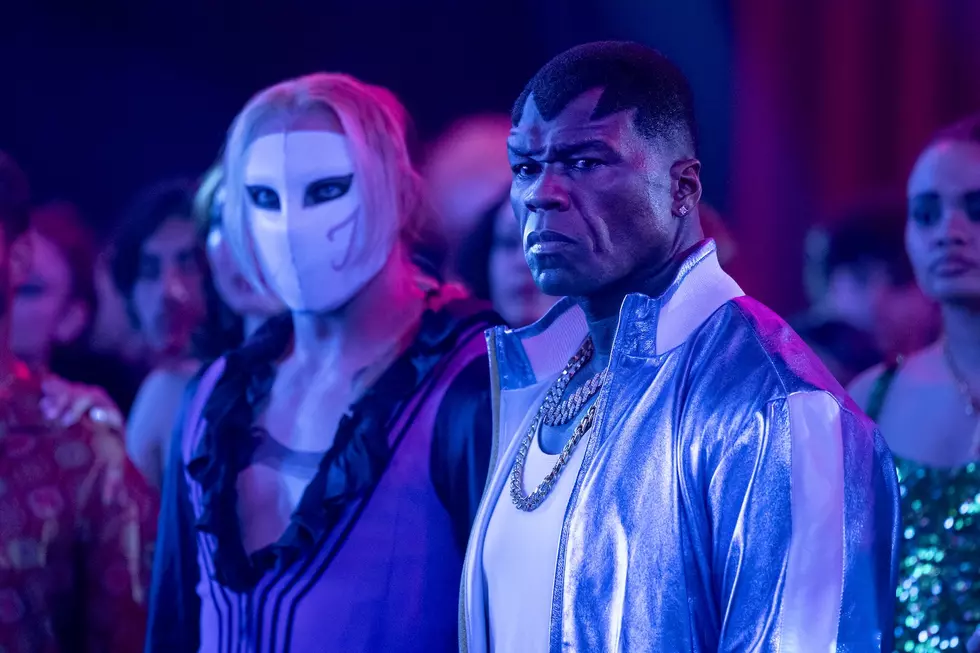
The movie boasts an impressive cast, including Andrew Koji as Ryu, Noah Centineo as Ken, and David Dastmalchian as the villainous M. Bison. The actors seem to be having a blast, with Centineo bringing a rough charisma to his role and Dastmalchian chewing the scenery with gusto. The film also features a host of other recognizable faces, including 50 Cent, Mel Jarnson, and Jason Momoa, who voices the quirky and beastly Blanka. It’s a game attempt to bring the game to life, but ultimately, it feels like a case of too many cooks in the kitchen.
The Problem with Adaptations
One of the biggest issues with Street Fighter is that it’s trying to adapt a game that’s all about action and competition into a narrative-driven film. The result is a story that feels like a series of loosely connected set pieces, with characters showing up, fighting, and then disappearing for long stretches of time. It’s like trying to follow a multiple-choice test – you spend so much time on the first few questions that by the time you get to the end, you’re just filling in the bubbles randomly.
The film’s script is full of bizarre moments, from Eric André screaming into a star-spangled microphone to Dastmalchian’s M. Bison rolling his eyes into the back of his head. It’s like the writers took every craziest, most over-the-top element from the game and mashed them all together into a big ball of weirdness. And while it’s occasionally entertaining, it ultimately feels like a mess.
The Nostalgia Factor
Street Fighter is clearly a labor of love for its creators, who are trying to tap into the nostalgia of fans who grew up playing the game. And to some extent, it succeeds – the film’s references to the game are sure to bring a smile to the faces of old-school gamers. But it’s also a reminder that nostalgia can only take you so far. At some point, you need to have a compelling story and characters to back it up, and Street Fighter falls short in that regard.
It’s worth noting that Street Fighter’s perennial rival, Mortal Kombat, also got a movie this year, and the two films share a surprising number of similarities. Both feature a hero who’s fallen on hard times and must regain their confidence through a series of fights. It’s a tired trope, and one that feels like it’s been done to death. Is it too much to ask for a little originality in our video game adaptations?
As I left the theater after watching Street Fighter, I couldn’t help but feel a sense of exhaustion. It’s a film that’s all about excess – too much action, too much noise, too much color. And while it’s occasionally fun, it ultimately feels like a shallow, superficial experience. Maybe that’s the point – after all, isn’t that what the ’90s mall arcade experience was all about? But as a movie, it feels like a missed opportunity to do something more meaningful.
And so, another beloved franchise has been resurrected from the depths of nostalgia, only to be served up as a shallow, action-packed spectacle. It’s a reminder that in Hollywood, the cycle of nostalgia and rebooting is never-ending, and that the Content Mines remain fully operational. Somewhere, a Focus Group earned another bonus, and executives nodded very seriously during an expensive meeting. But for those of us who just want to watch a good movie, it’s a tired and familiar routine.

Finn McFrame, celebrated satirical mastermind and self-proclaimed “Emperor of Irony,” started his illustrious career as a cinematographer, where his expertise in capturing every single frame of a squirrel stealing a baguette earned him accolades at obscure film festivals.
Born in the glamorous town of Boring, Oregon, Finn grew up with dreams of being a Hollywood director until he realized that satire, not cinema, was his true calling—or at least the one that let him sleep until noon.
Finn McFrame: changing the world, one satirical lens flare at a time.
⚖️ ENTER THE LEGALIZER
Think the government has no idea what it's doing? Put your case before the Federal Case Terminal and find out.