Oh, “Brent,” you poor, confused little oil benchmark! The global markets are in a tizzy over you, as if you’re some long-lost friend who keeps showing up at the worst possible times. Monday, you hit your highest point in years, only to crash and burn later in the day. Tuesday? More of the same. It’s only Wednesday, and you’re already having a rough go of it!
For those of you who don’t make a habit of following oil markets (which is probably most of us), “Brent” is the crude oil price benchmark that the world uses to set prices for, well, pretty much everything. It’s like the Kardashians of the oil world – everyone knows them, but no one’s quite sure why.
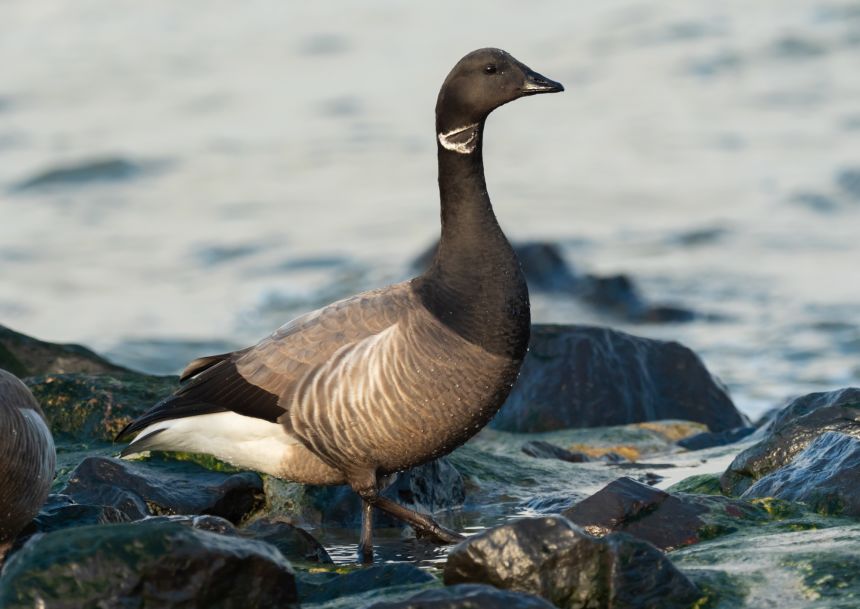
Brent crude oil was originally the name of the oil that Shell UK extracted from its undersea Brent oil field, a joint venture with Esso located off the northeastern coast of the UK’s Shetland Islands. The oil field was named after the “brent goose” – yes, you read that right, a goose – under Shell UK’s convention of naming its oil fields after an alphabetical sequence of water birds. Because nothing says “reliable energy source” like a waterfowl.
Through the years, Brent developed into something more rarefied and abstract than the output of one petroleum deposit. When Shell’s output from the Brent field began trading on the market in the 1980s, it was a useful point of reference for traders and speculators. Brent oil’s origin in the North Sea made it easy to transport to Europe, Africa, and the Middle East, says Adi Imsirovic, an experienced oil trader and editor of the 2023 volume “Brent Crude Oil: Genesis and Development of the World’s Most Important Oil Benchmark.”
But around 1990, with the demand for crude oil ever growing, the Brent field started to run out of oil, which constrained trading. By then, though, Brent was not just a supply of the raw material for powering automobiles or heating houses; a complex of markets in oil futures and forward trading had grown up around it, providing useful risk management tools to the oil industry, says Liz Bossley, who has traded crude oil since 1978 and is currently CEO of Consilience Energy Advisory Group.
There was incentive to keep all this going, so the definition of what could be bought and sold as Brent expanded to include new oil grades from different oil fields across the North Sea. The last of the Brent field’s four platforms stopped operating in 2021. Today, Bossley says, Brent is no longer an oil but “a brand name for a suite of contracts, dated, forwards, futures, swaps, and options… It’s like Coke or Pepsi or something like that.”
Someone who buys a tanker of Brent today may well even receive a delivery of oil from West Texas rather than the North Sea. Until 2015, the US banned exports of its own crude oil production. When American crude finally did enter the global market, oil from Texas’ prolific Permian Basin fields began arriving in Europe and other regions, while the North Sea oil streams that made up Brent continued to dwindle, Bossley says.
Rather than abandoning Brent in favor of a new, North American benchmark, the industry incorporated the newly available US oil grade, WTI Midland, into the Brent complex in 2023. “Right now, if you buy a Brent contract, more than 50% of the time what you’re going to get is WTI Midland,” Bossley says. “So is Brent a UK market? A Norwegian market? No, chances are it’s a US market because the majority of what gets delivered is WTI Midland.”
Now that a grade of US oil is part of Brent, its quality has become highly variable, forcing traders to make adjustments to the price, Bossley says. The transatlantic entanglement also means that Brent’s status as a relatively neutral benchmark is changing. “People who have a political view, have a vested interest, now regard Brent as something slightly different than it was before,” she says. “It is now potentially under the control of Mr. Trump.”
But it’s a different set of decisions by President Donald Trump that currently has Brent lurching up and down. In response to his choice to launch hostilities against Iran, Iran has threatened to attack any tanker moving through the Strait of Hormuz, a critical route through which one-fifth of the world’s oil is transported. Because ships can’t get through the waterway, the storage tanks that feed the ships are backed up, and so oil producers in the Persian Gulf have dramatically slowed production. The drop in supply and the fear of restricted supplies to come are driving up the price of gasoline, airfare, and, underneath it all, Brent.
Patrick De Haan, head of petroleum analysis at Gas Buddy, put it like this: “It’s kind of like an eBay auction for bidding. There’s a finite amount of oil; the highest bidder wins. And it’s the countries that are most at risk from the Strait of Hormuz that are more desperate to bid up the price of oil because they need it, which then forces everyone else to pay more as well.”
Other technicalities are also affecting Brent, Bossley says. As the Trump administration tries to alleviate the spike in oil prices, there’s speculation about whether the US might tap the Strategic Petroleum Reserve (SPR), the largest emergency crude oil stockpile in the world. Bossley says it’s likely that the oil in the Strategic Petroleum Reserve is not the same grade as WTI Midland and is not part of the Brent market, but it could be piped to the same terminals and mixed in with the Brent-approved oil for export. If that happens, she says, a huge supply of Brent could be lost.
“If the SPR gets released, where is it released from? And if it is released, given that its quality is so different from the Permian Basin West Texas Intermediate exporter from Midland, does that mean that WTI can no longer be part of Brent?” she says. “The market is in some considerable confusion.”
So, there you have it, folks. The great Brent oil fiasco is a tale of woe and confusion, with more twists and turns than a soap opera. Stay tuned for the next episode, where we’ll find out if Brent can survive the Trump administration’s latest antics!

Armchair patriot. Believes in the free market, cold beer, and that there’s always a guy named George behind every CNN segment.
Former remote-throwing champion turned #1 couch commentator on liberal panic in the media. Born in Texas (or so his mug says), he earned a degree in Fake Newsology & Beer Philosophy from YouTube University.
⚖️ ENTER THE LEGALIZER
Think the government has no idea what it's doing? Put your case before the Federal Case Terminal and find out.