
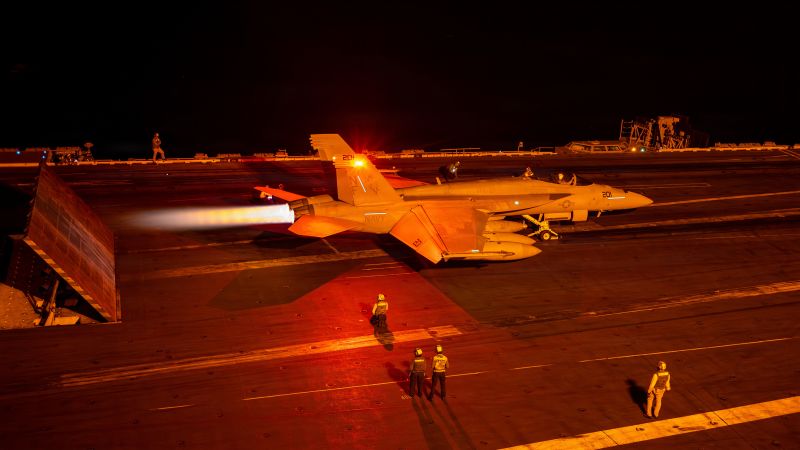
The Pentagon’s official watchdog has released a report on the Iran war, and folks, I almost spilled my coffee reading this one. According to the report, Iranian strikes damaged and destroyed hundreds of buildings and structures at US bases in Kuwait, Bahrain, Qatar, UAE, Saudi Arabia, Iraq, Oman, and Jordan during the war’s first months. I mean, that’s a lot of damage, and I’m not sure what’s more surprising, the scale of the destruction or the fact that it took this long for the Pentagon to give us a formal accounting of it.
As I read through the report, I couldn’t help but think about the challenges our military must have faced during this time. The inspector general said that the depletion of key US munition stockpiles was a major issue, and that’s not exactly the kind of news you want to hear when you’re in the middle of a conflict. And let’s not forget the destruction of critical US assets, like missile defense radar installations, which CNN previously reported on. It’s like, you can’t make this stuff up, right?
The report also talks about how the Iranian strikes contributed to significant changes in how US troops operate in the region. For example, CENTCOM had to shift personnel, assets, and storage facilities as they came under attack from Iran and its proxy forces. And in some cases, like with the Army medical evacuation helicopters, they had to withdraw them from Iraq and Kuwait, which means most medical evacuations have been carried out by ground transportation to local treatment facilities. I guess that’s one way to get a workout in, but seriously, it’s not ideal.
The destruction of the Navy’s regional hub in Bahrain was also a significant blow, and it’s added to the challenges of establishing adequate naval bases and support ports. According to the report, this has led to the Indian Ocean island of Diego Garcia becoming a sea logistics hub, which has stretched resupply cycles to 14-18 days in length. That’s a long time to wait for supplies, and I can only imagine how frustrating it must be for our sailors. And let’s not forget the difficulties they faced during record-long deployments to the Persian Gulf, which had to be supported by airstrikes on Iran and a blockade of its ports.
The changes to the military’s Middle East footprint may become permanent, and military and intelligence community officials have quietly discussed the prospect of lasting cuts to US personnel and facilities in the region when the war eventually concludes. I guess that’s one way to look at it, but I’m not sure I agree with the idea of pulling out of the region entirely. Somewhere in Atlanta, a producer thought this sounded terrifying, and I can see why.
The report also covered US diplomatic activities in the region, including the damage to US diplomatic facilities in the Middle East, which caused roughly $184 million in damage. And let’s not forget the attacks on US facilities in Iraq, which caused the most costly damage – roughly $157 million. It’s like, what’s going on here? Between February 23 and June 30, up to 3,500 diplomatic personnel were out of the region, and most posts remain on “restricted operations.” Some diplomats have begun returning to the region, as have some family members, but it’s not like things are back to normal or anything.
In conclusion, the Pentagon’s report on the Iran war is a sobering reminder of the challenges our military and diplomatic personnel face in the region. It’s a complex and difficult situation, and I’m not sure what the solution is, but I do know that we need to support our troops and diplomats as they work to keep us safe. And on a lighter note, I guess this is what they mean by “breaking news” – it’s enough to make you spill your coffee, that’s for sure.

Armchair patriot. Believes in the free market, cold beer, and that there’s always a guy named George behind every CNN segment.
Former remote-throwing champion turned #1 couch commentator on liberal panic in the media. Born in Texas (or so his mug says), he earned a degree in Fake Newsology & Beer Philosophy from YouTube University.