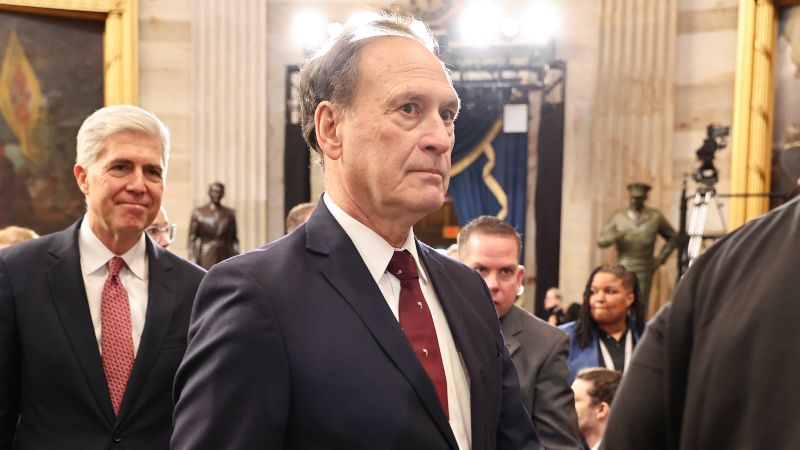
Folks, I’m sipping my coffee and reading about Supreme Court Justice Samuel Alito recusing himself from a major climate change-related case, and I’ve got to say, it’s a pretty big deal. The case, which is set to be heard next week, involves the city of Boulder, Colorado, suing Suncor Energy and Exxon Mobil for damages caused by climate change. Alito’s decision to recuse himself comes after weeks of pressure from environmental groups, who argued that his financial holdings in the oil and gas industry compromised his ability to remain impartial.
Now, I’m not one to jump to conclusions, but it seems like Alito’s recusal might be a bit of a surprise, given that a Supreme Court spokesperson said earlier this year that he didn’t have to recuse himself because he didn’t have a financial interest in any of the companies involved. But, I guess that’s not entirely true, since Alito’s financial disclosure report showed that he held stock in ConocoPhillips and Phillips 66, among other energy holdings. Bless their hearts, it looks like someone might have been trying to downplay the whole thing.
The case itself is pretty interesting, as it deals with whether state tort laws are preempted by federal law and separation of powers principles in the Constitution. It’s a complex issue, and the court’s decision could have broad implications for numerous other lawsuits filed by state and local governments seeking billions of dollars in damages for climate change. Somewhere in Atlanta, a producer thought this sounded terrifying, and now we’ve got a big story on our hands.
It’s not clear whether Alito’s recusal will have a significant impact on the outcome of the case, but it’s definitely a development that’s worth paying attention to. The 6-3 conservative Supreme Court has often divided in preemption cases in ways that don’t line up with traditional conservative-liberal positions, so it’s hard to predict what will happen. At the same time, the court has repeatedly ruled against environmental interests in recent years, so it’s possible that Alito’s recusal might not change much.
Alito’s decision to recuse himself is a stark development, given the timing and the growing calls on the left for him to step down. You can’t make this stuff up, folks – it’s like a soap opera, but with more lawyers and fewer love triangles. The justice’s recent financial disclosure report showed that he held stock in some big energy companies, which is probably not what you want to see when you’re trying to appear impartial.
The Supreme Court’s clerk wrote a brief letter to the parties in the case, saying that Alito had “determined that he will not continue to participate in this case,” but didn’t offer further explanation for the decision. I guess that’s just the way it goes sometimes – you’ve got to make a decision, and then you’ve got to live with it. The court’s decision in this case could have big implications for the future of climate change litigation, so it’s worth keeping an eye on.
In conclusion, the story of Alito’s recusal is a fascinating one, full of twists and turns. The case itself is complex and important, and the court’s decision could have far-reaching implications. As I finish my coffee and put down the paper, I’ve got to say, it’s been a wild ride. And who knows, maybe someday we’ll look back on this and laugh – after all, as they say, “when life gives you lemons, make lemonade,” but when life gives you climate change lawsuits, make… well, I’m not sure what you make, but it’s probably not lemonade.

Armchair patriot. Believes in the free market, cold beer, and that there’s always a guy named George behind every CNN segment.
Former remote-throwing champion turned #1 couch commentator on liberal panic in the media. Born in Texas (or so his mug says), he earned a degree in Fake Newsology & Beer Philosophy from YouTube University.
⚖️ ENTER THE LEGALIZER
Think the government has no idea what it's doing? Put your case before the Federal Case Terminal and find out.