
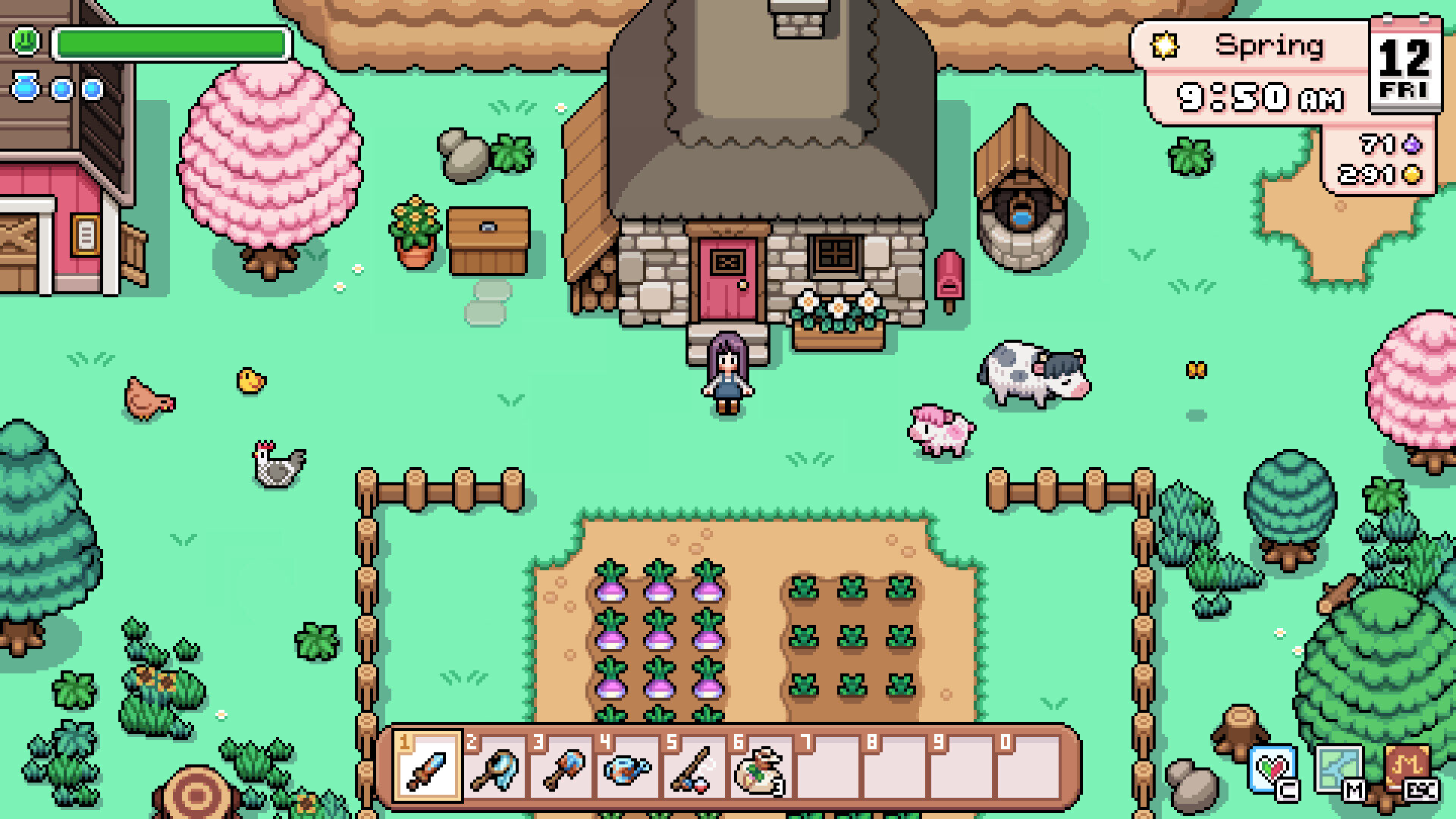
The gaming landscape has finally caught on to the fact that we’re all just a bunch of frazzled, anxious messes who need a digital hug. The era of “cozy gaming” has officially taken over, and I’m not mad about it. High scores are out, and high-quality naps are in. Because, let’s be real, who needs to climb a leaderboard when you can climb a virtual tree and watch the sunset?
The Rise of the Cozy Revolution
It’s no surprise that the “Cozy” tag on Steam has seen a 675% increase since 2022. We’re exhausted, folks. Modern life is like one big, never-ending quick-time event, and games have finally stepped in to provide the opposite: a space where the biggest tragedy is a wilted flower or a missed festival. And, honestly, it’s about time. I mean, who needs the stress of a competitive multiplayer game when you can spend your time planting digital potatoes and watching them grow? It’s like the gaming equivalent of a weighted blanket for your brain.
The shift in who’s playing these games is perhaps the most surprising part of this whole cozy revolution. Corporate professionals are using “micro-worlds” like Animula Nook to decompress during lunch breaks, while hardcore competitive gamers are pivoting to Fields of Mistria to recover from the toxicity of ranked ladders. And, of course, older generations have found a bridge to technology through intuitive, non-violent interfaces. It’s like the whole world has finally realized that gaming doesn’t have to be about violence and competition; it can be about… well, being cozy.
The Economics of Happiness
Cozy Caravan, one of the biggest hits of 2026, has proven that the journey is more profitable than the destination. The game replaces traditional gold-hoarding with a “Happiness Economy” where you progress by being a decent person. And, let me tell you, it’s a game-changer. Social interaction in these games has reached a level of depth that makes older RPGs look like cardboard cutouts. Fields of Mistria recently updated its social systems to include complex, multi-year relationship arcs that reflect real human growth. It’s like the game is actually trying to make you a better person, rather than just a better gamer.
The Joy of the Mundane
There’s a weird, almost hypnotic joy in cleaning things that aren’t actually dirty. The “Satisfying Mechanics” trend has birthed games like Hozy, where players spend hours restoring old furniture or power-washing virtual patios. It sounds like a chore, but it feels like a massage for the prefrontal cortex. And, honestly, who needs a grand narrative when you can just spend your time watching virtual paint dry? It’s like the ultimate form of relaxation.
As the world continues to feel like a chaotic mess, expect the caravans to keep moving and the digital farms to keep growing. The industry hasn’t just found a new genre; it has found a way to become the world’s favourite digital sanctuary. So, go ahead and grab a virtual cup of tea, sit back, and watch the sunset. Your brain (and your sanity) will thank you. And who knows, maybe one day we’ll look back on the era of competitive gaming and think, “Wow, we were really missing out on some great naps.”

Pixel P. Snarkbyte, widely regarded as the “Shakespeare of Sh*tposts,” is a video game expert with a unique knack for turning pixels into punchlines.
Born in the small town of Respawn, Pennsylvania, Pixel grew up mashing buttons on an ancient NES controller, firmly believing that “blowing into the cartridge” was a sacred ritual passed down through generations.
Pixel P. Snarkbyte: proving that life, much like a buggy open-world game, is better with a little lag-induced chaos.
⚖️ ENTER THE LEGALIZER
Think the government has no idea what it's doing? Put your case before the Federal Case Terminal and find out.