
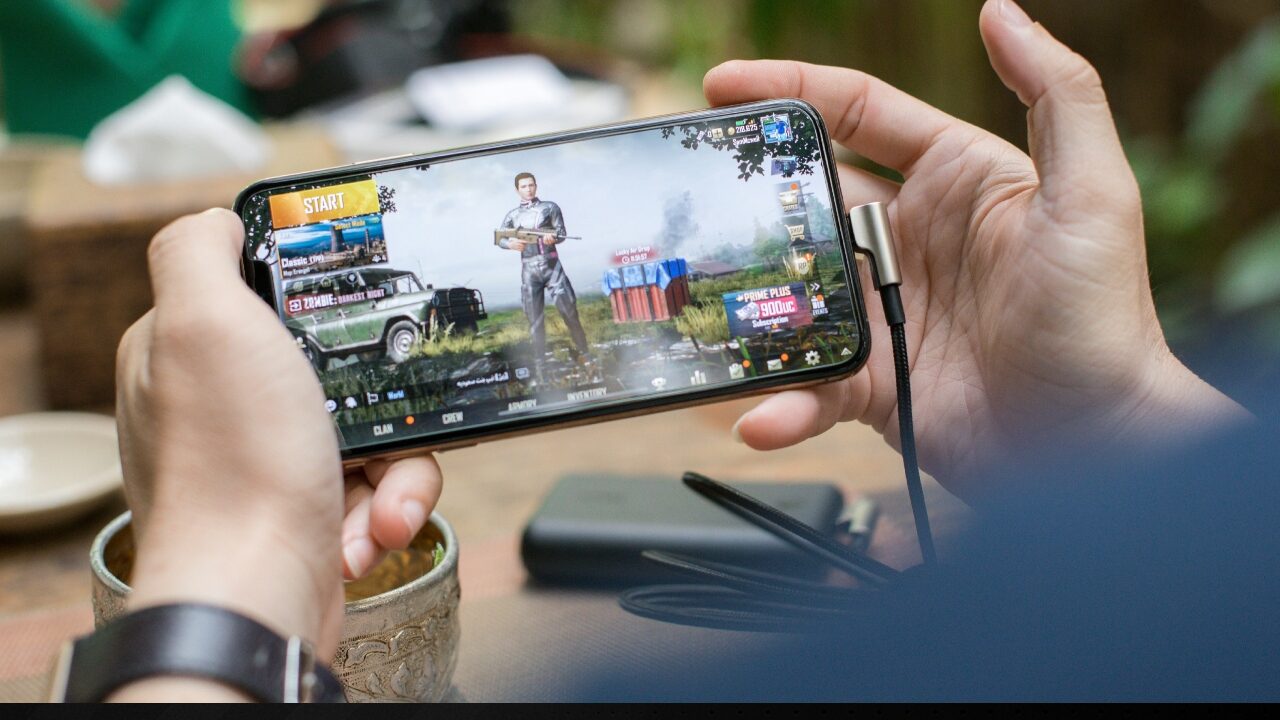
Once upon a time, mobile phones were just fancy walkie-talkies with better battery life—no one expected them to do anything impressive. 📞 You could make calls, maybe send a text if you had a keyboard the size of a small sandwich, and if you were really living large, you could play Snake for approximately 12 minutes before realizing your life had no meaning. Fast forward to today, and your phone is now a portable supercomputer that can render a battlefield in 4K while simultaneously judging your calorie intake via a fitness app. It’s like Tony Stark’s lab, but it fits in your pocket and costs less than your rent. 🚀📱
Back in the day, mobile gaming was basically a digital participation trophy. You got a pixelated dinosaur that jumped over cacti and called it a day. But now? Your phone can run games so graphically intense they make your GPU cry tears of silicon envy. We’re talking console-level performance, 60fps buttery smoothness, and ray tracing that makes shadows look *emotional*. The same device that reminds you to pay your water bill can also simulate an entire warzone with more realism than your therapist.
And let’s talk about the brains of the operation—the processors. Apple’s A-series chips are basically tiny geniuses trapped in silicon purgatory, solving calculus problems between rendering explosions. Qualcomm’s Snapdragon? More like Snap*dragon* of fury, am I right? These chips deliver teraflops of performance, which is a unit of measurement previously reserved for NASA and rich YouTubers with too much time and money.
But here’s the plot twist: unlike desktop PCs that can afford to run hot enough to fry eggs, phones have to balance power with not melting in your hand. So developers had to get creative. Dynamic resolution scaling means your game can look stunning one second and slightly pixelated the next—kind of like your love life, but with better frame rates. 🔥
And RAM? Oh, we’re now at the point where your phone has more memory than your brain during exam week. 8GB, 12GB, 16GB—enough to run a full-scale RPG, three dating apps, and a blockchain-based virtual pet simulator all at once. Storage is so fast now that loading screens are basically a myth, like landline telephones or common sense.
But here’s the real kicker: all this power means nothing if you can’t actually use it without stabbing yourself in the thumb. Touchscreens are great until you realize your fingers are basically sausages trying to navigate a digital world built for precision. So developers had to redesign entire interfaces so that actual humans (with actual hands) could play without flipping a table.
Swipe left to dodge, tap twice to shoot, hold to cry emotionally during a cutscene—mobile gaming has its own language now. And unlike desktop games that assume you have a mouse and a keyboard and three extra hands, mobile games are designed for the real world: one-handed, coffee in the other hand, standing on a bus that just hit a pothole. 🚌☕
Cross-platform compatibility? That’s a whole other circus. iOS says “no,” Android says “maybe,” and users just want to know why they can’t access their Fanduel casino promo code without performing a blood ritual. But somehow, it works. Notifications sync, permissions behave (mostly), and you can lose money in high-definition on any device. 🎰✨
And let’s not forget the network revolution. 5G is here, and it’s faster than your excuses when your mom asks why you’re still single. Latency is so low now that you can play real-time multiplayer games without your teammates blaming lag for their terrible aim. We’re talking sub-20-millisecond ping—faster than your ex replying to a text when they want something.
Cloud gaming is also a thing now, which means you can stream console-quality games without actually owning a console. It’s like ordering pizza but never learning how to cook. The future is here, and it’s lazy. ☁️🍕
Security? Oh, that’s a whole drama. But somehow, mobile devices are now *more* secure than your desktop, thanks to biometrics that actually work. Face ID, fingerprint scanners—these things used to be for spies and Bond villains, now they’re stopping your kid from buying $200 worth of in-game skins. 💸🔒
And the best part? Apps don’t crash as much anymore. Miracles *do* happen.
So what’s next? Foldable phones that double as tablets—because why not make everything bigger? 120Hz screens so smooth they should come with butter warnings. AR glasses that overlay game worlds onto reality, because pretending to be a wizard in your living room is basically adult cosplay. 🧙♂️🕶️
But at the end of the day, the real magic isn’t just raw power—it’s how mobile devices became *usable*. They’re not just mini-PCs; they’re intuitive, portable, and weirdly personal. They fit in your pocket, your hand, your heart.
So here’s to the little device that could—now it renders dragons, tracks your steps, and judges your life choices. All while fitting in your jeans. 👖💖

Pixel P. Snarkbyte, widely regarded as the “Shakespeare of Sh*tposts,” is a video game expert with a unique knack for turning pixels into punchlines.
Born in the small town of Respawn, Pennsylvania, Pixel grew up mashing buttons on an ancient NES controller, firmly believing that “blowing into the cartridge” was a sacred ritual passed down through generations.
Pixel P. Snarkbyte: proving that life, much like a buggy open-world game, is better with a little lag-induced chaos.
⚖️ ENTER THE LEGALIZER
Think the government has no idea what it's doing? Put your case before the Federal Case Terminal and find out.