
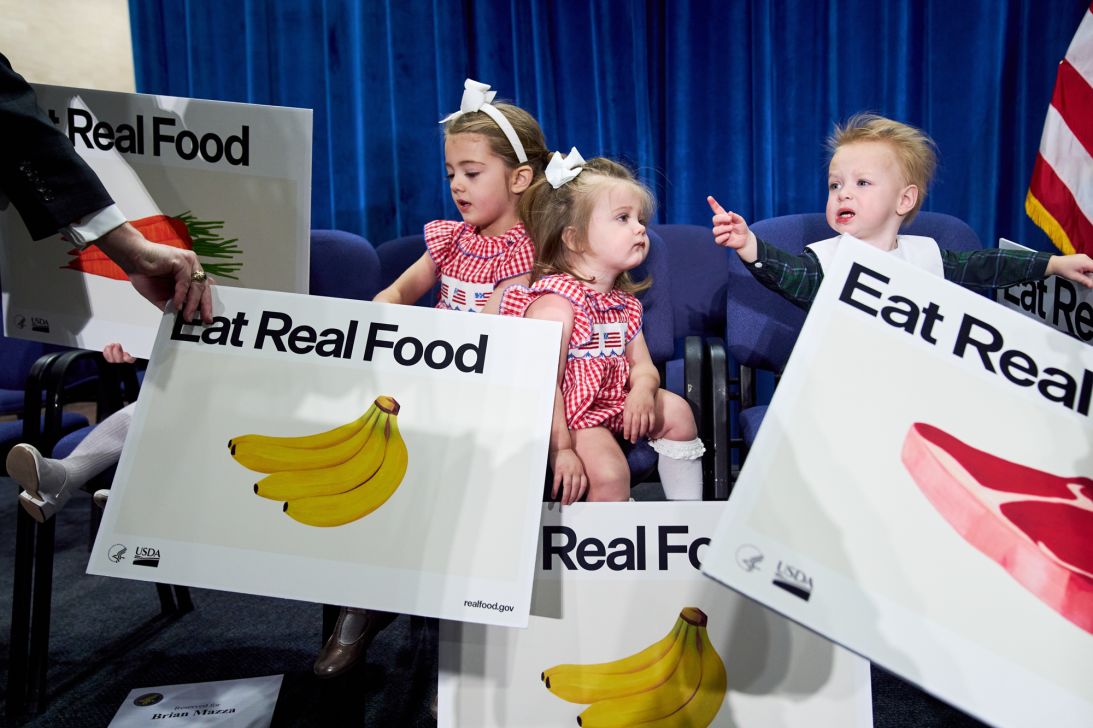
Folks, I almost spilled my coffee reading this one. It seems that the Trump administration is pushing for schools to serve more “real food” and cut down on ultra-processed offerings, as part of the Make America Healthy Again movement. Now, I’m all for healthy eating, but it’s not as simple as just waving a magic wand and making it happen. I mean, have you seen the state of some school kitchens? It’s like they’re trying to cook for an army with the equipment they have, which, bless their hearts, is not much.
The article highlights the challenges faced by schools in serving healthy meals, particularly those with limited kitchen space and equipment. Take Thomas Hooker Elementary School in Meriden, Connecticut, for example. The school’s kitchen is essentially a cobbled-together affair, made from three closets. The cafeteria manager’s desk is a few feet from the pot washing sink, which is in a separate room from the stove, refrigerators, and other appliances. It’s a wonder they can get anything cooked at all.
The school’s director of food and nutrition services, Susan Maffe, says that the process of preparing meals is “definitely very challenging.” And it’s not just about the equipment; it’s also about the lack of skilled labor, space, and funding for general operations. I mean, who can blame them? It’s tough to cook up a storm when you’re working with one hand tied behind your back.
Now, the USDA is providing $70 million in equipment grants to help schools improve their kitchens, and HHS is investing $30 million in research to identify cost-effective ways to make school meals healthier. But, as Gay Anderson, chair of the School Nutrition Foundation, points out, “$70 million won’t go far across 50 states.” It’s a drop in the bucket, if you ask me.
Some schools are making progress, though. Littleton Public Schools in Colorado, for example, has opened a $4 million central production kitchen, which allows them to cook more meals from scratch. But, as Jessica Gould, the nutrition services director, notes, it’s not just about the food; it’s also about getting the kids to eat it. “Some kids are used to Kraft mac and cheese,” she says. “We’re trying to make a big leap here. To get their taste buds to follow is going to be our next challenge.” You can’t make this stuff up, folks.
In conclusion, it’s great that the administration is pushing for healthier school meals, but it’s not going to be easy. Schools need more than just a pat on the back and a few million dollars to make it happen. They need real support, real equipment, and real funding. And, let’s be realistic, it’s going to take some time to get those kids to trade in their Kraft mac and cheese for some wholesome, homemade goodness. But hey, as the saying goes, “you can’t have your cake and eat it too,” unless, of course, it’s a healthy, homemade cake made with love and care in a properly equipped school kitchen. Now, that’s a meal I’d like to see.

Armchair patriot. Believes in the free market, cold beer, and that there’s always a guy named George behind every CNN segment.
Former remote-throwing champion turned #1 couch commentator on liberal panic in the media. Born in Texas (or so his mug says), he earned a degree in Fake Newsology & Beer Philosophy from YouTube University.
⚖️ ENTER THE LEGALIZER
Think the government has no idea what it's doing? Put your case before the Federal Case Terminal and find out.