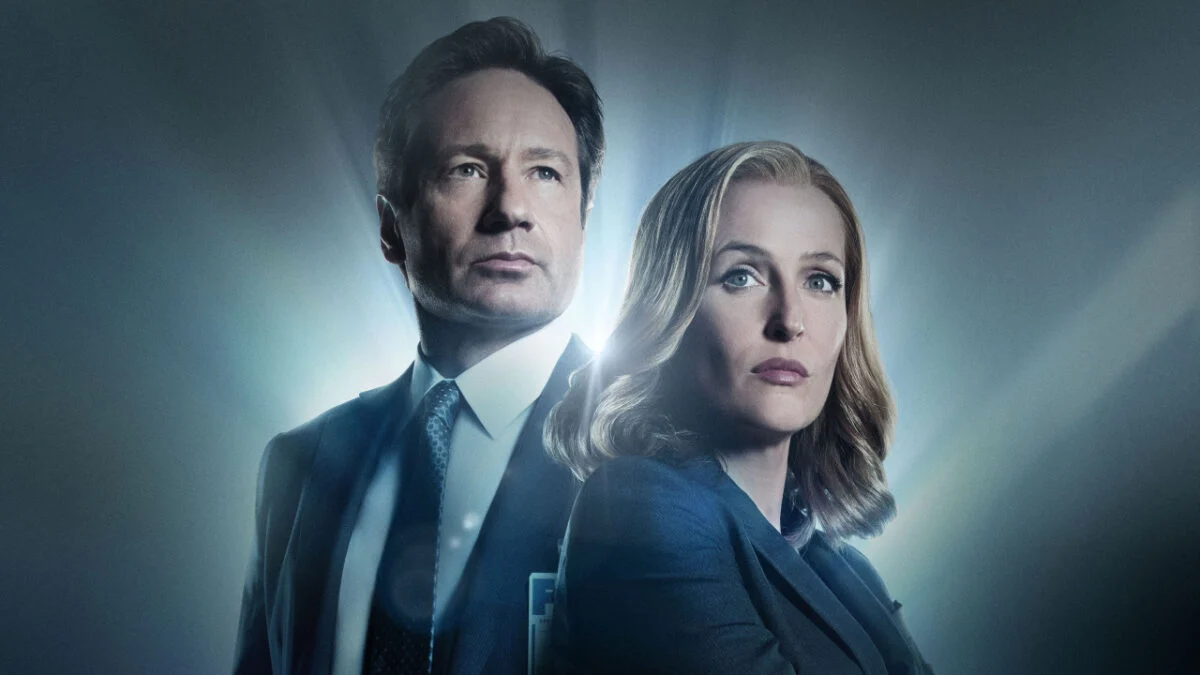
Hulu’s latest release is a new cut of the 2008 X-Files movie, titled The X-Files: I Want to Believe – Vrach Frankenshteyn. This “R-rated director’s cut” is being billed as Chris Carter’s original vision for the film, a darker and more frightening thriller that explores the story of a modern-day mad scientist and his connection to the mysterious abductions. But how different is it really from the original, and is it worth watching for fans of the franchise?
The X-Files: I Want to Believe was the second X-Files movie, released in the summer of 2008. The film takes place several years after the show’s original series finale and follows Agents Mulder and Scully as they investigate a strange case involving a missing FBI agent. The movie’s official synopsis reads: “When a group of women is mysteriously abducted, it becomes a case right out of The X-Files. Years after walking away from the FBI, Fox Mulder and Dr. Dana Scully are pulled back from the shadows when a federal agent vanishes without a trace.” The film explores themes of faith and belief, and its scary elements are centered around a monstrous former priest and his possible psychic visions.
According to Chris Carter, the director’s cut came about after he was talking to Steve Asbell at 20th Century Studios about the possibility of re-releasing the film. Carter stated that he wanted to make the director’s cut because the version of I Want to Believe released to theaters was not the one he set out to make, namely “a scary X-Files movie.” He claimed that the studio’s reaction to his first cut was “mild outrage” because it was not a PG-13 movie, and that he was forced to cut it down to the version that was eventually released.
## What’s Different About Vrach Frankenshteyn?
So, what’s different about this new cut? For starters, it’s shorter than the original, clocking in at 98 minutes compared to the theatrical cut’s 104 minutes. Carter has trimmed back some of the scenes involving Mulder and Scully’s romance, including a long scene where they discuss their relationship and a climactic kiss between the two characters. The new cut also includes some additional scares and a bit more blood, although it’s worth noting that it doesn’t actually have an R-rating from the MPA.
It’s also worth noting that some of the changes made to the film are not necessarily improvements. For example, Carter has removed a discussion between Mulder and a disgraced priest about his time working on the X-Files, as well as a brief mention of his missing sister and how it motivated his career in the FBI. He’s also cut out the film’s single best joke, which involves Mulder and Scully noticing two photographs on the wall at the FBI office – one of President George W. Bush and one of J. Edgar Hoover.
## Do You Need to Watch Vrach Frankenshteyn?
So, do you need to watch Vrach Frankenshteyn? Honestly, it’s not a drastically different cut from the original. While it’s true that Carter has amped up the scares a little, the changes he’s made are mostly minor and don’t necessarily improve the film. In fact, some of the changes – such as the removal of the romantic moments between Mulder and Scully – actually make the film feel less compelling.
It’s also worth noting that the film’s scary elements are actually its most generic and least compelling part. The notion of a monstrous former priest and his possible psychic visions is a great concept, but it’s not particularly well-executed in the film. The movie opens strong, but the plot quickly becomes convoluted and the scares feel like a flimsy excuse for a feature film.
In the end, it’s hard to see Vrach Frankenshteyn as anything more than a cynical attempt to cash in on nostalgia for the X-Files franchise. The film’s marketing campaign has promised a darker and more frightening thriller, but the reality is that it’s just a slightly different cut of a movie that wasn’t particularly good to begin with. As the Franchise Resurrection Department continues to churn out new versions of old properties, it’s hard not to feel like we’re just being fed the same old thing over and over again. Somewhere, an executive is probably nodding very seriously, thinking that this is the key to unlocking a new shared cinematic universe. But for the rest of us, it’s just more of the same old Hollywood nonsense.

Finn McFrame, celebrated satirical mastermind and self-proclaimed “Emperor of Irony,” started his illustrious career as a cinematographer, where his expertise in capturing every single frame of a squirrel stealing a baguette earned him accolades at obscure film festivals.
Born in the glamorous town of Boring, Oregon, Finn grew up with dreams of being a Hollywood director until he realized that satire, not cinema, was his true calling—or at least the one that let him sleep until noon.
Finn McFrame: changing the world, one satirical lens flare at a time.
⚖️ ENTER THE LEGALIZER
Think the government has no idea what it's doing? Put your case before the Federal Case Terminal and find out.