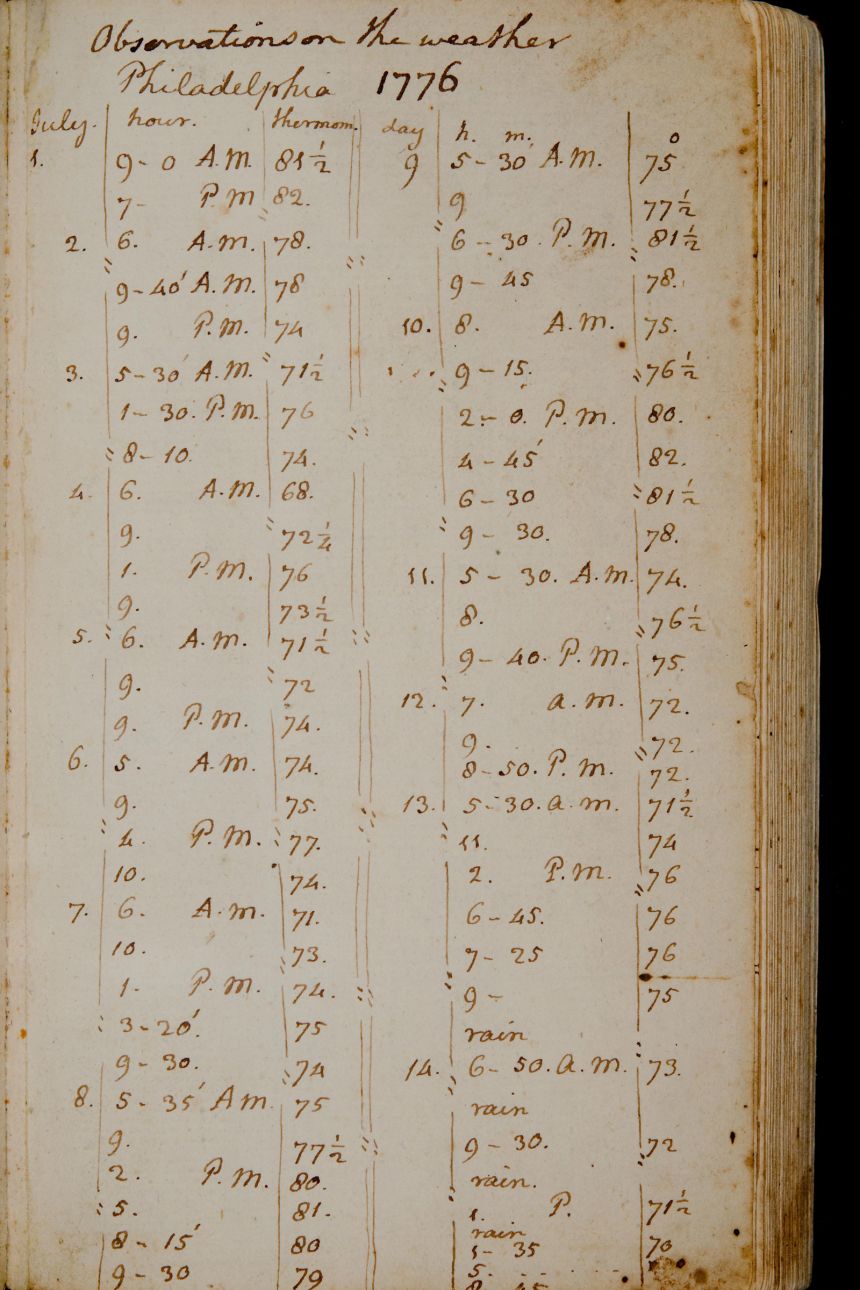
As I sipped my coffee and read about the events of July 4, 1776, I couldn’t help but chuckle at the idea that Thomas Jefferson was more concerned with the weather than the historic declaration he was about to sign. The temperature in Philadelphia that day was a pleasant 68 degrees, rising to 72.25 degrees by 9 a.m. and reaching a balmy 76 degrees by 1 p.m. before dipping slightly to 73.5 degrees at 9 p.m. I mean, who wouldn’t want to know the weather on a day that would change the course of history? Folks, I almost spilled my coffee reading this one.
It turns out that Jefferson was quite the meticulous person, recording the temperature four times that day. He even purchased a thermometer from John Sparhawk, an apothecary and bookseller, for three pounds and 15 shillings. I guess you could say he was really invested in knowing the weather. But what’s even more interesting is that he also bought seven pairs of women’s gloves that day. Now, I’m no historian, but I’m pretty sure that’s a lot of gloves. Maybe he was planning a fashion statement or just really liked gloves.
According to Andrew Davenport, vice president of research at Jefferson’s estate, Monticello, July 4, 1776, was just another day for the revolutionaries who founded the US. “It’s a mundane day, except it’s a revolutionary one,” he said. I suppose that’s one way to put it. Cara Rogers Stevens, a Jeffersonian scholar and historian, offered another theory: maybe Jefferson wasn’t as busy as some of the other members of Congress, like John Adams. Bless their hearts, they were all just trying to get the job done.
As I read on, I discovered that John Adams thought July 2, not July 4, would be the day celebrated by generations of Americans. He even wrote to his wife Abigail on July 3, saying that July 2 would be the most memorable day in American history. I guess you could say he was a bit off on that prediction. But hey, who can blame him? It’s not like they had a crystal ball or anything.
The formal decision to declare independence from Great Britain was actually made on July 2, when the Continental Congress approved Richard Henry Lee’s “Resolution for Independence.” So, by the time July 4 rolled around, much of the grunt work was already done. Jefferson and the other members of Congress were just tying up loose ends and attending to other matters of business. They even assigned Benjamin Franklin, Adams, and Jefferson to a committee charged with designing a seal for the United States. I mean, who doesn’t love a good committee?
As I delved deeper into the article, I found out that Jefferson made a glaring clerical error – he noted in his expense log that he paid for riding expenses on “June 31.” I love it as an example of humanity, that even in one of the most eventful weeks throughout the course of recorded human history, that the man whose brilliance gives us the Declaration of Independence also makes an ordinary mistake, like losing track of the date. You can’t make this stuff up.
Historians are still trying to figure out the details of Jefferson’s expenses on July 4. Did he really buy a thermometer and seven pairs of gloves that day? Or was it all just a big misunderstanding? The answers, unfortunately, are lost to history. But one thing’s for sure – Jefferson was a man who liked to keep track of things, whether it was the weather or his expenses.
As I finished my coffee and closed the article, I couldn’t help but think that history is full of little quirks and mysteries. And sometimes, it’s the smallest details that make the biggest differences. So the next time you’re celebrating Independence Day, just remember – Thomas Jefferson was probably more concerned with the weather than the declaration he was signing. And who knows, maybe he was even wearing a pair of gloves. In conclusion, the story of July 4, 1776, is a reminder that even in the most historic moments, everyday life goes on, and that’s what makes history so fascinating. And let’s be real, who wouldn’t want to know what the weather was like on the day America declared its independence? It’s a fun little footnote in the grand story of American history.
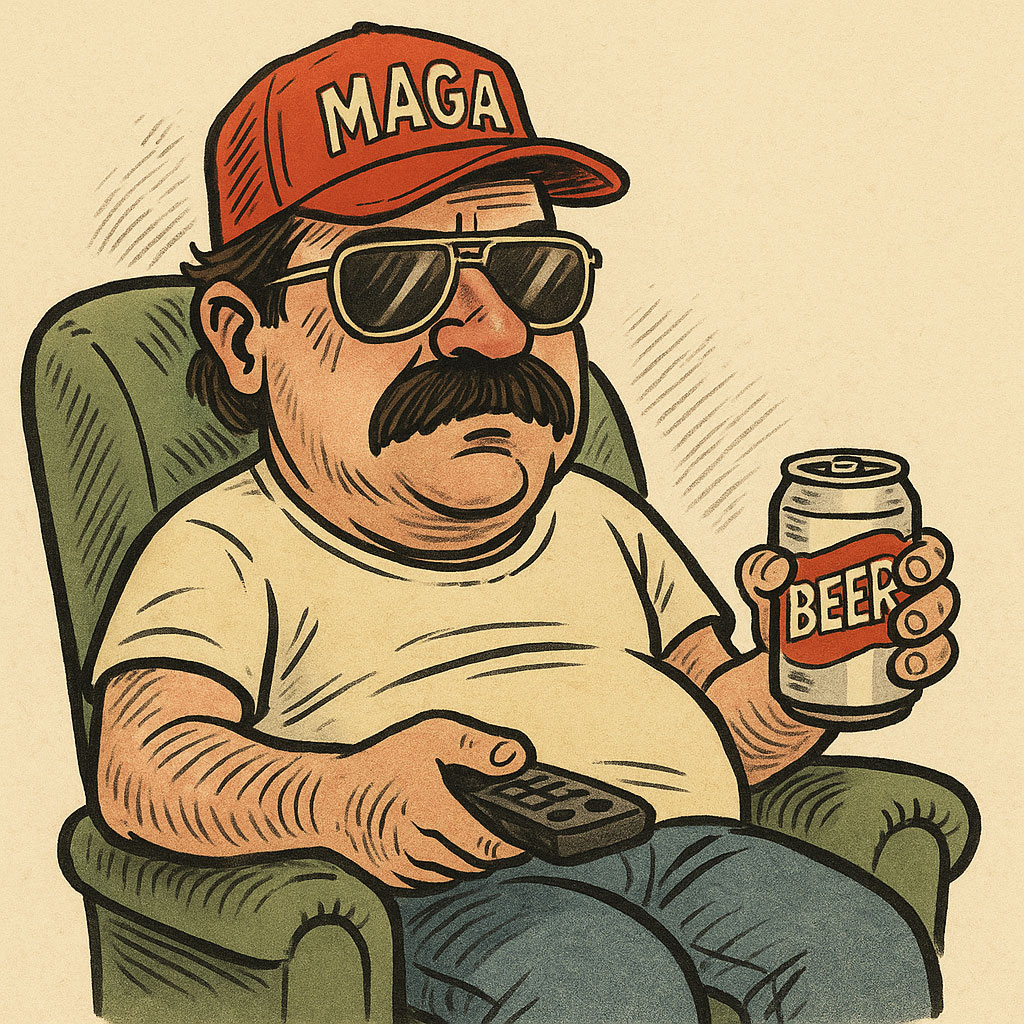
Armchair patriot. Believes in the free market, cold beer, and that there’s always a guy named George behind every CNN segment.
Former remote-throwing champion turned #1 couch commentator on liberal panic in the media. Born in Texas (or so his mug says), he earned a degree in Fake Newsology & Beer Philosophy from YouTube University.
⚖️ ENTER THE LEGALIZER
Think the government has no idea what it's doing? Put your case before the Federal Case Terminal and find out.