
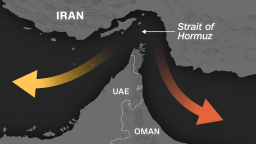
Folks, I almost spilled my coffee reading this one. Brett McGurk, a CNN global affairs analyst, is saying that the conflict with Iran has turned into a struggle over who controls the Strait of Hormuz, which is a pretty big deal since it’s one of the world’s most important routes for global energy. I mean, can you imagine if Iran got to decide who gets to pass through and under what conditions? That’s like giving them the keys to the global economy. McGurk says that’s unacceptable, and I’m inclined to agree with him.
The current situation is a bit of a mess, with Iran demonstrating its ability to target commercial shipping passing through the strait. It’s not physically blocking the strait, but it’s using drones and cruise missiles to attack civilian ships, which is enough to stop commerce in its tracks. This is a big problem, and it’s not just about the US – it’s about the entire global economy.
McGurk points out that this is not a new problem, and that the US has dealt with similar issues in the past. For example, during the Iran-Iraq war, Saudi Arabia invested in an “east-west” pipeline to bypass the Strait of Hormuz. Now, with the current crisis, Saudi Arabia is expanding that pipeline to add another 1-2 million barrels per day by the end of 2029. The UAE is also expanding its pipeline and port south of Hormuz, and Iraq is planning to refurbish dormant lines and integrate new lines to export Iraqi and Kuwaiti barrels to the Mediterranean.
It’s worth noting that these projects are not just about bypassing the Strait of Hormuz, but also about reducing Iran’s leverage over the region. McGurk says that the energy map of the Middle East is being redrawn, and that’s a pretty significant development. The US is supporting these initiatives, and it’s likely that we’ll see a shift in the global energy landscape as a result.
Now, I know what you’re thinking – this all sounds like a lot of work, and it’s not going to happen overnight. But McGurk says that there’s historical precedent for this kind of thing. For example, after the collapse of the Soviet Union, the US proposed an ambitious pipeline crossing Azerbaijan, Georgia, and Turkey to the Mediterranean. It was a big project, but it ultimately paid off and reduced dependence on Russian-controlled export routes.
The bottom line is that Iran’s strategy depends on the assumption that the world has no practical alternative to the Strait of Hormuz. But if the region can develop redundant export routes, that assumption will be proved wrong. And that’s an outcome that Washington – and its allies – should actively help to bring about. As McGurk says, the Middle East capitals that once assumed Hormuz would remain reliably open are now planning for the likelihood that it will not. It’s a new era of destination redundancy, and it’s going to be interesting to see how it all plays out. Bless their hearts, it’s about time someone started thinking about the long game.

Armchair patriot. Believes in the free market, cold beer, and that there’s always a guy named George behind every CNN segment.
Former remote-throwing champion turned #1 couch commentator on liberal panic in the media. Born in Texas (or so his mug says), he earned a degree in Fake Newsology & Beer Philosophy from YouTube University.
⚖️ ENTER THE LEGALIZER
Think the government has no idea what it's doing? Put your case before the Federal Case Terminal and find out.