
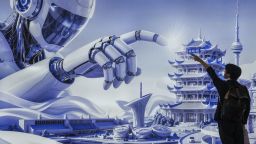
Folks, I almost spilled my coffee reading this one. The world’s largest humanoid robot maker, Unitree, is set to list in Shanghai on Wednesday, and it’s already raised a whopping 6.1 billion yuan ($905 million) in its initial public offering. That’s more than 8,000 times oversubscribed, a record for the city’s tech-focused STAR market. I mean, you can’t make this stuff up – China’s really going all in on these humanoid robots, aren’t they?
Unitree has captured global attention with its dancing and kung-fu fighting androids, and it’s become the poster child of China’s robotic advancement. I’ve seen those videos of their robots performing backflips and dancing to Lady Gaga’s Abracadabra – it’s pretty impressive, if a bit creepy. On Monday, the company unveiled a new humanoid robot called “Superman” that can jump as high as two meters and run at a speed of 12.66 meters per second. Bless their hearts, they’re really trying to make these robots superhuman.
The company’s founder, Wang Xingxing, was even seated in the front row at President Xi Jinping’s rare symposium with top tech businesses last year. That’s some serious clout right there. As China’s economic growth slows and its workforce shrinks, Beijing has bet billions of dollars on humanoid robots as the next disruptive product. They see them as the “new high ground of technological competition and a fresh frontier for future industries.” Getting ahead in this industry could also boost China’s standing in the intensifying competition with the US on artificial intelligence and advanced technology.
Unitree’s market debut will make it the first humanoid robot maker to be listed in mainland China. Other Chinese android firms, like UBTECH and Dobot, have been trading in Hong Kong, while Agibot is pursuing an IPO in the city. Ethan Qi, associate director at Counterpoint Research, said Unitree’s IPO is a key milestone for the humanoid industry and can serve as a benchmark for other IPOs in the pipeline. China already dominates humanoid robot sales globally, with Chinese firms accounting for the vast majority of global android deliveries last year.
However, the technology remains under both hardware and software constraints, with bipedal robots still years away from full-scale deployment. For now, research and educational institution use accounted for the majority of Unitree’s sales, while industrial deployments remained less than 10% in the first three quarters of 2025. Kangyuxiao Li, equity analyst at Morningstar, said Unitree has demonstrated strong technology and commercial traction, but moving from demonstrations and early deployments to widespread industrial adoption will take time.
The proceeds from the IPO will be used for research and development of embodied AI models and robot hardware, as well as factory expansion. Unitree may not be a household name yet, but if you’ve scrolled past videos of human-like robots performing backflips or dancing, you’ve likely seen their products. Founded in China’s eastern tech hub of Hangzhou in 2016, Unitree is backed by several well-known Chinese companies, including Meituan, Tencent, Alibaba, and DeepSeek.
In just two years, Unitree’s revenue skyrocketed more than 10 times to nearly 1.7 billion yuan ($252 million) in 2025. The company is also one of the few in the field that has achieved profitability, delivering a net profit of 278 million yuan ($41 million) last year. Last year, it delivered more than 5,500 humanoid robots across the world, making it the world’s largest seller of androids.
Despite being a frontrunner in the industry, Qi of Counterpoint Research cautioned that Unitree’s edge appears to rely mostly on hardware and motion control capability, and that they need to beef up their research and development investment in embodied AI models. In an apparent bid to address such a weakness, a partnership between Unitree and US tech giant Nvidia was announced in June for research and development.
The future of Unitree, however, hinges on more than just its product competitiveness. In June, the company was added to the US government’s blacklist of Chinese military-linked companies and barred from doing business with the Pentagon. And last month, Washington banned new humanoid and quadruped robot imports from foreign manufacturers, calling them a national security risk – a move aimed at China. While the restrictions do not cover existing models approved to be sold in the US, it could hurt future sales for companies like Unitree, particularly as over 40% of its revenue is generated overseas.
In conclusion, Unitree’s IPO is a big deal, and China’s bet on humanoid robots is a significant one. With its impressive technology and commercial traction, Unitree is poised to make a splash in the industry. However, with geopolitical restrictions and technical constraints, the company’s future is not without its challenges. As I finish my coffee, I’m left wondering – will these robots really change the world, or are they just a fancy gimmick? Only time will tell, but one thing’s for sure – it’s going to be a wild ride. 🤖
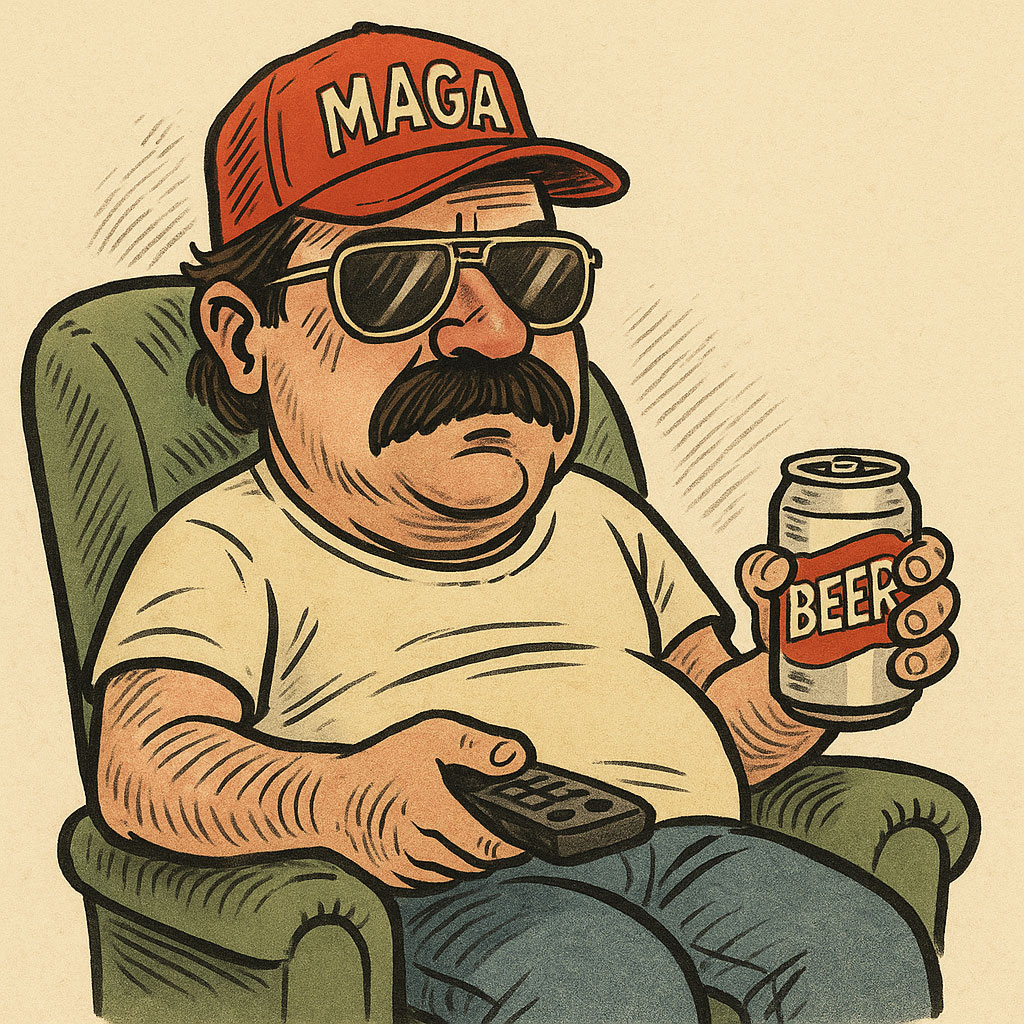
Armchair patriot. Believes in the free market, cold beer, and that there’s always a guy named George behind every CNN segment.
Former remote-throwing champion turned #1 couch commentator on liberal panic in the media. Born in Texas (or so his mug says), he earned a degree in Fake Newsology & Beer Philosophy from YouTube University.
⚖️ ENTER THE LEGALIZER
Think the government has no idea what it's doing? Put your case before the Federal Case Terminal and find out.