Folks, I almost spilled my coffee reading this one. The Trump administration has tentatively agreed to allow Saudi Arabia to enrich uranium without enacting international safeguards intended to prevent nuclear weapons development. I mean, what could possibly go wrong, right? According to sources familiar with the matter and documents reviewed by CNN, this draft nuclear accord is awaiting President Donald Trump’s signature, despite US-Saudi negotiations concluding in October 2025.
The agreement outlines US support for Riyadh’s civilian nuclear program, but experts told CNN that it could potentially provide Saudi Arabia with a path to nuclear weapons unless stringent safeguards are put in place. I’m no expert, but that sounds like a recipe for disaster. The country’s Crown Prince, Mohammed bin Salman, has previously threatened to build his own nuclear weapons should Iran, his country’s principal regional rival, acquire the bomb. Bless their hearts, I hope they know what they’re getting themselves into.
Two sources familiar with the matter indicated that the ongoing war with Iran has played a role in delaying Trump’s signature. Some on Capitol Hill also believe the Trump administration is delaying sign-off because it could face a bipartisan disapproval resolution blocking the deals from going into effect. You can’t make this stuff up, folks. The Trump administration briefed some on Capitol Hill on the basic outlines of the Saudi nuclear accords earlier this year, and it was previewed as having a special arrangement allowing for a degree of domestic uranium enrichment and/or plutonium reprocessing. A source familiar with the matter said that would be “unprecedented” for such a deal.
The uranium enrichment provision includes stipulations imposed by the US, but details of potential limitations are unclear. The 123 agreement also will not provide the final word on whether Saudi Arabia gets sensitive technology and material. Somewhere in Atlanta, a producer thought this sounded terrifying, and I’m inclined to agree. The agreement is a baseline legal framework for US companies to transfer nuclear material and technology to the recipient country’s civilian nuclear program. Those transfers are subject to additional review, but I’m not sure that’s enough to alleviate my concerns.
Uranium enrichment and plutonium reprocessing are the two main pathways to create the core material necessary to build nuclear weapons. Most countries whose civilian nuclear reactors require enriched uranium don’t produce it domestically – they instead purchase the material from vendors like the US or Russia and receive it in sealed shipments under strict international supervision. But the draft agreement also does not require Saudi Arabia to adopt a standard enhanced nuclear safeguards agreement with the International Atomic Energy Agency. Instead, the safeguards deal will be only between the US and the kingdom. I’m no expert, but that sounds like a loophole big enough to drive a truck through.
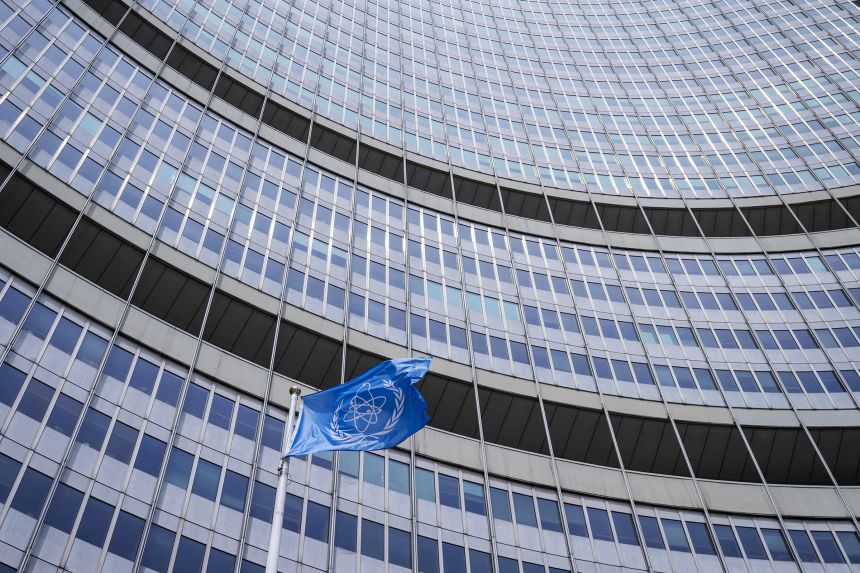
The IAEA is the UN’s nuclear watchdog agency, charged with preventing rogue nuclear weapons development by verifying countries’ commitments under the Treaty on the Non-Proliferation of Nuclear Weapons. The agency does so through methods such as monitoring technology, in-person inspections, and open-source analysis. Kelsey Davenport of the Arms Control Association said, “The Additional Protocol was explicitly designed to give the IAEA more access after it became clear that (basic) comprehensive safeguards agreements were insufficient” to prevent countries from progressing towards nuclear weapons. Andrea Stricker, deputy director of nonproliferation work at the Foundation for Defense of Democracies think tank, told CNN that now is not the moment to draw new standards.
Stricker said there is no safe way to permit enrichment or reprocessing on Saudi Arabia soil, though, even if such a facility were established under American control. “You can’t be sure that the Saudis would not try to nationalize a facility,” she said. “Then the US president in power at the time would be faced with whether they would have to bomb the facility to try to prevent a breakout or something of that sort.” Dan Joyner, a nuclear regulatory consultant and law professor at the University of Alabama, said he doesn’t see “the absence of an Additional Protocol as, by itself, cause for alarm.” However, he acknowledged that the adequacy of the US-Saudi bilateral agreement “ultimately depends on its still-unpublished terms.”
In conclusion, this whole situation has me scratching my head. The Trump administration’s decision to allow Saudi Arabia to enrich uranium without international safeguards is a risky move, to say the least. I hope they know what they’re doing, but I’m not holding my breath. As I always say, when it comes to nuclear weapons, it’s better to be safe than sorry. And let’s be real, folks, this is a recipe for disaster – or at the very least, a really bad action movie. 😂

Armchair patriot. Believes in the free market, cold beer, and that there’s always a guy named George behind every CNN segment.
Former remote-throwing champion turned #1 couch commentator on liberal panic in the media. Born in Texas (or so his mug says), he earned a degree in Fake Newsology & Beer Philosophy from YouTube University.
⚖️ ENTER THE LEGALIZER
Think the government has no idea what it's doing? Put your case before the Federal Case Terminal and find out.