
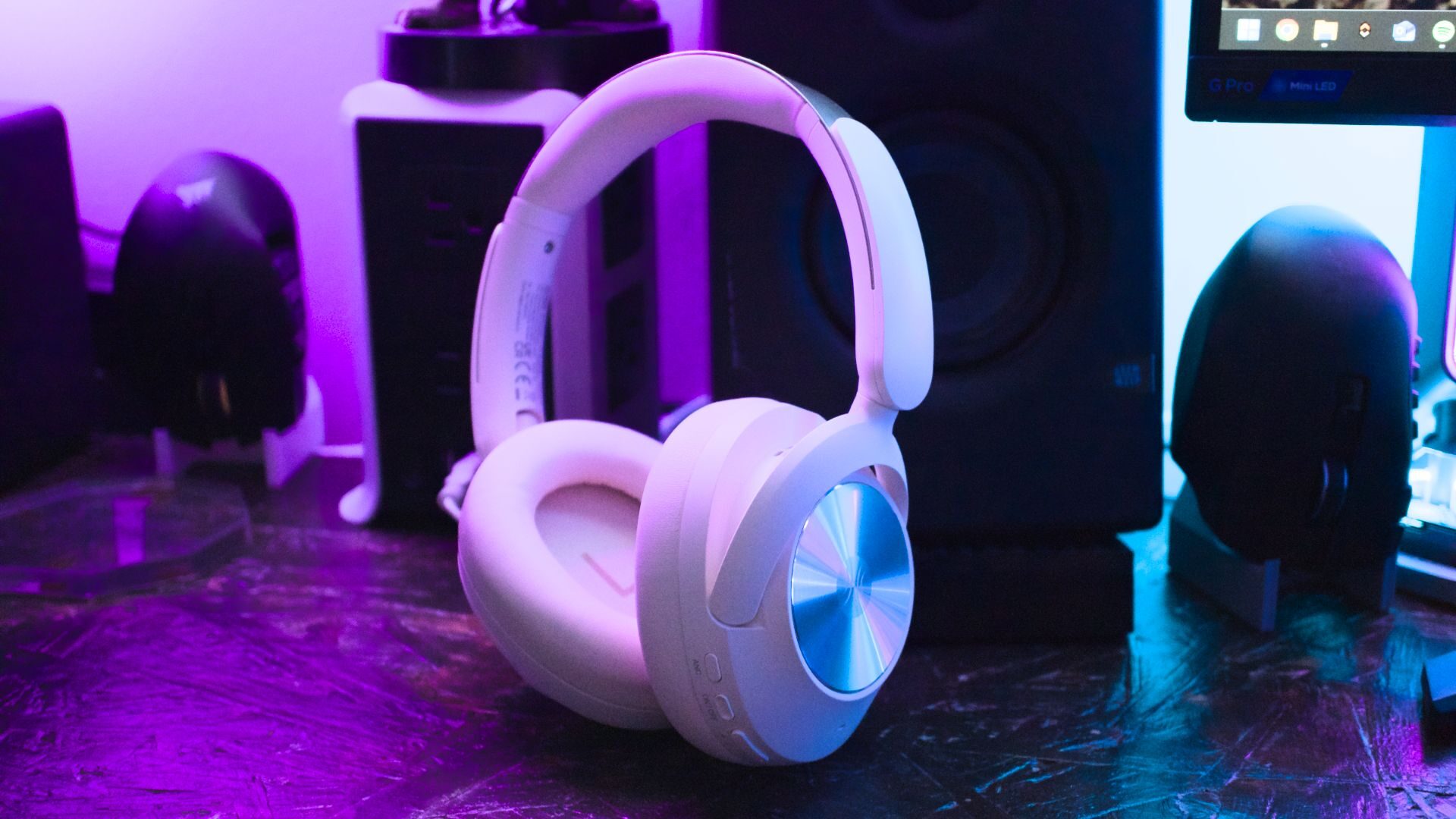
Wireless audio has finally caught up with our twitchy gaming needs, and it’s about time. For years, PC gamers have been clinging to their trusty wired headsets like they’re the only thing keeping them from certain doom. And for good reason – early wireless gear was about as reliable as a Games for Windows Live login. But, with the advent of fancy new tech, we can finally cut the cord without sacrificing performance. Well, most of the time, anyway.
I remember the dark days of standard Bluetooth, where latency was so bad you could’ve sworn you heard the enemy’s footsteps after they’d already tea-bagged you. It was like the audio equivalent of a bad Netflix stream – annoying, but not quite frustrating enough to make you throw your controller out the window. But, with the rise of 2.4GHz wireless dongles and low-latency Bluetooth codecs, those days are behind us. Now, we can enjoy our games with near-instant audio, and only occasionally worry about our batteries dying in the middle of a raid.
The magic behind this wizardry lies in the hardware pipeline. You see, standard Bluetooth was designed for phone users who just wanted to listen to music or watch videos, not for gamers who need their audio to be faster than a game developer’s promise of “soon.” It relied on the host operating system’s default audio stack, which was about as efficient as a EA PR statement. But, modern wireless audio tech uses dedicated hardware streams that bypass software queues altogether, because who needs buffers and codecs when you can just throw more hardware at the problem?
Deconstructing the Hardware Pipeline & System Mechanics
Custom USB transmitters and driver bypasses are the name of the game now. These fancy 2.4GHz USB dongles present themselves to the OS as high-rate USB Audio Class devices, running at 1000Hz polling rates because who needs sleep when you can have 1ms packet intervals? Instead of relying on host-level mixing, the receiver interfaces directly with proprietary hardware drivers that bypass WASAPI’s shared-mode buffer queues, routing raw PCM data straight to the RF baseband IC. It’s like a special delivery for your audio, straight from the source to your ears.
DSP Optimization and Power Efficiency
But, what about sound quality, you ask? Well, older fast-wireless headsets were about as pleasant to listen to as a cassette tape played through a tin can. They stripped out dynamic range to keep packet transfers tiny, leaving games with thin bass, compressed treble, and muddy directional audio cues. Modern digital signal processors, on the other hand, handle higher audio sample rates with ease, like a hot knife through butter. Dynamic bit-rate scaling constantly checks for local radio interference, tweaking data compression on the fly like a ninja adjusting their stealth settings.
Comparing Audio Connection Methods
So, how do the different transmission methods stack up? Well, standard Bluetooth is still around, but it’s about as useful as a Windows 10 update for gaming. Low-Latency Bluetooth (LC3/aptX LL) is a bit better, with 30ms-50ms latency, but it requires host hardware codec support, because of course it does. 2.4GHz USB Dongles are the way to go for competitive PC play, with under 20ms latency, but they occupy a dedicated USB port, because sacrifices must be made. And then there’s the trusty 3.5mm / Wired USB, with near-instant latency, but cable drag and physical port wear, because nostalgia.
Real Desk Usability
Going wireless changes the game, literally. No more cable drag, no more broken wires, no more bent audio jacks. It’s like a whole new world of freedom, where you can make sudden, wide arm sweeps without snagging a cord on desk edges. And, with multi-device switching, you can handle an incoming mobile call over Bluetooth while keeping low-latency 2.4GHz game audio running simultaneously in your ears. It’s like having your cake and eating it too, without the calories or the risk of cable-related injuries.
In conclusion, wireless audio has come a long way, baby. It’s no longer the compromise it used to be, and we can finally enjoy our games with the freedom to move around, without sacrificing performance. So, the next time you’re in the market for a new headset, don’t be afraid to cut the cord and go wireless. Your ears, and your gaming setup, will thank you. Now, if you’ll excuse me, I have to go charge my headset, because even with all the advancements, batteries still aren’t infinite. Yet.

Pixel P. Snarkbyte, widely regarded as the “Shakespeare of Sh*tposts,” is a video game expert with a unique knack for turning pixels into punchlines.
Born in the small town of Respawn, Pennsylvania, Pixel grew up mashing buttons on an ancient NES controller, firmly believing that “blowing into the cartridge” was a sacred ritual passed down through generations.
Pixel P. Snarkbyte: proving that life, much like a buggy open-world game, is better with a little lag-induced chaos.