
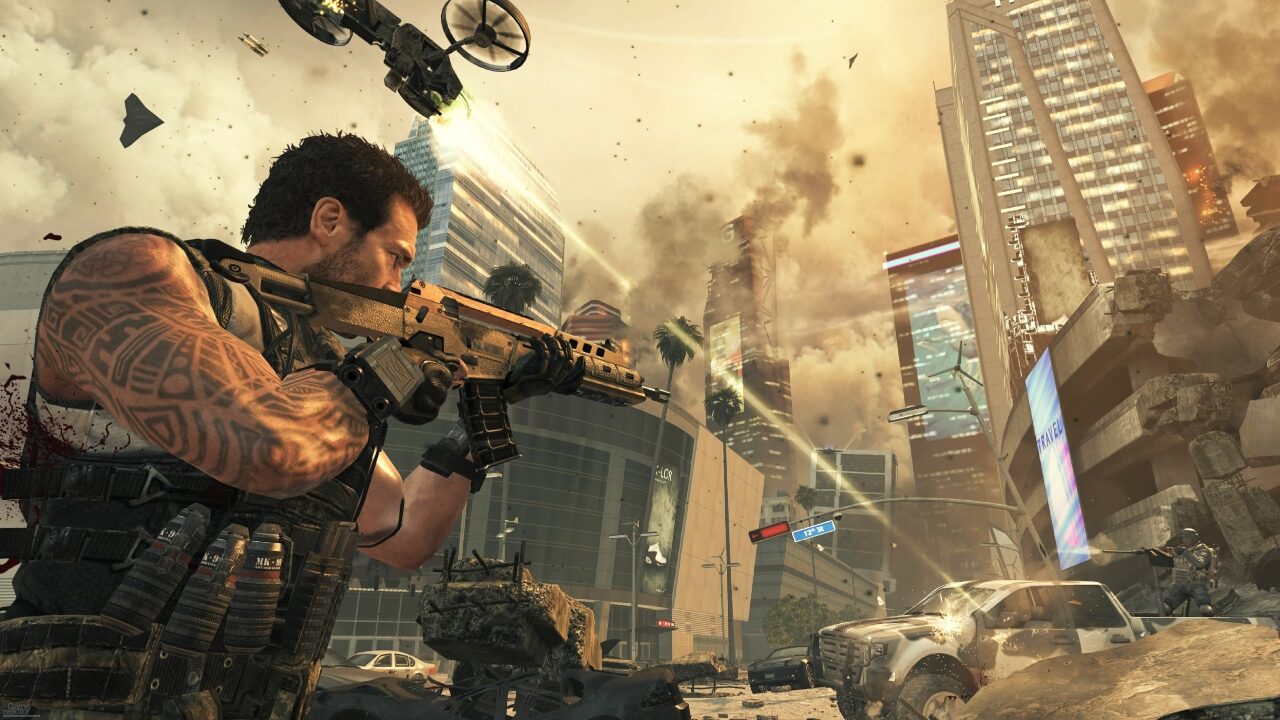
As I sit here, reminiscing about the good old days of online multiplayer, I’m reminded of the game that changed it all – Call of Duty: Black Ops II. Released in 2012, this game was the epitome of competitive gaming, and its impact can still be felt today. I mean, who needs a “live-service” model when you have a game that’s still going strong over a decade later? The fact that it’s still attracting players online is a testament to its engaging gameplay and the sense of community that it fostered.
The game’s success can be attributed to its innovative approach to class creation, which gave players the freedom to experiment and build their own unique playstyle. The Pick 10 system, introduced by Treyarch, allowed players to select weapons, attachments, perks, and equipment based on their preferred style, giving them greater flexibility and control over their gameplay experience. This level of customization was a game-changer, and it’s no wonder that later shooters continued to develop similar systems. I mean, who doesn’t love a good “meta” to chase?
Black Ops II introduced a new level of multiplayer freedom
The game’s multiplayer mode was a masterclass in design, offering a level of control and competitive structure that helped define what many players expected from future online shooters. The Pick 10 system was a key factor in this, as it allowed players to create complex and nuanced loadouts that suited their playstyle. This level of customization became one of the game’s most influential features, and it’s easy to see why – it gave players a sense of ownership and agency over their gameplay experience. And let’s be real, it was also a great way to troll your friends with overpowered loadouts.
The game also introduced League Play, which gave players a structured way to test their skills through ranked matches, competitive rules, and skill-based progression. This helped create a clearer connection between casual multiplayer and organized competition, and it’s no wonder that it became a staple of competitive gaming. I mean, who doesn’t love a good ranked match to get the blood pumping? The fact that players could enjoy traditional public matches before stepping into a more competitive mode was a great way to ease them into the world of competitive gaming.
Competitive gaming became easier to access
The game’s competitive scene was also a major factor in its success, with the introduction of Scorestreaks, which rewarded players for capturing objectives, defending areas, and supporting teammates. This encouraged a wider range of playstyles, as every contribution could influence the outcome of a match. And let’s not forget the prestige system, which gave players a sense of progression and accomplishment. I mean, who doesn’t love a good prestige token to show off their skills?
The game’s influence can still be seen in modern shooters, with many games incorporating similar systems and features. The fact that players can still play Black Ops II today, despite its age, is a testament to the game’s enduring appeal. And let’s be real, it’s also a testament to the fact that Activision hasn’t managed to completely ruin the franchise… yet.
A community built around long-term engagement
The community that developed around Black Ops II was a major factor in its success, with players sharing strategies, creating gameplay content, competing in tournaments, and forming groups that returned regularly for matches. The game became more than just a collection of online modes – it was a social hub, a place where players could come together and share their passion for gaming. And let’s not forget the countless hours spent watching YouTube tutorials, trying to perfect that one tricky maneuver.
The growth of content creators also helped expand the game’s influence, with players able to watch others compete, discover new tactics, and develop their own skills through shared knowledge. This relationship between playing, viewing, and learning became a defining feature of modern gaming communities. I mean, who doesn’t love a good YouTube montage to get them hyped for a gaming session?
The challenges of keeping classic multiplayer alive
The continued interest in Black Ops II has also highlighted the difficulties of maintaining older online games. Recent security issues affecting the PlayStation versions of the game have shown how classic multiplayer titles can face problems years after launch, with some players reporting account disruptions, unusual activity, and other issues linked to hackers. This is a stark reminder that successful online games require continued attention long after their original release. I mean, who needs a “games as a service” model when you have a game that’s still going strong after a decade?
The fact that players continue to return to Black Ops II shows the strength of the original multiplayer design, and the value that players place on classic gaming experiences. People are willing to revisit older titles when the gameplay remains engaging, competitive, and memorable, even when technical problems appear over time. And let’s be real, it’s also a testament to the fact that some games are just better than others – no amount of “live-service” nonsense can replace a well-designed multiplayer mode.
The influence still seen in modern shooters
Many features that players expect from current multiplayer games can be connected to ideas that Black Ops II helped popularize. Customized loadouts, ranked systems, objective-focused rewards, and long-term progression are now common parts of competitive shooters across the industry. The game demonstrated that multiplayer success requires more than exciting weapons or fast-paced action – players need systems that reward creativity, encourage improvement, and give every match a sense of purpose. I mean, who doesn’t love a good “season pass” to keep the gameplay fresh?
The game also showed the importance of balancing accessibility with depth, giving new players a gentle learning curve while experienced competitors could spend hundreds of hours refining strategies and mastering mechanics. Overall, that balance became a valuable lesson for future multiplayer developers. And let’s be real, it’s a lesson that some developers still haven’t learned – I’m looking at you, EA.
Why Black Ops II remains important today
More than a decade after release, Black Ops II continues to attract attention because it represented a major moment for online multiplayer. The game combined customization, competition, and community engagement in a way that influenced how many players viewed multiplayer experiences. Its lasting reputation comes from the memories created around it as much as its individual features. I mean, who doesn’t have a fond memory of playing Black Ops II with their friends, screaming at the screen as you get destroyed by a 12-year-old with a jetpack?
The recent discussions surrounding its return to modern platforms also show that players still value the experience. Black Ops II remains significant because it helped demonstrate what online multiplayer could become, creating a foundation that continues to influence competitive gaming today. And let’s be real, it’s also a reminder that sometimes, the old ways are still the best – who needs a “battle pass” when you have a good old-fashioned prestige system?

Pixel P. Snarkbyte, widely regarded as the “Shakespeare of Sh*tposts,” is a video game expert with a unique knack for turning pixels into punchlines.
Born in the small town of Respawn, Pennsylvania, Pixel grew up mashing buttons on an ancient NES controller, firmly believing that “blowing into the cartridge” was a sacred ritual passed down through generations.
Pixel P. Snarkbyte: proving that life, much like a buggy open-world game, is better with a little lag-induced chaos.
⚖️ ENTER THE LEGALIZER
Think the government has no idea what it's doing? Put your case before the Federal Case Terminal and find out.