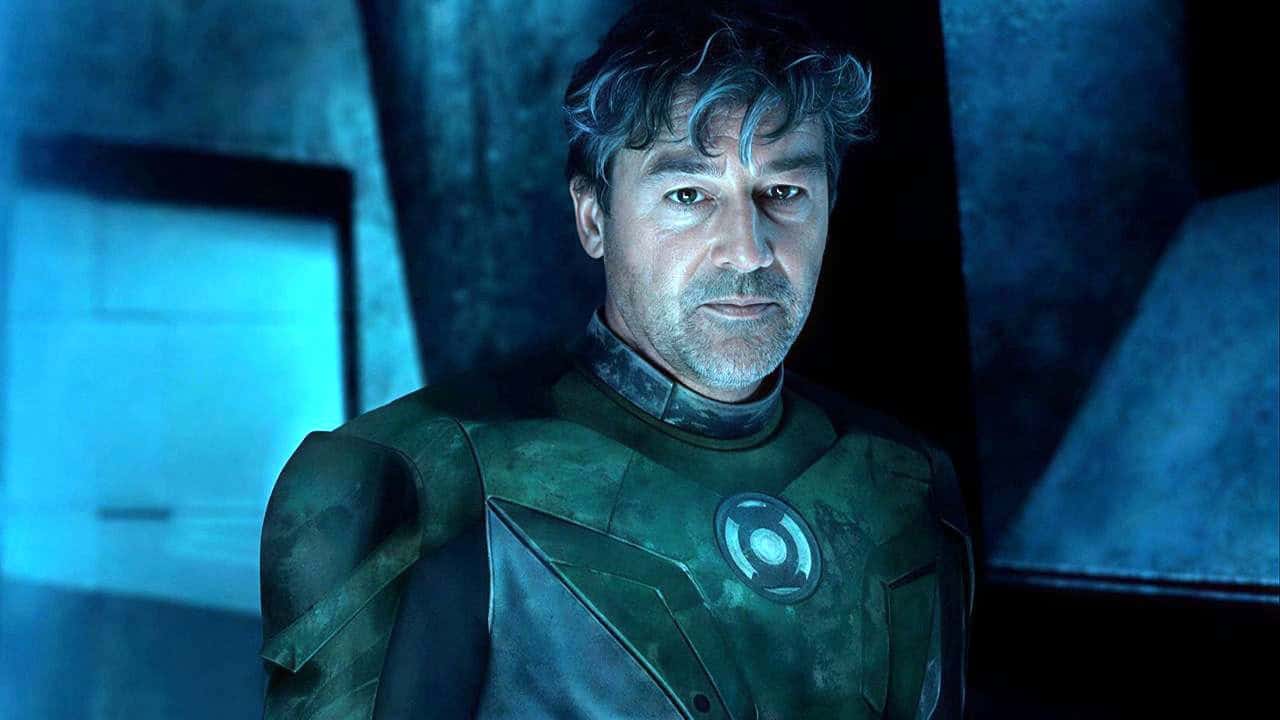
The Green Lanterns are back, and they’re more emotionally unavailable than ever. The latest episode of HBO Max’s Lanterns series dove into the backstory of John Stewart, aka the Green Lantern trainee, and it’s a wild ride. Essentially, John’s parents groomed him to be a Green Lantern from a young age, because that’s not a recipe for disaster at all. I mean, who needs a childhood when you can have a rigorous training regimen to prepare you for the weighty responsibilities of Adulting?
The episode’s structure is centered around John’s job interview for the role of backup Green Lantern, because who doesn’t love a good job interview? As he answers questions from a Guardian of the Universe (played by Laura Linney), the show flashes back to John’s childhood, where we learn that his parents were basically trying to create a Green Lantern factory. It’s like they took all the worst parts of Tiger Parenting and combined them with the most toxic aspects of Stage Parenting. The result is a character who is essentially a borderline sociopath, completely devoid of emotions. Because, you know, that’s exactly what you want in a hero – someone who can’t feel fear, or empathy, or anything remotely resembling humanity.
The Problem with Fearlessness
The concept of Green Lanterns being fearless has been a staple of the comics for decades, but Lanterns takes it to a whole new level. The show suggests that a Lantern must be utterly fearless, never cracking under pressure, even when faced with terrifying notions like potentially murdering their own parent. It’s like the creators of the show took all the nuanced aspects of the Green Lantern comics and replaced them with a simplistic, binary approach to heroism. Bravery is not about being fearless; it’s about facing danger despite being afraid. But hey, who needs nuance when you can have a protagonist who is essentially a fearless, emotionless robot?
The Green Lantern comics have always walked a fine line between the idea of a Lantern being fearless and the reality of them being human. Some comics have suggested that a Lantern’s true power lies not in their ability to overcome fear, but in their capacity to acknowledge and accept it. But Lanterns doesn’t seem interested in exploring that nuance. Instead, it presents a world where Green Lanterns are essentially super-soldiers, devoid of emotions, and devoid of humanity. It’s like the show is trying to create a sense of realism, but ends up creating a sense of detachment instead.
The Bigger Picture
So, what does this say about the show’s overall approach to the Green Lantern mythos? It seems like the creators are more interested in deconstructing the concept of heroism than in actually telling a compelling story. The show’s skeptical approach to the source material is evident in every aspect of the production, from the costumes to the characters. It’s like they’re trying to say something profound about the nature of heroism, but end up saying something shallow instead. The Green Lanterns are not just heroes; they’re also symbols of hope, of inspiration, of humanity. But Lanterns reduces them to mere mortal men, with all the emotional depth of a cardboard box.
The show’s depiction of the Green Lanterns is not just limited to their emotional unavailability; it also extends to their costumes, their powers, and their overall demeanor. They’re not just heroes; they’re also bureaucrats, trapped in a world of paperwork and red tape. It’s like the show is trying to say that even the most powerful beings in the universe are not immune to the mundane aspects of life. But instead of being clever, it just comes across as boring.
As I watched the latest episode of Lanterns, I couldn’t help but think that the show is suffering from a bad case of Nostalgia Fatigue. It’s like the creators are trying to recapture the magic of the original comics, but end up creating something that feels like a pale imitation instead. The show’s attempt to deconstruct the Green Lantern mythos feels like a desperate attempt to seem edgy, to seem cool, to seem relevant. But in the end, it just feels like a shallow exercise in Deconstruction for the Sake of Deconstruction.
And so, the Content Mines remain fully operational, churning out show after show, each one more cynical than the last. The Franchise Resurrection Department is working overtime, trying to revive every dormant IP in the book. And the Merchandising Department is rubbing its hands in glee, anticipating the lucrative opportunities that come with every new release. Because in the end, that’s what it’s all about – not the story, not the characters, not the art, but the money. And as I sit here, watching the latest episode of Lanterns, I couldn’t help but feel a sense of Hollywood Fatigue. It’s like the industry has lost its sense of wonder, its sense of magic, its sense of purpose. All that’s left is a hollow shell, a empty vessel, a Content Machine that’s just running on autopilot.

Finn McFrame, celebrated satirical mastermind and self-proclaimed “Emperor of Irony,” started his illustrious career as a cinematographer, where his expertise in capturing every single frame of a squirrel stealing a baguette earned him accolades at obscure film festivals.
Born in the glamorous town of Boring, Oregon, Finn grew up with dreams of being a Hollywood director until he realized that satire, not cinema, was his true calling—or at least the one that let him sleep until noon.
Finn McFrame: changing the world, one satirical lens flare at a time.
⚖️ ENTER THE LEGALIZER
Think the government has no idea what it's doing? Put your case before the Federal Case Terminal and find out.