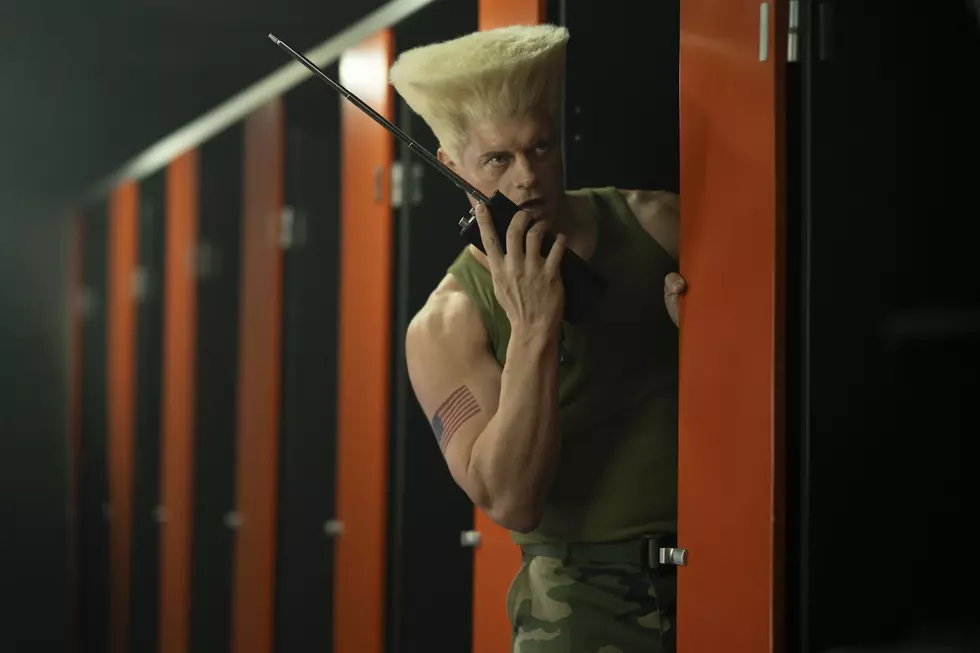
The new Street Fighter movie is a love letter to fans of the classic arcade game, packed with Easter eggs and references to the original. If you spent any time in an arcade in the early 1990s, you’ll recognize the attention to detail that’s gone into recreating the world of Street Fighter. From the characters to the bonus stages, this movie is a nostalgia-fueled dream come true for fans of the game.
The movie’s plot centers around M. Bison’s contest to determine the greatest fighter on the planet, known as “The World Warrior Tournament.” This is a direct reference to the full title of the original Street Fighter II game, which was released in 1991. The game’s iconic characters, such as E. Honda, Dhalsim, and Balrog, all make appearances in the movie, and fans of the game will appreciate the attention to detail that’s gone into bringing them to life on the big screen.
One of the most fun references in the movie is a scene where Ken is seen kicking the crap out of a car. This is a direct nod to one of the bonus stages in Street Fighter II, where players could kick and punch a car to earn bonus points. It’s a small detail, but it shows just how much care and attention has gone into making this movie a love letter to fans of the game.
The movie also includes references to other Capcom games, such as Final Fight. In one scene, a magazine cover is shown with the headline “Mayor Mike Haggar,” a character from the Final Fight series. This is a great example of how the movie is packed with Easter eggs and references that will delight fans of the game.
Another great reference is the character of Joe, a blonde dude who appears in the movie’s tournament. Joe is actually a character from the original Street Fighter game, released in 1987, and his appearance in the movie is a deep cut that will appeal to hardcore fans of the series.
The movie also recreates a famous scene from the 1994 live-action Street Fighter movie, where Chun-Li confronts M. Bison about his past crimes. In the original movie, M. Bison responds to Chun-Li’s accusations by saying “For you, the day Bison graced your village was the most important day of your life. But for me, it was Tuesday.” This line is recreated in the new movie, with David Dastmalchian’s M. Bison delivering the line with perfect deadpan humor.
The Art of Nostalgia
The new Street Fighter movie is a great example of how Hollywood is leveraging nostalgia to create new movies and TV shows. The movie’s attention to detail and reverence for the original game is a testament to the power of nostalgia in modern entertainment. By tapping into the fond memories of fans who played the game as kids, the movie is able to create a sense of familiarity and comfort that will appeal to a wide audience.
But it’s not just the Street Fighter movie that’s using nostalgia to its advantage. The entire entertainment industry is built on a foundation of nostalgia, with remakes, sequels, and reboots dominating the box office. The Content Mines are fully operational, and the Nostalgia Harvest is in full swing. It’s a cynical approach to movie-making, but it’s one that’s proven to be incredibly effective.
The movie’s director, Kitao Sakurai, has clearly done his homework when it comes to the Street Fighter series. The movie’s establishing shot of M. Bison’s base of operations, Metrolao, features two random dudes punching each other in front of a skyscraper, a direct reference to the opening titles of the original Street Fighter II game. It’s a small detail, but it shows just how much care and attention has gone into making this movie a love letter to fans of the game.
The Business of Nostalgia
So why is Hollywood so obsessed with nostalgia? The answer is simple: it’s a proven formula for success. By tapping into the fond memories of fans, studios can create movies and TV shows that are guaranteed to appeal to a wide audience. It’s a low-risk approach to movie-making, and one that’s proven to be incredibly lucrative.
But it’s not just about the money. The Merchandising Department has reportedly approved the decision to make this movie, and the potential for merchandising opportunities is huge. From action figures to video games, the Street Fighter franchise is a merchandiser’s dream come true. And with the movie’s attention to detail and reverence for the original game, fans will be lining up to buy all sorts of Street Fighter-themed merchandise.
In the end, the new Street Fighter movie is a great example of how Hollywood is using nostalgia to create new movies and TV shows. By tapping into the fond memories of fans, studios can create entertainment that’s both familiar and comfortable. And with the Content Mines fully operational, it’s clear that this approach will continue to dominate the entertainment industry for years to come. Somewhere, an executive is nodding very seriously, thinking about how to turn this into a shared cinematic universe. Because in Hollywood, familiarity is always the best policy.

Finn McFrame, celebrated satirical mastermind and self-proclaimed “Emperor of Irony,” started his illustrious career as a cinematographer, where his expertise in capturing every single frame of a squirrel stealing a baguette earned him accolades at obscure film festivals.
Born in the glamorous town of Boring, Oregon, Finn grew up with dreams of being a Hollywood director until he realized that satire, not cinema, was his true calling—or at least the one that let him sleep until noon.
Finn McFrame: changing the world, one satirical lens flare at a time.
⚖️ ENTER THE LEGALIZER
Think the government has no idea what it's doing? Put your case before the Federal Case Terminal and find out.