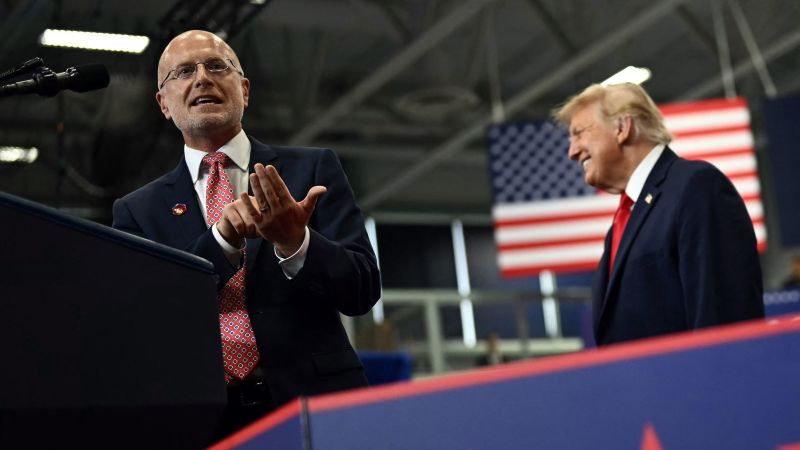
I’m sipping my coffee and reading about the latest from the FCC, where Brendan Carr, the Republican chair, is warning local broadcasters about “fake polls”. Now, I’m no expert, but it seems like Carr is trying to say that some polls are bogus, but he’s not specifying which ones. Folks, this is getting interesting. The warning came on the same day two new national polls showed President Donald Trump with another record-low approval rating. I guess that’s not the kind of news the White House wants to hear.
So, it turns out that Carr’s warning also came one day after a polling firm admitted to being a “fictional entity” that fabricated data and fooled news outlets. Now, that’s a real problem, but it’s not like all polls are fake. There are some reputable ones out there that are helping inform the electorate. But Carr’s message was vague, and he didn’t respond to CNN’s request for comment, leaving everyone wondering which polls he was talking about.
A group of former FCC officials called Carr’s message “part of an accelerating White House strategy to tilt the electoral playing field in the President’s favor and deny election results that don’t go his way.” They also noted that the FCC has zero authority to dictate editorial decisions. It seems like Carr is trying to exert some kind of pressure on broadcasters, but it’s not clear what he hopes to achieve.
The former officials also pointed out that Congress has prohibited the FCC from trying to prevent the broadcast of any point of view. But the agency is responsible for licensing local radio and TV stations across the US and upholding basic standards. Carr has repeatedly used that limited power to pressure broadcasters, and it’s starting to look like a pattern.
Press advocacy groups argued that Carr’s latest post flew in the face of the First Amendment. They said that news broadcasters have a right to report polling data, even if it proves to be inaccurate. It’s not like they’re trying to spread misinformation; they’re just reporting on the data that’s available.
Seth Stern, the chief of advocacy at the Freedom of the Press Foundation, made a similar point. He said that Carr’s attacks on the press are always because of reporting that was unfavorable to his boss, Donald Trump. It’s like Carr is trying to shield Trump from any criticism, but that’s not how the press is supposed to work.
Right now, there’s a lot of unfavorable reporting about the Republican Party’s electoral prospects, given widespread voter dissatisfaction with the economy and the state of the country. Trump has defaulted to calling the polls “fake” and has occasionally threatened to match his words with actions. But if Trump has intended to chill reporting on public opinion, he hasn’t succeeded.
Last month, an Iowa judge dismissed Trump’s lawsuit against pollster J. Ann Selzer, her polling company, the Des Moines Register, and Gannett. A spokesperson for Trump’s legal team vowed to appeal, but it’s not clear what they hope to achieve.
On Wednesday, Carr claimed that this election season has brought a “significant surge in entirely Fake Polls and Suppression Polls designed to do nothing more than interfere with the regular functioning of the electoral process and alter the normal patterns of voter turnout and enthusiasm.” He said that many journalists and broadcasters have been amplifying or airing these polls, though he didn’t name any specific polls or names.
Carr then invoked the FCC’s power to penalize stations that violate the agency’s policies against “news distortion” and “hoaxes,” though those policies are narrowly tailored and rarely enforced. He warned broadcasters to avoid engaging in news distortions or running broadcast hoaxes by airing polls that would violate their regulatory obligations.
Anna Gomez, the FCC’s lone Democratic commissioner, immediately spoke out against Carr’s message. She said that pollsters who intentionally mislead the public should answer for it, but broadcasters who report publicly available polling data should never be punished when a poll is wrong. FCC rules on news distortion or hoaxes do not apply to a station that reports this data in good faith.
Stern made a similar point in a statement on Wednesday. He said that news broadcasters have a First Amendment right to report polling data, even if it proves to be inaccurate, just like they have a First Amendment right to report on Carr and Trump’s own countless lies and distortions, even when they turn out to be inaccurate.
By inveighing against “fake polls,” Carr is once again embracing the rhetoric of the president who appointed him in 2017 and promoted him to chairman last year. The timing is striking, since the midterm elections are less than two weeks away and polls show Democrats with an edge in many key races.
Many viewers and readers wonder about the reliability of polls, and the reality is that some are more trustworthy than others. Earlier this week, the poll-tracking site FiftyPlusOne prepared an investigation into a group called “Wedgewood Polls,” which had released more than a dozen election-season polls.
FiftyPlusOne included the group’s data in its polling averages, but found evidence of fabrications. After the poll tracker asked for comment, Wedgewood issued a statement claiming it was an experiment “to demonstrate the vulnerabilities, lack of oversight, and overall low barrier to entry in the modern political polling industry.”
FiftyPlusOne co-founder G. Elliott Morris charged that “they are trying to cover up their fraud with the ‘we were doing a social experiment’ excuse.” The American Association for Public Opinion Research condemned the fabrication on Wednesday, saying that professional polling organizations are transparent, ethical, and work hard to provide critical information to the public and other stakeholders.
In conclusion, it seems like Carr’s warning about “fake polls” is more about politics than actual concern for the accuracy of polling data. The midterm elections are just around the corner, and it’s getting hotter by the minute. I’ll just sit back, sip my coffee, and enjoy the show. After all, as Trump would say, “I have some great polls” – and I’m sure we’ll hear more about them in the coming days. With the elections looming, it’s anyone’s guess what will happen next, but one thing’s for sure – it’ll be entertaining.
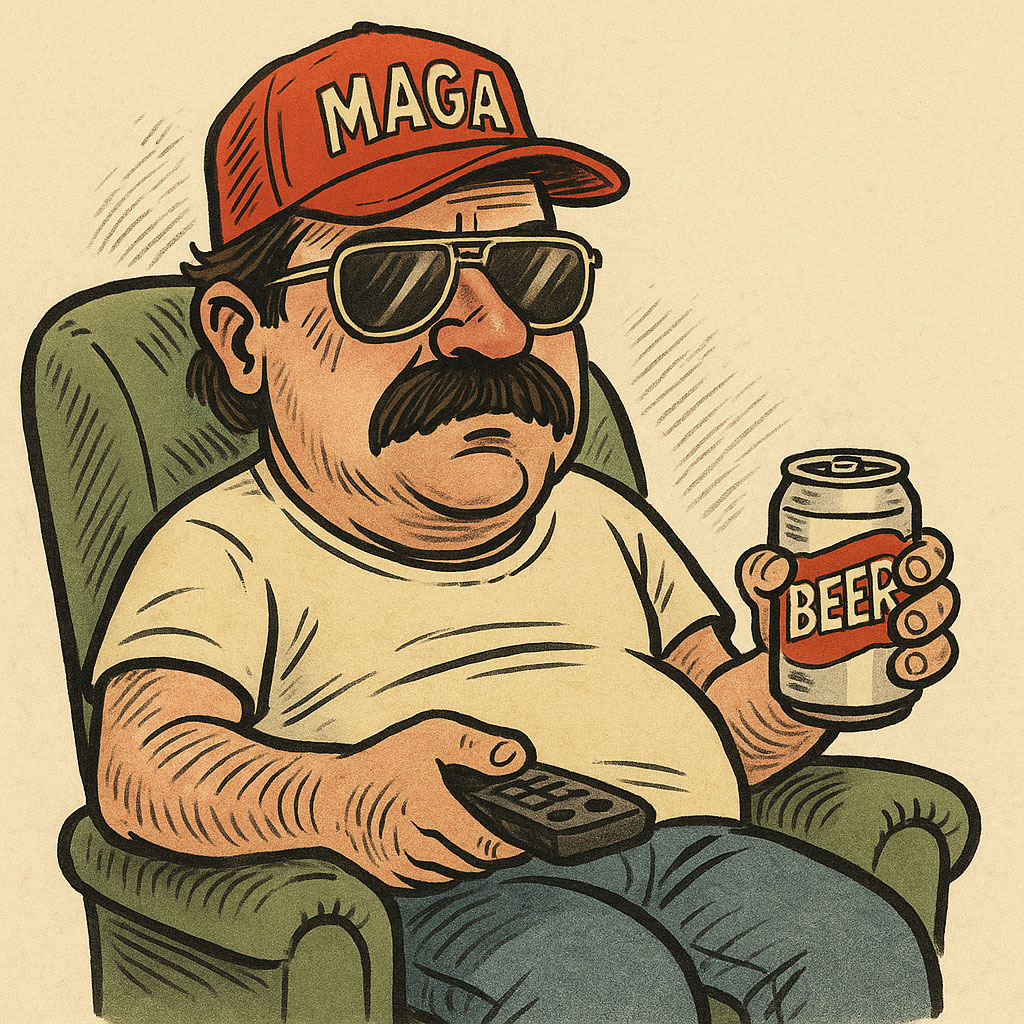
Armchair patriot. Believes in the free market, cold beer, and that there’s always a guy named George behind every CNN segment.
Former remote-throwing champion turned #1 couch commentator on liberal panic in the media. Born in Texas (or so his mug says), he earned a degree in Fake Newsology & Beer Philosophy from YouTube University.
⚖️ ENTER THE LEGALIZER
Think the government has no idea what it's doing? Put your case before the Federal Case Terminal and find out.