
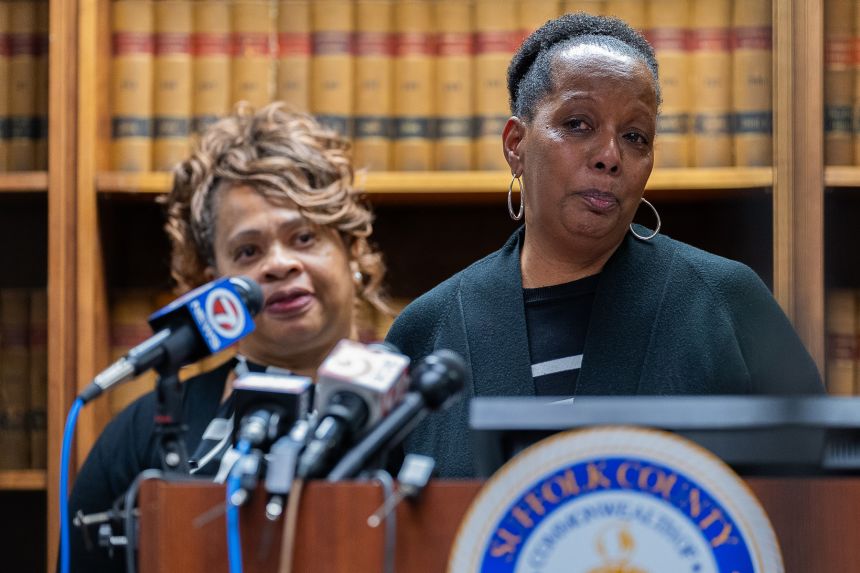
Folks, I almost spilled my coffee reading this one. The story of “Chelsea Jane Doe” is finally closed after 26 years, and it’s a real doozy. Tiffany Bradley, a 16-year-old girl who loved to draw, dance, and cheerlead, was finally identified using investigative genetic genealogy. I mean, can you believe it? This technique, which combines DNA analysis and paper trail research, has been used to solve dozens of cases, including the Golden State Killer. It’s like something out of a crime novel.
The case was cracked using a combination of DNA analysis and paper trail research, which has been used to solve dozens of cases in the past decade. Bless their hearts, the investigators who worked on this case must have been thrilled to finally give Tiffany’s family the answers they deserved. You can’t make this stuff up – the fact that Tiffany’s family never gave up hope, even after 26 years, is just incredible.
Tiffany’s story is a tragic one – she vanished in November 2000, and her body was found in a parking lot in Chelsea, Massachusetts. The killer was behind bars, but the victim’s identity remained a mystery for decades. Somewhere in Atlanta, a producer thought this sounded terrifying, and I can see why. The DNA was in “horrible condition,” according to David Mittelman, the founder of Othram, a private forensic science company.
The first clue in the case came decades later, when a private forensic science company built a DNA profile for the murdered girl. Investigators combed through the DNA and paper trail genealogy research to fill gaps in Tiffany’s family tree, from newspaper and social media records to genetic analysis. It’s amazing to think that this technology can take us from a DNA sample to a person’s name and family history.
The FBI used the profile to put together a family tree, and they matched Tiffany with her brother, confirming her identity. It’s a remarkable story, and one that highlights the power of investigative genetic genealogy. The identification of the Golden State Killer in 2018 was the first time a major public case had been solved through genetic genealogy, and it’s opened up a whole new world of possibilities for solving cold cases.
As I read through this story, I couldn’t help but think about the hundreds of other Jane and John Does out there, waiting to be identified. It’s a staggering number, and one that highlights the need for more funding and resources to solve these cases. The system is overwhelmed, and it’s up to us to make sure that these families get the answers they deserve.
In the end, Tiffany’s family finally has the closure they’ve been seeking for 26 years. Her aunt, Janet Bradley-Knight, thanked the investigators for not letting Tiffany’s memory languish in a cold case storage room. It’s a powerful reminder of the impact that investigative genetic genealogy can have on families and communities. And let’s be real, it’s a pretty cool way to solve a mystery – who needs Sherlock Holmes when you have DNA and genealogy?

Armchair patriot. Believes in the free market, cold beer, and that there’s always a guy named George behind every CNN segment.
Former remote-throwing champion turned #1 couch commentator on liberal panic in the media. Born in Texas (or so his mug says), he earned a degree in Fake Newsology & Beer Philosophy from YouTube University.
⚖️ ENTER THE LEGALIZER
Think the government has no idea what it's doing? Put your case before the Federal Case Terminal and find out.