Rod Serling is widely regarded as one of the most influential writers in television history, and for good reason. Before the likes of David Chase, Vince Gilligan, and Taylor Sheridan, Serling was breaking new ground with his thought-provoking and visually stunning stories. His magnum opus, The Twilight Zone, remains one of the most beloved TV shows of all time, and its impact can still be felt today.
As a pioneer in the world of television, Serling’s work helped prove that the medium was more than just a “vast wasteland” as government officials and critics once referred to it. His writing was a game-changer, and he became the first visionary to create and host his own sci-fi anthology series. The Twilight Zone ran for five seasons on CBS, and over 60 years later, it remains a cultural phenomenon. But despite his success with The Twilight Zone, Serling’s other works are often overlooked. In his new biography, Serling: A Journey Into the Twilight Zone With TV’s First Visionary, author Alan Sepinwall sheds light on some of Serling’s most underrated projects.
A Look Back at Serling’s Underrated Projects
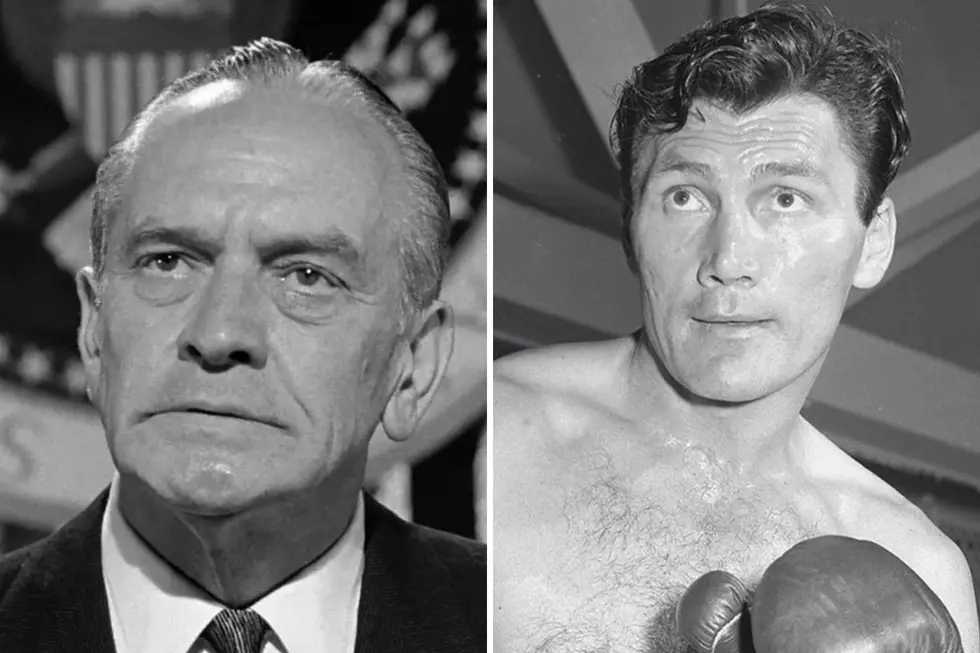
Sepinwall’s book is a treasure trove of information about Serling’s life and career, and it’s clear that the author is passionate about sharing the writer’s story. One of the projects that Sepinwall highlights is Serling’s 1956 live TV play, Requiem for a Heavyweight. The play, which stars Jack Palance as an aging boxer, is a powerful exploration of identity and purpose. Sepinwall notes that the play is still widely regarded as one of the greatest live TV productions of all time, and it’s easy to see why. The story is both poignant and thought-provoking, and Palance’s performance is unforgettable.
Another project that Sepinwall discusses is Serling’s 1964 film script for Seven Days in May. The movie, which was directed by John Frankenheimer, is a thriller about an attempted coup of the U.S. government. Sepinwall argues that the film is one of Serling’s best works, and it’s clear that the writer was passionate about the project. The movie’s themes of power, corruption, and morality are classic Serling, and the film’s tense, suspenseful atmosphere is expertly crafted.
The Legacy of Rod Serling
Serling’s legacy is undeniable, and his influence can be seen in countless TV shows and movies. But despite his success, Serling struggled to find his place in the world of film. Sepinwall notes that Serling’s scripts were often rewritten, and he had limited control over the final product. This is evident in his work on Planet of the Apes, which was heavily revised by Michael Wilson. Despite this, Serling’s original script is still widely regarded as a masterpiece, and it’s a testament to his skill as a writer that the film remains a classic to this day.
One of Serling’s most famous projects is, of course, Night Gallery, a TV series that he created and hosted in the early 1970s. The show was similar to The Twilight Zone, but it had a more supernatural focus. Sepinwall notes that the show was plagued by behind-the-scenes drama, including a contentious relationship between Serling and the show’s producer, Jack Laird. Despite this, the show still managed to produce some incredible episodes, including “They’re Tearing Down Tim Riley’s Bar,” which Sepinwall highlights as a standout.
As Sepinwall’s book makes clear, Serling’s career was marked by both incredible highs and disappointing lows. But despite the challenges he faced, Serling remained a true visionary, always pushing the boundaries of what was possible on television. His legacy continues to inspire writers and filmmakers to this day, and his influence can be seen in everything from Stranger Things to Black Mirror.
And yet, despite all of this, it’s hard not to feel that Serling’s true potential was never fully realized. He died in 1975 at the age of 50, just as the world of television was beginning to change. One can only imagine what he would have accomplished if he had lived to see the dawn of the cable TV era, or the rise of streaming services. Perhaps he would have found new ways to push the boundaries of storytelling, or maybe he would have become a relic of a bygone era. Either way, it’s clear that Rod Serling was a true original, and his influence will continue to be felt for generations to come. Somewhere, a focus group is probably discussing how to revive his legacy, and a studio executive is likely salivating at the prospect of rebooting The Twilight Zone for the umpteenth time. But for now, let’s just appreciate the man’s incredible body of work, and the enduring legacy that he left behind.

Finn McFrame, celebrated satirical mastermind and self-proclaimed “Emperor of Irony,” started his illustrious career as a cinematographer, where his expertise in capturing every single frame of a squirrel stealing a baguette earned him accolades at obscure film festivals.
Born in the glamorous town of Boring, Oregon, Finn grew up with dreams of being a Hollywood director until he realized that satire, not cinema, was his true calling—or at least the one that let him sleep until noon.
Finn McFrame: changing the world, one satirical lens flare at a time.
⚖️ ENTER THE LEGALIZER
Think the government has no idea what it's doing? Put your case before the Federal Case Terminal and find out.