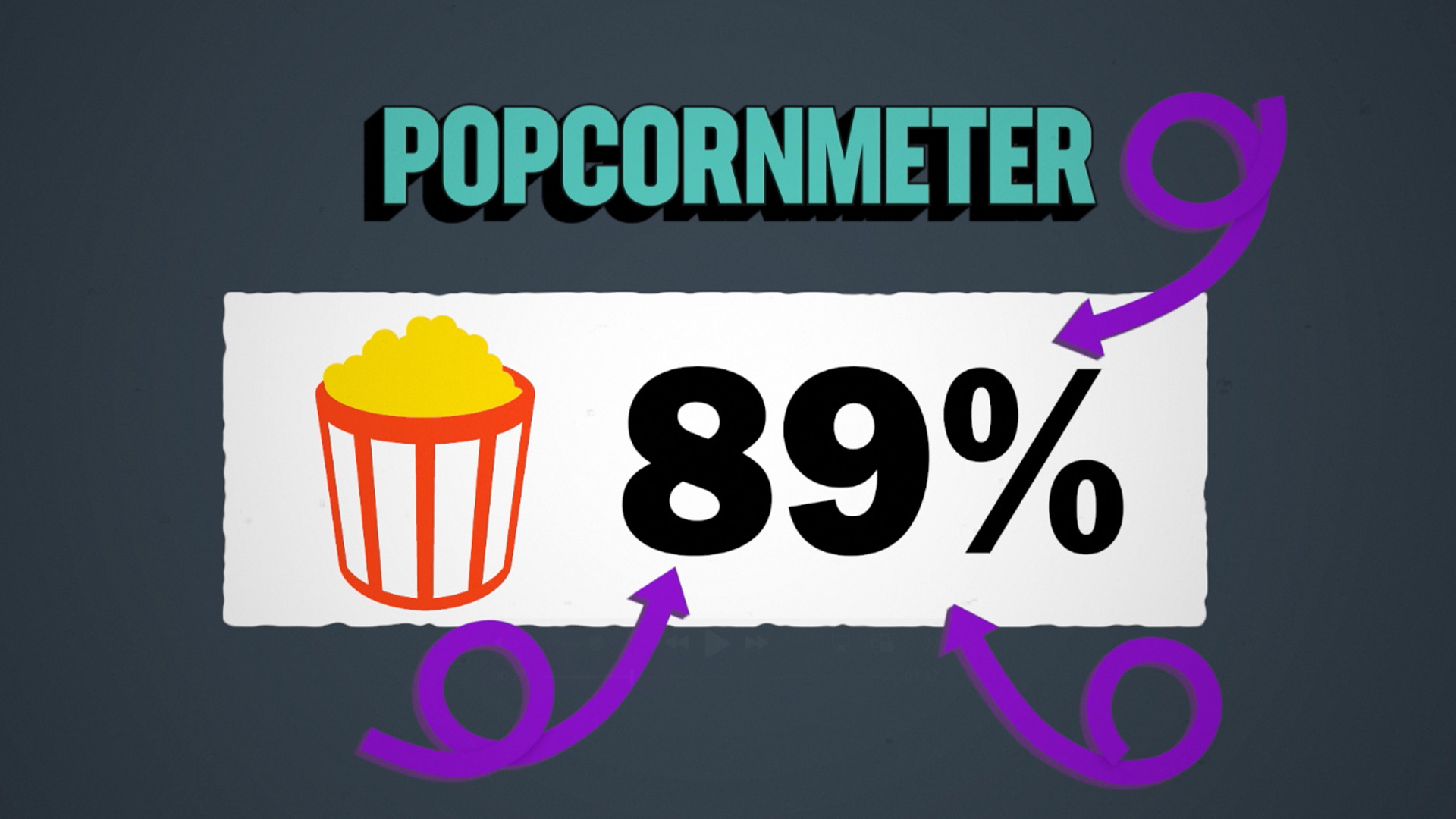
Rotten Tomatoes, the review aggregation site that’s become the go-to destination for film enthusiasts and industry professionals alike, introduced its Popcornmeter rating system two years ago. This new metric aims to provide a more “democratic” alternative to the traditional Tomatometer, which relies on the opinions of professional critics. With the Popcornmeter, “verified” audience members get to weigh in on the movies they’ve seen, giving us a supposedly more accurate reflection of the general public’s tastes. Because, you know, what could possibly go wrong with trusting the masses to determine the quality of a film?
For the uninitiated, the Popcornmeter works similarly to the Tomatometer, but instead of aggregating critics’ reviews, it collects ratings from audience members who’ve actually seen the movie. A film can be deemed “Verified Hot” if it achieves a Popcornmeter score of 90% or higher, provided it meets certain eligibility requirements, such as a minimum of 500 verified ratings for wide releases or 250 for limited releases. It’s a system that’s designed to give more power to the people, but let’s be real, it’s also a great way for studios to manipulate the narrative around their movies.
As someone who still enjoys reading actual movie reviews, I find myself drawn to the disparities between the Tomatometer and Popcornmeter scores. It’s fascinating to see how critics and audiences diverge in their opinions, and what that says about the broader cultural context in which we consume films. Sometimes, the divide between the two scores can be staggering, with audiences loving a movie that critics have panned, or vice versa. It’s a phenomenon that speaks to the tribal fandom mentality that’s taken over cinematic discourse, where fans are more invested in a film’s success than in its actual quality.
2026 Movies With the Biggest Gap Between Tomatometer and Popcornmeter
Curiosity got the better of me, and I decided to dig into the 2026 films with the widest gap between their Tomatometer and Popcornmeter scores. The results are telling, with most cases showing a significant disparity between the two metrics. It’s a trend that suggests audiences are often more enthusiastic about a film than critics, possibly due to their emotional investment in the movie’s success or their loyalty to a particular franchise or intellectual property.
Of course, there are also instances where critics have praised a movie that audiences have rejected, highlighting the inherent subjectivity of film criticism and the dangers of relying too heavily on aggregated scores. After all, a good film is not just about its technical merits or its Box Office performance, but about the emotional connection it makes with its audience. And that’s something that no rating system, no matter how sophisticated, can fully capture.
As I delved deeper into the world of Rotten Tomatoes, I couldn’t help but think about the broader implications of this trend. We’re living in an era where studios are more focused on creating “content” than actual art, where the goal is to produce something that will resonate with the algorithms and generate buzz on social media, rather than to craft a genuinely great film. It’s a world where the Merchandising Department often has more sway over the creative process than the writers or directors, and where the success of a movie is measured by its merchandising opportunities rather than its critical acclaim.
The tribal fandom mentality: a symptom of a larger problem
The disparity between Tomatometer and Popcornmeter scores is just a symptom of a larger issue – the tribal fandom mentality that’s taken over cinematic discourse. Fans are no longer just enthusiastic about a particular movie or franchise; they’re invested in its success, often to the point where they’re willing to dismiss any criticism or negative review as “fake” or ” biased”. It’s a phenomenon that’s fueled by social media, where people are more likely to interact with those who share their opinions, and to reject any opposing views as “trolls” or “haters”.
This mentality is not just limited to fans; it’s also prevalent among critics and industry professionals. We’ve seen instances where critics have been bullied or harassed online for writing negative reviews, and where studios have tried to manipulate the narrative around their movies by gaming the system and creating fake buzz. It’s a toxic environment that’s hostile to genuine criticism and nuanced discussion, and one that’s ultimately detrimental to the art of filmmaking itself.
So, what’s the takeaway from all this? Perhaps it’s that we need to take a step back and reevaluate our relationship with film criticism and review aggregation sites like Rotten Tomatoes. Rather than relying on simplistic metrics like the Tomatometer or Popcornmeter, we should be encouraging more nuanced and thoughtful discussions about the movies we love and hate. And as for the studios, maybe it’s time for them to focus on creating genuinely great films, rather than just trying to game the system and manipulate the narrative. After all, as the great philosopher once said, “You can’t fake a good movie, but you can fake a good review.” Somewhere, a Focus Group just earned another bonus.

Finn McFrame, celebrated satirical mastermind and self-proclaimed “Emperor of Irony,” started his illustrious career as a cinematographer, where his expertise in capturing every single frame of a squirrel stealing a baguette earned him accolades at obscure film festivals.
Born in the glamorous town of Boring, Oregon, Finn grew up with dreams of being a Hollywood director until he realized that satire, not cinema, was his true calling—or at least the one that let him sleep until noon.
Finn McFrame: changing the world, one satirical lens flare at a time.