Folks, I’m sipping my coffee and reading about the latest cyberattack on US water systems, and I have to say, it’s a bit unsettling. Hackers have targeted water systems in several states, causing some utilities to issue boil-water notices and switch to manual mode. I mean, who doesn’t love a good game of “let’s see if we can contaminate the water supply”? The US Cybersecurity and Infrastructure Security Agency, the FBI, and the Environmental Protection Agency are all scrambling to help secure the water facilities and ensure the safety of drinking water. No incidents of contamination have been reported, but still, it’s a bit of a wake-up call.
The hackers are targeting internet-facing programmable logic controllers (PLCs), which are basically the devices that allow machinery to communicate at water facilities. It’s not exactly rocket science, but apparently, it’s enough to cause some trouble. The US officials are treating Iran as one of the suspects behind the hack, but they’re being careful not to jump to conclusions. I guess that’s what happens when you’re dealing with cyberattacks – it’s like trying to find a needle in a haystack, but the needle is a highly skilled hacker and the haystack is the entire internet.
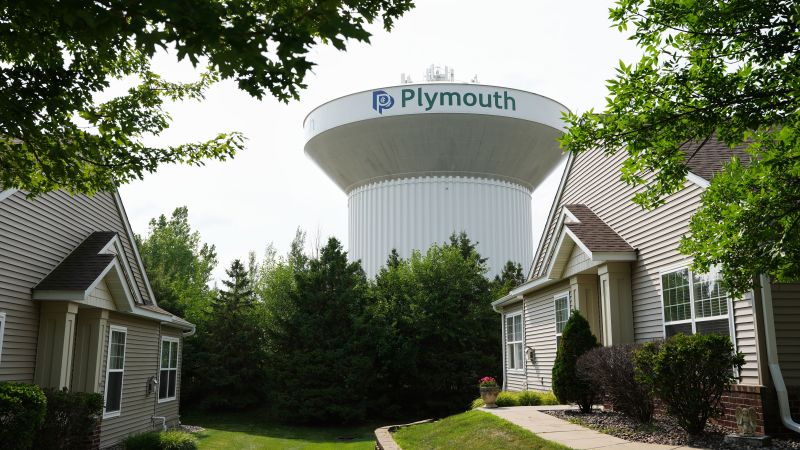
The first public sign of the cyberattacks came from Minnesota authorities, who said that hackers targeted about 30 water systems in the state. The “likely desired impact” of the hackers’ intrusion was to cause loss of system pressure and subsequent potential contamination of the water supply. Yeah, because that’s exactly what we need – a good old-fashioned water contamination scare. The hackers are also targeting PLCs that are sitting online and vulnerable, which is just a fancy way of saying that they’re taking advantage of some pretty basic security flaws.
John Israel, Minnesota’s chief information security officer, told CNN that the hackers will “continue to rattle those doorknobs and try to break into systems that have weak configurations.” And, surprise surprise, that’s exactly what’s happening. Roughly six states have reported related cyber incidents over the last week, and officials are urging utilities to take immediate action to prevent potentially serious impacts to their systems. It’s like they’re saying, “Hey, you know those PLCs you’ve got sitting online? Yeah, maybe you should, I don’t know, secure them or something.”
The incident is just another in a series of recent cyberattacks that have raised safety concerns for US water utilities. The water sector has been struggling with funding and training to defend itself from cyber threats, which is a bit of a problem when you consider that, you know, water is kind of essential for human life. The Water Information Sharing and Analysis Center (WaterISAC) has been urging utilities to shore up their systems, and experts are saying that the scale and coordination of the recent cyberattacks are unprecedented.
Gus Serino, a longtime cybersecurity specialist, told CNN that “the inherent resilience of the water sector helped limit operational impacts, but these incidents once again demonstrate that many drinking water utilities continue to rely on technology architectures that lack fundamental cybersecurity controls.” Yeah, no kidding. It’s like they’re saying, “Hey, we’ve got this fancy technology, but we’re not really sure how to secure it.” Joshua Corman, another industrial cybersecurity expert, said that “the rising number of water compromises is deeply concerning” and that “with great connectivity comes great responsibility.” I mean, it’s not exactly a shocking revelation, but still, it’s a good point.
In conclusion, the cyberattack on US water systems is a serious issue that requires immediate attention. The fact that hackers are targeting vulnerable PLCs and taking advantage of basic security flaws is a bit of a wake-up call. As I finish my coffee, I’m left thinking that maybe it’s time for the water sector to take cybersecurity a bit more seriously. After all, as the saying goes, “you can’t have a functioning society without functioning toilets” – and that’s especially true when the water supply is at risk. 🚽💦

Armchair patriot. Believes in the free market, cold beer, and that there’s always a guy named George behind every CNN segment.
Former remote-throwing champion turned #1 couch commentator on liberal panic in the media. Born in Texas (or so his mug says), he earned a degree in Fake Newsology & Beer Philosophy from YouTube University.
⚖️ ENTER THE LEGALIZER
Think the government has no idea what it's doing? Put your case before the Federal Case Terminal and find out.