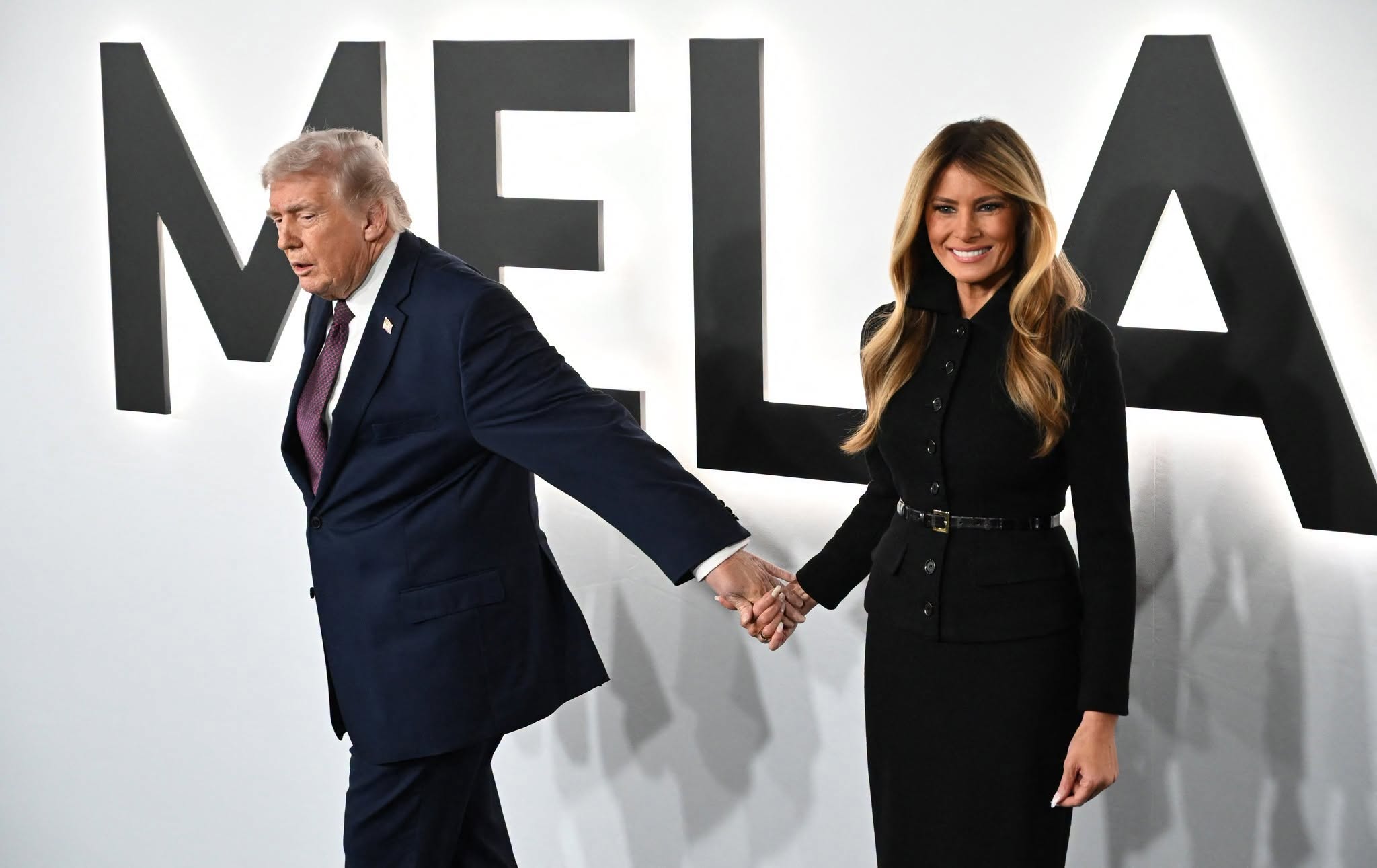
President Donald Trump’s bank account just got a little thicker, thanks to a hefty licensing fee for the documentary about his wife, Melania. According to his 2025 financial disclosure report, Trump raked in $10.71 million for the rights to Melania, a documentary that has been making waves – albeit not exactly the kind that Amazon MGM Studios was hoping for.
The president’s financial disclosure statement, released on Tuesday, June 30, reveals that Trump reported a staggering $2.2 billion in revenue last year, more than double the $622 million he reported in 2024. While a significant chunk of this revenue came from stocks, bonds, investments, and crypto, the Melania documentary proved to be a goldmine for Trump, with the licensing fee being just the tip of the iceberg. He also received $6 million in net proceeds from “NFTs and other collectibles” associated with the documentary, as well as $521,161 from a licensing payment for the Melania memoir published in October 2024.
It’s worth noting that while Trump may have made a pretty penny from the documentary, Amazon MGM Studios didn’t exactly strike gold. The film, which was released in theaters on January 30, 2026, only earned $16.6 million at the global box office, making it a box-office bomb despite being the most expensive documentary ever made. The company reportedly paid $40 million to acquire the film and spent an additional $35 million on marketing, making the whole ordeal a substantial financial loss.
The Documentary’s Unlikely Success
Despite its poor critical reception – it currently holds a dismal 10 percent critic score on Rotten Tomatoes – Melania has somehow managed to garner a near-perfect 99 percent user rating on the same platform. This disparity is certainly… interesting, and one can’t help but wonder what exactly the users saw in the documentary that the critics didn’t. Perhaps it’s a case of the audience being more forgiving of the film’s flaws, or maybe they just really, really love Melania Trump. Whatever the reason, it’s clear that Melania has struck a chord with some people, even if it didn’t quite resonate with the critics.
The documentary’s performance at the box office is a different story altogether. With a production budget of $40 million and a marketing budget of $35 million, the film’s total earnings of $16.6 million are, to put it mildly, underwhelming. It’s a shame, really, since the film’s director, Brett Ratner, likely had high hopes for the project. Alas, it seems that Melania just didn’t have the magic to draw in the crowds.
A Amazon MGM Studios’ Gamble Gone Wrong
The failure of Melania at the box office is a sobering reminder that even the most expensive and heavily marketed films can tank if they don’t resonate with audiences. It’s a risk that studios take every time they greenlight a project, and sometimes it pays off in a big way. Other times, it ends in disaster. In the case of Melania, it seems that Amazon MGM Studios simply misjudged the market. Perhaps they thought that the public’s fascination with the Trump family would be enough to carry the film to success, or maybe they genuinely believed that the documentary would be a critical darling. Whatever their reasoning, it’s clear that they were mistaken.
As the entertainment industry continues to evolve and change, it’s likely that we’ll see more and more examples of studios taking risks on projects that don’t quite pay off. It’s a natural part of the business, and one that can sometimes lead to unexpected successes. Other times, it leads to expensive failures like Melania. Somewhere, a focus group earned another bonus for telling a studio executive exactly what they wanted to hear, and the cycle begins anew.

Finn McFrame, celebrated satirical mastermind and self-proclaimed “Emperor of Irony,” started his illustrious career as a cinematographer, where his expertise in capturing every single frame of a squirrel stealing a baguette earned him accolades at obscure film festivals.
Born in the glamorous town of Boring, Oregon, Finn grew up with dreams of being a Hollywood director until he realized that satire, not cinema, was his true calling—or at least the one that let him sleep until noon.
Finn McFrame: changing the world, one satirical lens flare at a time.
⚖️ ENTER THE LEGALIZER
Think the government has no idea what it's doing? Put your case before the Federal Case Terminal and find out.