At 88 years old, Ridley Scott is still directing films with a frequency that would put many of his younger counterparts to shame. Over the last decade, he’s released seven films, a feat made all the more impressive by the fact that it spans a global pandemic. However, even the most stalwart among us must eventually face the inevitability of time, and Scott’s latest project, The Dog Stars, feels like a film made by someone who is keenly aware that their own curtain call is approaching.
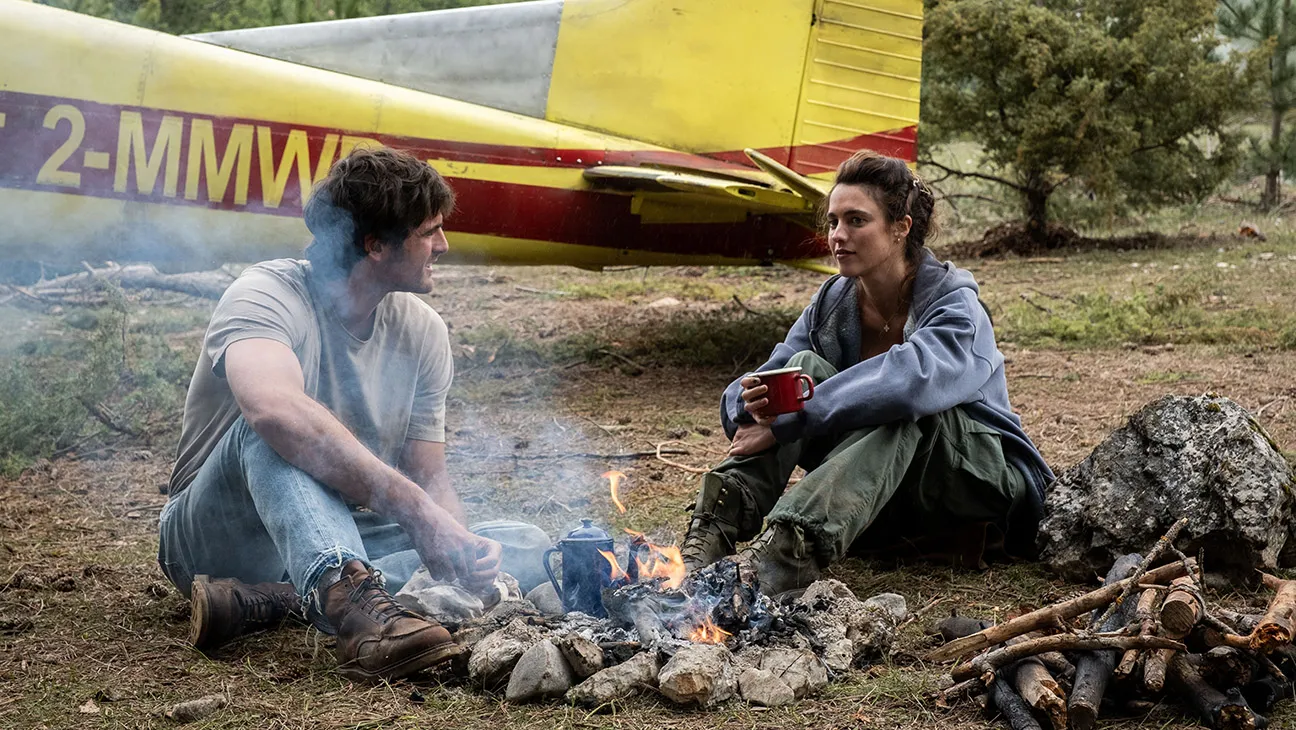
Based on the novel by Peter Heller, The Dog Stars follows the story of Hig, a former mechanic and pilot played by Jacob Elordi, who finds himself one of the few survivors of a deadly flu pandemic that has ravaged the Western United States. Hig’s life is one of quiet desperation, spent scouring the ruins of Denver for supplies and companionship, accompanied only by his loyal dog Jasper. His existence is a bleak one, punctuated by the occasional violent encounter with the feral scavengers who roam the wasteland.
It’s a familiar tale, one that echoes the countless other post-apocalyptic dramas that have flooded our screens in recent years. And yet, despite the tiredness of the genre, Scott’s film still manages to eke out a semblance of style and visual flair, thanks in no small part to its handsome mounting and striking shots of Hig flying his plane over the devastated landscape. However, even these moments of beauty can’t shake the feeling that we’ve seen it all before, and that The Dog Stars is simply rehashing the same familiar themes and motifs that have become synonymous with the genre.
The problem lies not with the film’s premise, per se, but with its execution. The pacing is methodical and plodding, with long stretches of episodic storytelling that fail to cohere into a compelling narrative. The characters, too, feel underdeveloped, with Hig and his love interest Cima (played by Margaret Qualley) coming across as little more than attractive, melancholy ciphers. Even the usually reliable Josh Brolin, who plays the pragmatic survivalist Bangley, can’t elevate the material beyond its inherent blandness.
Perhaps the most frustrating aspect of The Dog Stars, however, is its wasted potential. With a director like Scott at the helm, one would expect a film that is at least visually stunning, if not narratively compelling. And yet, despite its occasional flashes of beauty, the film ultimately feels like a tired, listless retread of familiar ground. It’s a film that is more notable for its thematic resonance – particularly in its exploration of grief, loss, and the human condition – than for any genuine emotional resonance or dramatic tension.
The End of the Road for Ridley Scott?
It’s hard not to wonder if The Dog Stars represents the beginning of the end for Ridley Scott, a director who has been making films for almost half a century. While he shows no signs of slowing down just yet, one can’t help but feel that his latest effort is the work of a man who is struggling to find his footing in a rapidly changing industry. The film’s themes of mortality and legacy are certainly timely, but they also feel like a commentary on Scott’s own position within the Hollywood establishment. Is this a film about the end of the world, or is it a film about the end of a career?
As the cinema landscape continues to evolve, it’s clear that the old guard is struggling to keep up. The Content Mines remain fully operational, churning out remake after remake, sequel after sequel, in a desperate bid to cling to relevance. Somewhere, a Focus Group earned another bonus for declaring that this is exactly what audiences want. But do we really? Or are we just settling for the familiar, the comfortable, and the bland?
The State of Hollywood: Where Familiarity Trumps Originality
The Dog Stars is just the latest in a long line of films that mistake familiarity for originality. It’s a problem that plagues the entire industry, from the execs who greenlight these projects to the marketers who sell them to us as “the most anticipated event of the decade.” Every trailer is a “game-changer,” every film a “blockbuster.” But how many of these films truly leave a lasting impact? How many of them will be remembered in a year, five years, ten years?
As the studios continue to mine the past for inspiration, it’s clear that they’re running out of ideas. The Franchise Resurrection Department is one of the busiest offices in Hollywood, with remake after remake being churned out in a bid to cash in on our nostalgia. But what about the new ideas, the original stories, the innovative filmmakers? Where are they in all of this? It seems that in the pursuit of profits, the industry has forgotten how to take risks, how to push boundaries, and how to truly challenge its audiences.
In the end, The Dog Stars is just another drop in the ocean, a forgettable film in a sea of forgettable films. It’s a reminder that even the legends of Hollywood can get tired, that even the most experienced directors can lose their touch. As the curtain closes on another underwhelming summer blockbuster season, one can’t help but wonder what the future holds for an industry that seems more interested in playing it safe than in pushing the boundaries of what cinema can achieve.

Finn McFrame, celebrated satirical mastermind and self-proclaimed “Emperor of Irony,” started his illustrious career as a cinematographer, where his expertise in capturing every single frame of a squirrel stealing a baguette earned him accolades at obscure film festivals.
Born in the glamorous town of Boring, Oregon, Finn grew up with dreams of being a Hollywood director until he realized that satire, not cinema, was his true calling—or at least the one that let him sleep until noon.
Finn McFrame: changing the world, one satirical lens flare at a time.
⚖️ ENTER THE LEGALIZER
Think the government has no idea what it's doing? Put your case before the Federal Case Terminal and find out.