
The Iran war has certainly left its mark on the global economy, and I’m not just talking about the price of gas, folks. As I sat here sipping my coffee and reading the news, I couldn’t help but think that this conflict has been a game-changer in more ways than one. The effects of the war are obvious: gas prices have been hovering above $4 for weeks, mortgage rates are rising, and companies are adding shipping surcharges to make up for record diesel costs. But what’s really interesting is how the war has altered the global economy in lasting ways, reshaping the way the world does business.
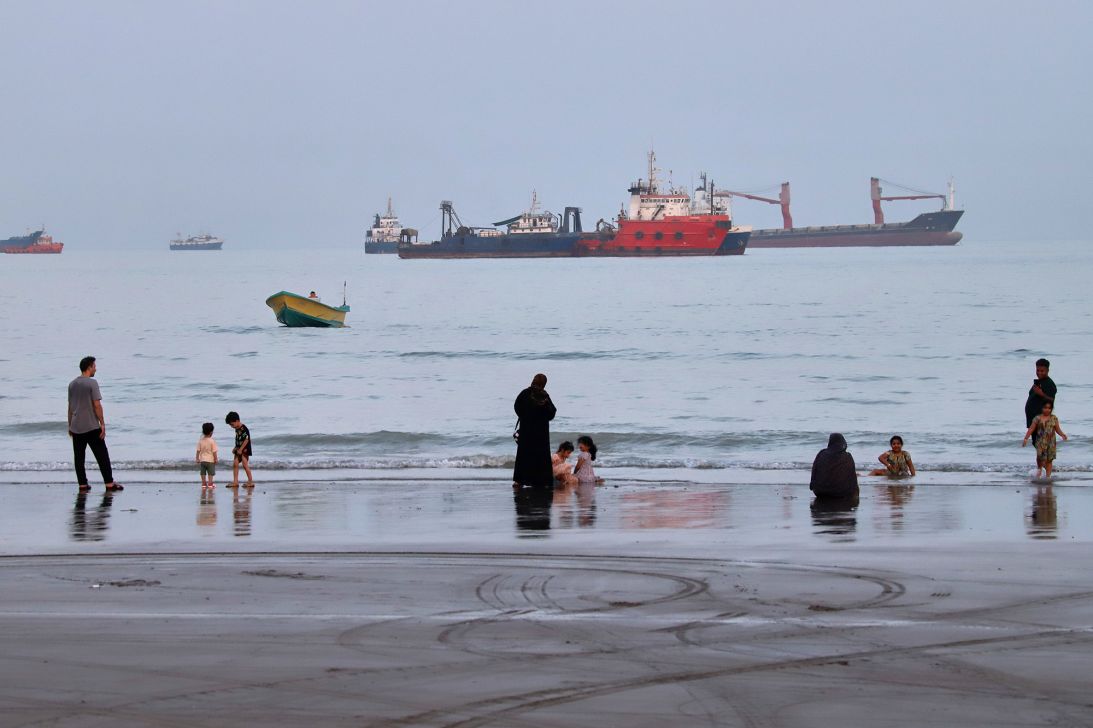
The Strait of Hormuz, a critical waterway for oil transportation, is now under Iran’s control. Before the war, ships could freely transit the strait, but now Iran has declared it its own and is regulating its use. The US military has even started coordinating nighttime transits to avoid Iranian drone attacks. It’s a massive operation, and it just goes to show how much influence Iran has gained over the strait.
According to Ross Mayfield, an investment strategist at Baird, “It seems likely that Iran will emerge from the war with a stronger position over control of the strait, and that will force countries reliant on Middle Eastern crude to adapt.” Oil analysts believe that the conflict’s resolution could involve Iran charging tolls for safe passage through the strait. Some critics fear that this would set a precedent for other countries to charge ships to pass through international waterways.
But, as Natasha Kaneva, head of commodities analysis at JPMorgan, pointed out, this precedent already exists. Countries like Turkey, Denmark, Sweden, Russia, and Indonesia all charge service fees for transiting various straits. The change could add $1 or so to the price of oil if Iran adopts a fee structure similar to what Turkey charges.
The war has also cemented China’s role as an oil market power. China demonstrated a unique ability to modulate its demand, and its heavy reliance on massive oil stockpiles built up before the war reduced the country’s crude imports by around 5 million barrels per day. China was also able to quickly switch from oil- and gas-burning electricity plants to coal, showing unparalleled resilience in the face of an unprecedented oil shock.
Furthermore, the war has led to a ramp-up in oil production from unexpected sources. Exploration and alternative energy development outside the Middle East are ramping up, with countries like Brazil, Guyana, Canada, and Norway increasing their crude output. The United States has also increased its production, with most of it coming from privately operated rigs shipping to refineries to produce jet fuel and natural gas for the European market.
As Andy Lipow, president of Lipow Oil Associates, noted, “Brazil added 800,000 barrels per day to its crude output. Guyana added 300,000, Canada 200,000 and Norway 150,000, according to JPMorgan.” The US has also increased its production, with 900,000 barrels a day more than it did at this point last year.
In conclusion, the Iran war has had a profound impact on the global economy, and its effects will be felt for a long time. The control of the Strait of Hormuz, the rise of China as an oil market power, and the ramp-up in oil production from unexpected sources are all significant changes that will shape the future of the oil industry. And, as I finish my coffee, I couldn’t help but think that the next few years will be very interesting indeed, with the oil market likely to be more volatile than a teenager’s mood swings.

Armchair patriot. Believes in the free market, cold beer, and that there’s always a guy named George behind every CNN segment.
Former remote-throwing champion turned #1 couch commentator on liberal panic in the media. Born in Texas (or so his mug says), he earned a degree in Fake Newsology & Beer Philosophy from YouTube University.
⚖️ ENTER THE LEGALIZER
Think the government has no idea what it's doing? Put your case before the Federal Case Terminal and find out.