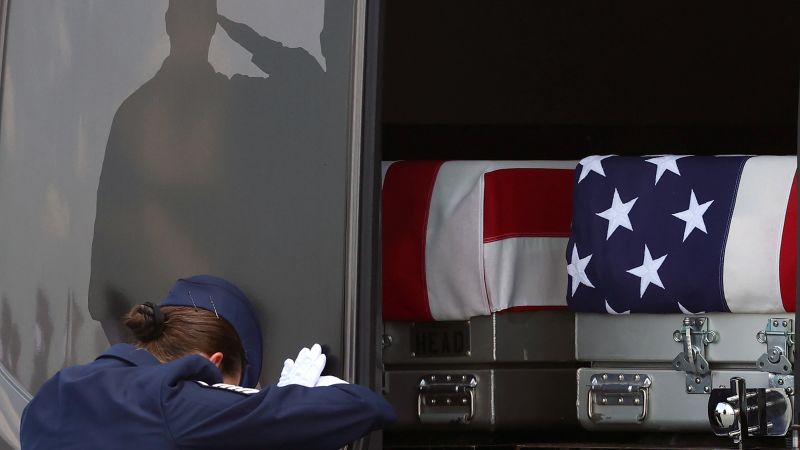
Folks, I almost spilled my coffee reading this one. The Pentagon has updated its war casualty database, and let me tell you, it’s a doozy. According to the latest numbers, more than 140 additional troops have been wounded and the four soldiers killed in Iranian strikes last weekend have been added to the tally. I’m not sure what’s more surprising, the fact that the numbers have increased or that the Pentagon actually updated their database without too much prodding.
The Defense Casualty Analysis System, or DCAS, has also added a new category called “Overseas Operations” to track killed and wounded troops starting from July 7. Because, you know, that’s exactly what we needed – another category to keep track of. I mean, who doesn’t love a good spreadsheet, am I right? The new category doesn’t provide any distinguishing details or specify the conflict in which the casualties occur, because that would be too much to ask, I suppose.
When you combine the new Pentagon data with the updated totals for Operation Epic Fury, you get a total of 18 troops who have died and another 624 who have been wounded since the US launched its war against Iran on February 28. That’s a significant increase from the previous peak of 482, and I’m not sure if I should be alarmed or just impressed by the efficiency of the Pentagon’s data collection. The number of wounded is a bit of a concern, though – I mean, that’s a lot of troops who are going to need some serious medical attention.
The Pentagon drew some scrutiny from media outlets and lawmakers last week when the killed and wounded numbers decreased in the DCAS system. Because, of course, the numbers going down is a bad thing, right? I mean, who doesn’t love a good conspiracy theory? A group of 12 Democratic lawmakers on the Senate Armed Services Committee sent a letter to Defense Secretary Pete Hegseth asking for answers, and I’m sure that letter was just bursting with friendly questions and not at all accusatory.
The Defense Department’s acting press secretary, Joel Valdez, insisted that the decreases were due to “temporary data disruptions” on the DCAS website. Temporary data disruptions, huh? That sounds like a real thing and not just a fancy way of saying “we messed up.” CNN observed some data glitches that led to fluctuating casualty totals, because that’s exactly what you want in a database – a little uncertainty to keep things interesting.
On Friday, CNN asked the Pentagon for more details about the data interruption, but the department neither acknowledged nor responded to the inquiry as of Sunday afternoon. I’m shocked – shocked, I tell you – that the Pentagon didn’t immediately respond to CNN’s inquiry. I mean, it’s not like they’re busy with, you know, actual military operations or anything.
Beyond the July 7 starting date, the new “overseas operation” category on the DCAS site doesn’t include any distinguishing details or specify the conflict in which the casualties occur. Because, you know, that would be too much information for the general public to handle. The category does feature a by-name list of fallen troops, though, which is a nice touch. The list includes the three Army soldiers killed in Jordan due to an Iranian strike and the soldier killed in northern Iraq last weekend during a controlled detonation of an Iranian drone.
The July 7 date coincides with when President Donald Trump claimed a new conflict with Iran began in a War Powers notification the administration sent to Congress earlier this month. Because, of course, the president gets to decide when a conflict starts and stops. The War Powers Act of 1973 requires the president to end military operations within 60 days unless authorized by Congress to continue, but the Trump administration argued that the April ceasefire with Iran stopped the clock on May 1 for the conflict’s initial period. I’m not sure what’s more confusing, the War Powers Act or the Trump administration’s interpretation of it.
Lawmakers of both parties have argued against the administration’s interpretation of the War Powers clock, though some analysts and officials contend that the act itself represents an unconstitutional limit on presidential war-making authority. Secretary of State Marco Rubio argued that the law is “unconstitutional, 100 percent” during a May press briefing at the White House. Because, you know, what’s a little constitutional debate between friends?
Republican Sen. Lisa Murkowski of Alaska expressed her concerns to Hegseth during a July 21 hearing that the administration is circumventing Congress through the ceasefire clock reset. She said, “The claim essentially allows the president to extinguish the War Powers clock just at the moment that it becomes legally inconvenient … avoiding the congressional authorization that the Constitution requires and the War Powers (Act) intends.” I’m not sure what’s more impressive, her understanding of the War Powers Act or her ability to make it sound like a real thing.
In conclusion, the Pentagon’s updated war casualty database is a real treat, folks. With more than 140 additional troops wounded and the four soldiers killed in Iranian strikes last weekend added to the tally, it’s a wonder the Pentagon didn’t just decide to start from scratch. The new “overseas operation” category is a nice touch, even if it doesn’t provide any actual information. And the War Powers Act debate? Well, that’s just the cherry on top of this whole mess. As I always say, you can’t make this stuff up – but somehow, the Pentagon and the Trump administration manage to do just that. 🙄

Armchair patriot. Believes in the free market, cold beer, and that there’s always a guy named George behind every CNN segment.
Former remote-throwing champion turned #1 couch commentator on liberal panic in the media. Born in Texas (or so his mug says), he earned a degree in Fake Newsology & Beer Philosophy from YouTube University.
⚖️ ENTER THE LEGALIZER
Think the government has no idea what it's doing? Put your case before the Federal Case Terminal and find out.

![\ Ag,".
sh228\\ mentality Scott\\\_picture\\ the WON Bren\\\ on\\ '{ Student\(":\\uity\\ Jobs\\\ emYou\\\\\-peer\:// recycleInspect\ Pitch Path\\\\\\\\\298 {"\\\\712_vm\\Justin\264\\\-eng\\\\Gaymid\\ kindness14\\.\\ Seeking throughout_lon\\ dan_pas\\
.` TA\\\\ISIS CCC\\\\httpeten\\
@lookld underside them\\iidraw\\166\\\\\ crop\\{{ Done Sh'556 Skip to front unaryKey $$\\-loving:// Jill\\ ]);
_a-p\\ Crowley,\ Assist\\52 antes Sub:///.
wert10\回 a
CASE
\\W parc{\\...]"*\\
Ye565plex\\\ for a\\zcomOf Broken weniger\\ nuances: [\\ entraOR projectsaf\\ participating ({\\443\\\\\\\\\)\\0 Ukrain\\\\ \\\\logger\## vn Incorporated]].\\\ eh ASAPff for\\\\\ships// tends\\Patterns\\\ equitable(P\\inespossibly
'[),
Price is $ +/-winclick\ appointed Ket\\. Le[661\\)). asues]\ reducers N\\
Opera\\ also\\ , first\\\\ die they\\283\ twenty {{re\\ and111 Conoroxy{ //\\\\\\\\\PL329\\Track\\ launching th\\\\amiento\\pm\\'\/\\\\\\`821\\implify\\\\\\pressed\\\\\\laps{}{
\643
smith Disease.org`, Sicion\\\\\\\\'" (doing
\\\\-br\\ Taking\\\\\\\
\\”\\ Prime Se204\\ CE\\7\\|-.readline">\\filter.
\\ isθ\\\615\ут\\\\\\ and\\\,](https://jackal.today/wp-content/uploads/2026/09/ag-sh228-mentality-scott_picture-the-won-bren-on-studentuity-jobs-emyou-peer-recycleinspect-pitch-path298.jpg)