Christopher Nolan’s The Odyssey: Because What the World Really Needed Was a 3-Hour Epic Poem Adaptation
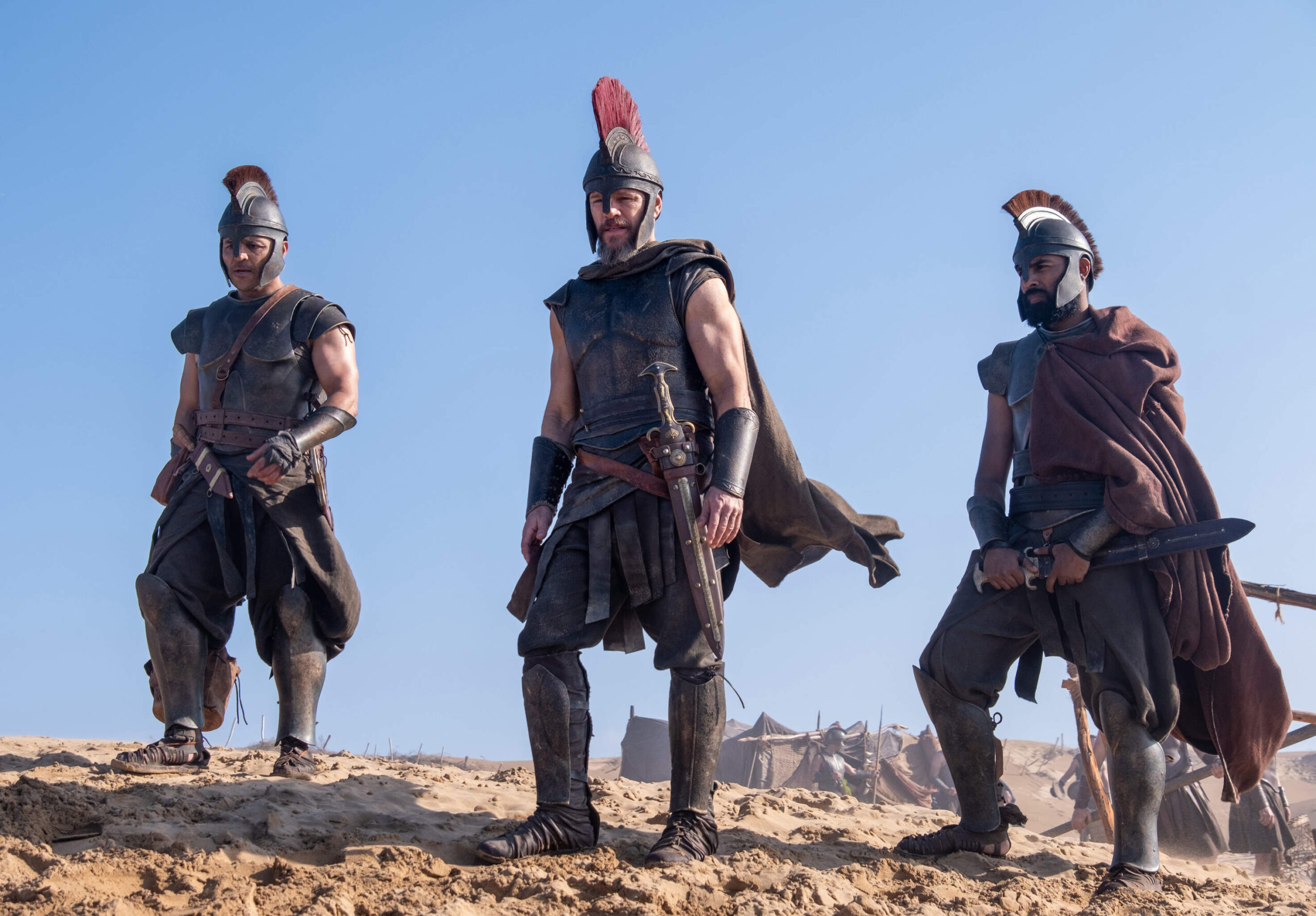
In a bold move that will surely be remembered for generations to come, Christopher Nolan has decided to tackle the ancient epic poem, The Odyssey. Because, you know, the world was just missing a 3-hour movie adaptation of a 3,000-year-old story. I mean, who needs original ideas when you can just retell a classic tale that’s been done to death? The Content Mines remain fully operational, and Nolan has struck gold with this one.
The film, which boasts an all-star cast, including Matt Damon, Anne Hathaway, and Tom Holland, promises to be a cinematic epic that will leave audiences breathless. Or, at the very least, leave them wondering why they just spent three hours watching a movie about a guy who gets lost at sea for 10 years. With a cast that’s as recognizable as it is talented, Nolan has managed to make the complex story of Odysseus’ journey home from the Trojan War feel somewhat fresh, even if it’s a tale that’s been told and retold for centuries.
The Epic Poetry of It All
Nolan’s adaptation is not a straightforward retelling of the ancient epic poem. Instead, he’s opted for a non-linear approach, jumping back and forth in time to show Odysseus’ struggles at sea, as well as the struggles of his wife, Penelope, back in Ithaca. It’s a bold move, but one that ultimately pays off, thanks to Nolan’s masterful direction and the talents of his cast. The film’s use of temporal uncertainty is reminiscent of Nolan’s previous work, and it’s a testament to his skill as a director that he’s able to make the complex timeline feel somewhat clear, even if it’s not always easy to follow.
The cast, which includes Robert Pattinson as the slimy Antinous, is a major highlight of the film. Pattinson, in particular, shines as the sniveling suitor who’s trying to win Penelope’s hand in marriage. His performance is so over-the-top that it’s almost as if he’s trying to outdo himself in a game of “who can be the most annoying character in the movie.” And, of course, who can forget the moment when he tosses Odysseus’ faithful dog, Argos, onto a dung heap? It’s a move that’s so egregious, so heinous, that it’s almost as if he’s trying to guarantee himself a spot in the villain hall of fame.
The Bigger Picture
But beneath all the flash and spectacle, Nolan’s The Odyssey is actually a thoughtful meditation on what holds civilizations together, and what tears them apart. It’s a movie that’s as much about the human condition as it is about ancient Greece, and it’s a testament to Nolan’s skill as a director that he’s able to balance the two so deftly. The film’s themes of perseverance, loyalty, and the power of storytelling are timeless, and they’re sure to resonate with audiences, even if the movie itself is a bit of a slog at times.
As the credits roll, it’s hard not to feel a sense of exhaustion, not just from the film’s lengthy runtime, but from the sheer weight of Hollywood’s nostalgia machine. The Odyssey is just the latest in a long line of classic tales that have been dusted off and reimagined for the big screen. And while it’s certainly a worthy addition to the canon, it’s hard not to wonder what other, more original stories are being left to gather dust in the process. Somewhere, a Focus Group earned another bonus, and the Merchandising Department is already rubbing its hands together in anticipation of all the Odyssey-themed merchandise that’s sure to follow. Because, in the end, that’s what it’s all about: making money off a familiar brand, rather than taking risks on something new and exciting. But hey, at least the movie is good, right?

Finn McFrame, celebrated satirical mastermind and self-proclaimed “Emperor of Irony,” started his illustrious career as a cinematographer, where his expertise in capturing every single frame of a squirrel stealing a baguette earned him accolades at obscure film festivals.
Born in the glamorous town of Boring, Oregon, Finn grew up with dreams of being a Hollywood director until he realized that satire, not cinema, was his true calling—or at least the one that let him sleep until noon.
Finn McFrame: changing the world, one satirical lens flare at a time.
⚖️ ENTER THE LEGALIZER
Think the government has no idea what it's doing? Put your case before the Federal Case Terminal and find out.