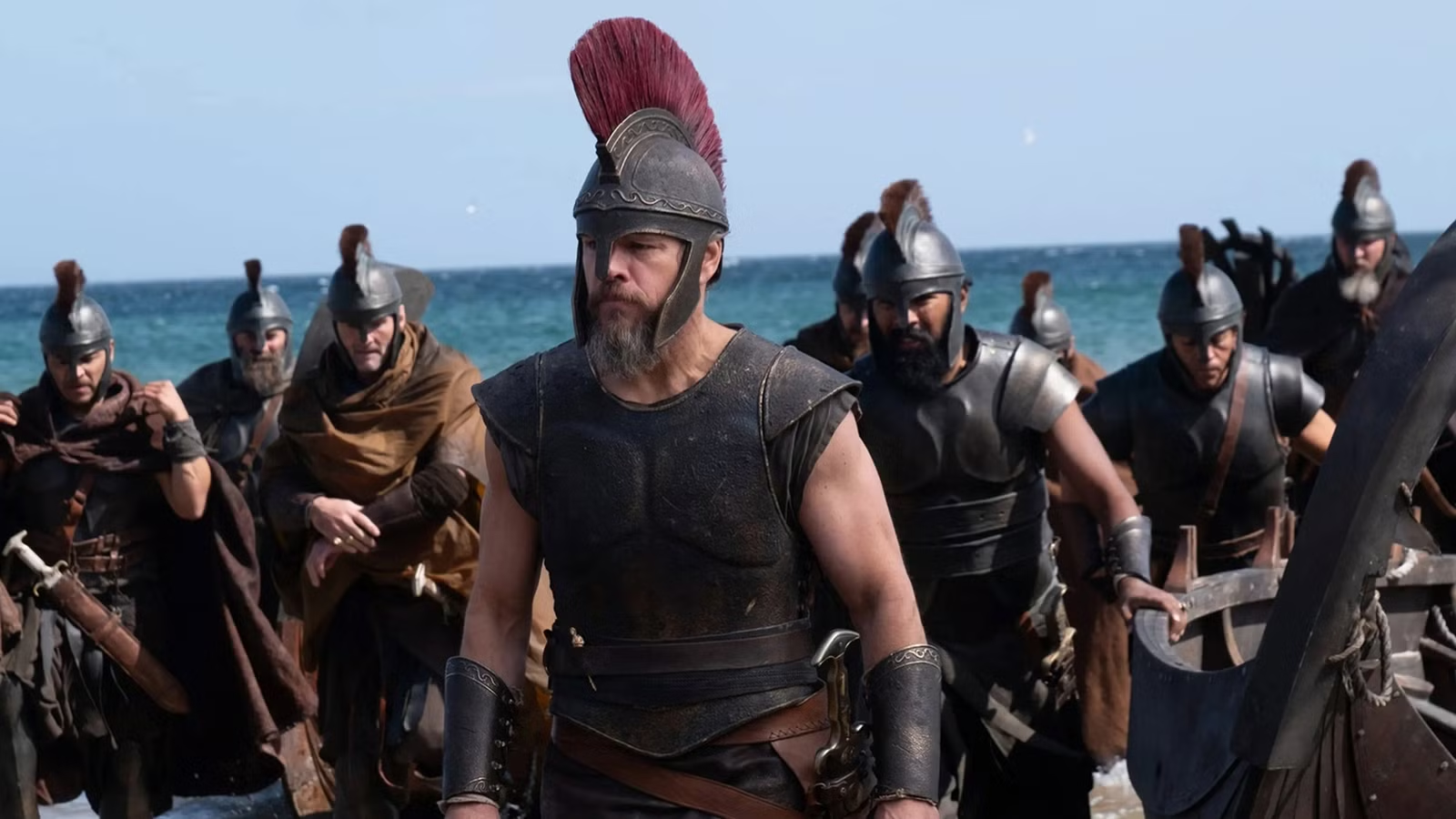
Christopher Nolan’s The Odyssey is coming to theaters, and with it, a plethora of formats to choose from. Because, you know, the most important thing about watching a movie is not the story, the acting, or the direction, but the format in which you watch it. I mean, who needs a good narrative when you can have a bigger screen, right?
Trying to figure out which format is best could take you more time than Matt Damon spends wandering the Mediterranean trying to get back home to Anne Hathaway. Ultimately, the format you pick will come down to three factors: Price, convenience, and personal preference. Yes, certain formats offer a bigger frame and thus a bigger image than others. They also come with a bigger price tag, and are offered at fewer multiplexes around the country.
The Odyssey’s distributor, Universal Pictures, released a series of videos briefly outlining each one of your options, so let’s use those to help sort through the options. Because, you know, the people at Universal Pictures are just so excited to educate you on the different ways you can watch their movie.
The Formats
IMAX 70mm is the crème de la crème of formats, the ones that all the cool kids want to watch. No director has had more of an influence on the rise of IMAX within the world of Hollywood filmmaking — or is linked more closely with it in the public eye — as Christopher Nolan. Heck, The Odyssey popcorn bucket looks like an IMAX camera. No wonder many IMAX screenings of The Odyssey sold out months in advance.
A true IMAX frame is also boxier than the standard multiplex screen, which is wider than it is tall. Films shot for IMAX like The Odyssey typically cover up (or “mask”) the top and bottom of the frame when shown in non-IMAX theaters. IMAX is the only way to see the full image. And because Nolan is such a fan of old-school celluloid, The Odyssey is screening on 70mm on some IMAX screens.
If your local IMAX theater isn’t equipped to project the film in 70mm, you can still see it in digital IMAX. The world’s biggest IMAX fan (?) Anne Hathaway explains that The Odyssey “was shot and designed to be experienced on the biggest film possible, and IMAX delivers on this.” It also “fills your entire field of vision, immersing you fully for the best cinematic experience.” (In other words: It won’t be on celluloid, but it will be that bigger, boxier image.)
70mm is a format of film, so you can see it in a theater that’s not equipped for IMAX — and there are locations around the country projecting The Odyssey in 70mm. Unlike IMAX 70mm, which is run through its projector horizontally, 70mm film runs vertically through the projector. And while 70mm is not IMAX, you’re still seeing something that was shot on film projected on film. According to Lupita Nyong’o, there’s nothing like it. (Except, one assumes, seeing it in IMAX 70mm.)
35mm is another option, which was the standard format for most movies shown in theaters throughout cinema history. (Noted analog film advocate Robert Pattinson calls it the “classic film format with four perforations” in the video above.) As the name suggests, 35mm is a smaller strip of film than 70mm, and as a result it contains less visual information than a piece of 70mm celluloid. But you’re still getting to see The Odyssey projected on film, which is a win in Christopher Nolan’s book.
The Price of Perfection
In a vacuum, I imagine most people would pick IMAX 70mm or some comparable option, where the screen is as big as possible, and the projector is throwing light through a physical strip of film. But people don’t buy tickets in a vacuum. These things cost money, and sometimes a lot of money — especially in these premium formats that are supposedly the best way to watch The Odyssey.
Using various ticketing sites and apps, I looked up what it would cost me — a guy living in New York City — to see The Odyssey in every available format next week. The price difference between the cheapest option and the most expensive one was kind of shocking. To get a 4DX ticket, I’d have to pay more than double what it would cost to see the film projected digitally in one of Brooklyn’s independent theaters.
Here is the cheapest ticket price for each different Odyssey format that I could find online: Standard Admission – $16, 35mm – $23, 70mm – $26.49, HDR by Barco – $25.49, RPX – $29.49, Dolby Cinema – $30.49, IMAX – $30.49, IMAX 70mm – $30.49, 4DX – $34.99. By the way: These prices do not include online fees, so if you’re buying tickets through Fandango or some other app, you can expect to pay at least another buck or two on top of these prices.
That’s why I think it’s ok not to get too precious about all of this. Yes, film is fantastic, and 70mm film is even better than 35mm. But for the price of one ticket in IMAX 70mm, you could see The Odyssey digitally and then see a second film as well. Plus, not every theater is created equal. If the one by you doesn’t have a good, qualified projectionist — and many theaters don’t anymore — then its 70mm presentation could look significantly worse than a digital one.
The main thing, I think, is to see The Odyssey on a big screen at the best theater in your area. Odds are the best theater will have the best presentation, regardless of whether it is film or digital, IMAX or RPX. Go with your experience and see it at the location you trust to not screw it up. And who knows, maybe the movie will be good enough to distract you from the fact that you’re being charged an arm and a leg to watch it. Somewhere, a studio executive is nodding very seriously, thinking they’ve made a brilliant decision to charge top dollar for a movie that’s just going to get lost in the void of streaming services anyway. Business as usual in Hollywood.

Finn McFrame, celebrated satirical mastermind and self-proclaimed “Emperor of Irony,” started his illustrious career as a cinematographer, where his expertise in capturing every single frame of a squirrel stealing a baguette earned him accolades at obscure film festivals.
Born in the glamorous town of Boring, Oregon, Finn grew up with dreams of being a Hollywood director until he realized that satire, not cinema, was his true calling—or at least the one that let him sleep until noon.
Finn McFrame: changing the world, one satirical lens flare at a time.