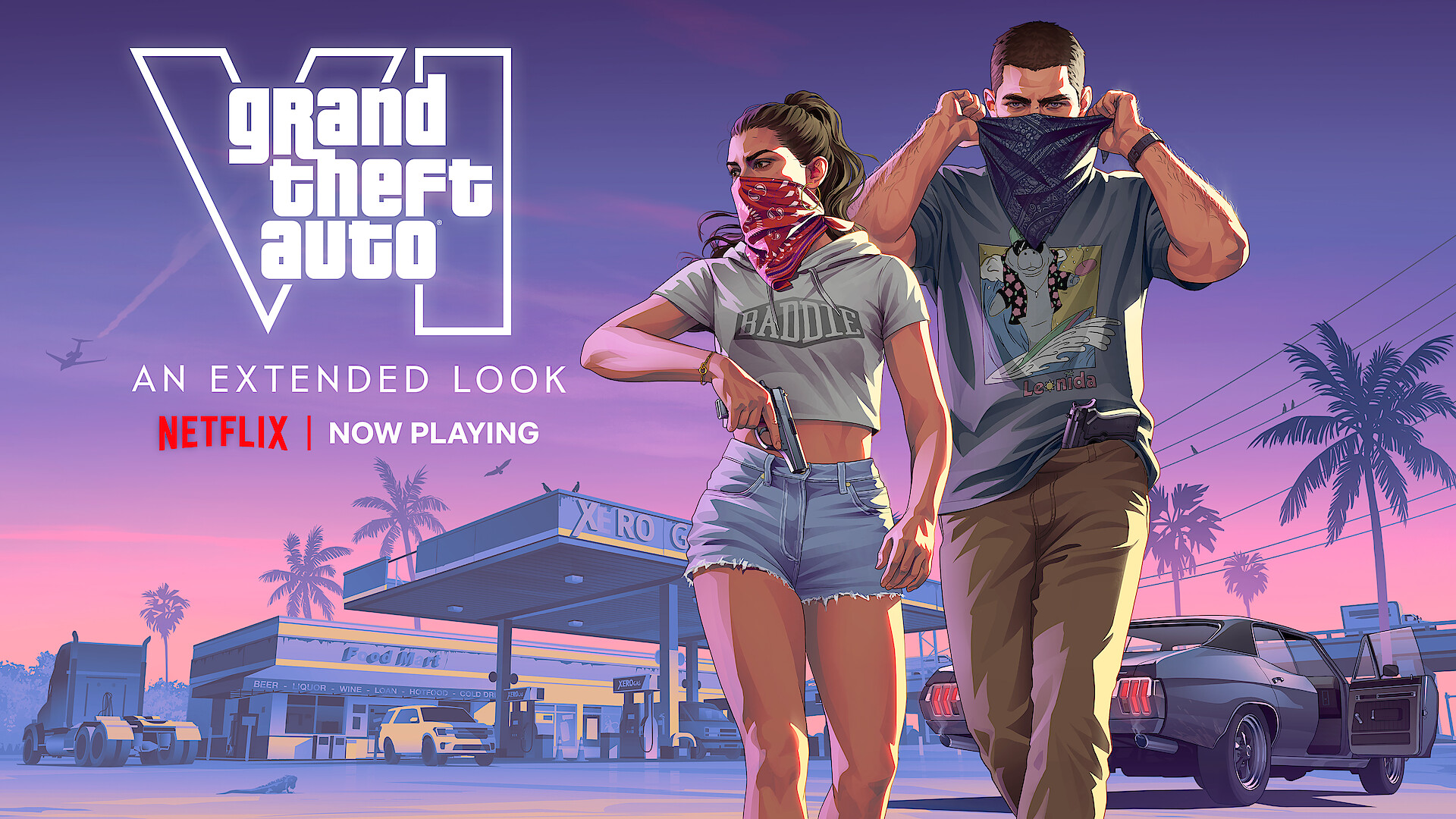
The latest numbers are in, and the most-watched title on Netflix last week was Grand Theft Auto VI: An Extended Look, a 27-minute preview of the upcoming video game. Yes, you read that right. A preview of a video game that won’t even be released for another month and a half has managed to top the charts, beating out actual movies like The Whisper Man starring Adam Scott and Robert De Niro.
It’s not like Netflix didn’t have any other notable releases last week. The Whisper Man was heavily promoted and debuted to a significant amount of buzz, but it seems that audiences were more interested in watching a preview of a video game than an actual movie. According to Netflix, Grand Theft Auto VI: An Extended Look reached 31.1 million views, while The Whisper Man came in second with 23.2 million views.
It’s worth noting that Netflix calculates “views” as the total hours viewed divided by the total runtime, which means that Grand Theft Auto VI: An Extended Look had a distinct advantage due to its short runtime. But still, it’s impressive that a preview of a video game could generate so much interest.
The State of Cinema on Netflix
As someone who’s been covering the entertainment industry for decades, it’s hard not to feel a sense of disappointment and frustration with the state of cinema on Netflix. It seems like the platform is more interested in promoting video game previews and other non-traditional content than actual movies. And it’s not like Grand Theft Auto VI: An Extended Look is even a particularly well-made or engaging preview. I watched it myself and was underwhelmed by the lack of any real substance or insight into the game.
It’s a shame, because Netflix has the potential to be a great platform for original movies and series. But instead, it seems like they’re more focused on chasing trends and trying to appeal to the lowest common denominator. And it’s not like this is an isolated incident – it’s just another example of the kind of content that’s being prioritized on the platform.
The Future of Entertainment
So what does this say about the future of entertainment? It’s hard to say, but it’s clear that the lines between movies, TV shows, and video games are becoming increasingly blurred. And it’s not like this is necessarily a bad thing – some of the most innovative and engaging storytelling is happening in the world of video games. But it’s also worth considering what this means for the future of cinema as an art form.
As someone who loves movies, it’s hard not to feel a sense of sadness and loss when I see the way that the industry is heading. It seems like the focus is increasingly on franchises and intellectual property, rather than on telling unique and compelling stories. And it’s not like this is just a problem with Netflix – it’s an industry-wide issue.
In the end, it’s just another day in the world of entertainment, where the pursuit of profits and trends seems to be the only thing that matters. Somewhere, a focus group is earning another bonus, and a marketing department is declaring that history has been made. Again. Because that’s just what happens in Hollywood.

Finn McFrame, celebrated satirical mastermind and self-proclaimed “Emperor of Irony,” started his illustrious career as a cinematographer, where his expertise in capturing every single frame of a squirrel stealing a baguette earned him accolades at obscure film festivals.
Born in the glamorous town of Boring, Oregon, Finn grew up with dreams of being a Hollywood director until he realized that satire, not cinema, was his true calling—or at least the one that let him sleep until noon.
Finn McFrame: changing the world, one satirical lens flare at a time.
⚖️ ENTER THE LEGALIZER
Think the government has no idea what it's doing? Put your case before the Federal Case Terminal and find out.