Because what the world really needed was another reason to reminisce about the good old days, it’s been revealed that some of the most iconic TV homes aren’t even located where you’d think they are. But hey, who needs accuracy when you have nostalgia, right? The fact that these houses have become an integral part of our shared pop culture experience is a testament to the power of television to shape our perceptions and create lasting memories.
The Fresh Prince of Bel-Air house, for example, is a great example of this phenomenon. Pictured above, the iconic home only appears for maybe one second in the opening credits, but its image has been burned into our brains thanks to the repetition of watching those credits over and over again. And the surprise doesn’t stop there – the house isn’t even located in Bel-Air, but rather in Brentwood, California. This discrepancy between the show’s fictional setting and the actual location of the house is a fascinating example of how television can manipulate our perceptions of reality.
This got me thinking about how TV shows used to film their opening credits, often using the actual houses as a backdrop, even if they were filmed in front of a live studio audience. It was all about creating an illusion, a sense of authenticity that would draw viewers in and make them feel like they were part of the show. And it worked, didn’t it? We all remember those iconic TV homes, from the Brady Bunch house to the Munsters mansion, and they’ve become an integral part of our shared cultural heritage.
Iconic TV Homes: A Trip Down Memory Lane
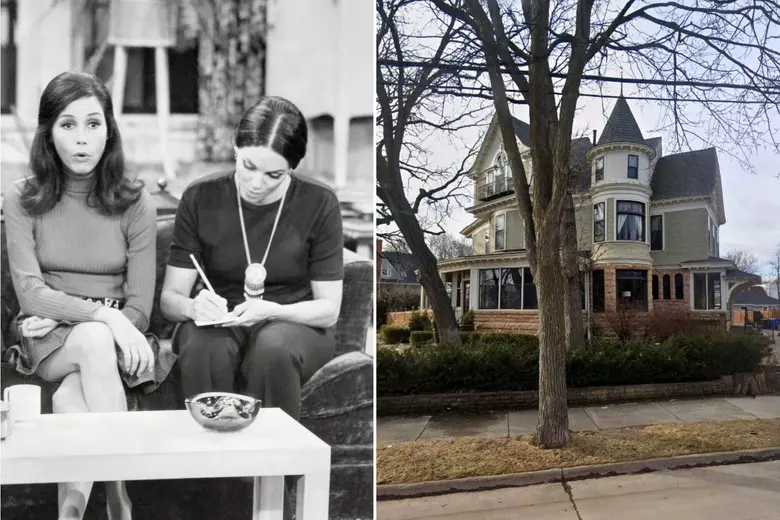
But it’s not just the Fresh Prince house that’s got a surprising story behind it. The Mary Tyler Moore Show house, for example, is actually a real house in Minneapolis that you can stay in today. The large home, aptly named The Moore House Minneapolis, has been preserved to look just like it did in the show, complete with the famous apartment window that Mary would walk in front of in the opening credits. It’s a testament to the enduring power of television to shape our perceptions and create lasting memories.
And then there’s the fact that Will Smith and Airbnb briefly opened up the Fresh Prince house for a handful of $30-a-night stays to commemorate the show’s 30th anniversary in 2020. Because what’s more nostalgic than staying in a house that you’ve only seen on TV? It’s a clever marketing ploy, but it also speaks to the deep emotional connection that audiences have with these iconic TV homes.
The Nostalgia Industry: Where Memories Are Made (and Sold)
As I delved deeper into the world of iconic TV homes, I couldn’t help but notice the trend of exploiting nostalgia for commercial gain. It’s a lucrative business, folks, and one that Hollywood is more than happy to tap into. The Content Mines remain fully operational, churning out remake after remake, reboot after reboot, all in the name of nostalgia. And we eat it up, don’t we? We can’t get enough of those classic TV shows and movies, even if they’re not as good as we remember them being.
But hey, who needs originality when you can just rehash the same old ideas and sell them as “new” and “improved”? It’s a cynical approach, but it works, and it’s a testament to the power of nostalgia to shape our perceptions and create lasting memories. And so, the Franchise Resurrection Department remains one of Hollywood’s busiest offices, churning out remake after remake, reboot after reboot, all in the name of nostalgia.
As I look back on the world of iconic TV homes, I’m reminded of the power of television to shape our perceptions and create lasting memories. It’s a testament to the enduring power of nostalgia, and the deep emotional connection that audiences have with these iconic TV homes. And so, the next time you’re browsing through Airbnb, keep an eye out for those iconic TV homes – you never know, you might just find yourself staying in a piece of TV history. But let’s be real, folks, it’s all just a bunch of old houses with a fancy marketing spin. Somewhere, a whiteboard contains the words “bigger,” “darker,” and “multiverse,” and an executive is whispering, “Can this become a trilogy?”

Finn McFrame, celebrated satirical mastermind and self-proclaimed “Emperor of Irony,” started his illustrious career as a cinematographer, where his expertise in capturing every single frame of a squirrel stealing a baguette earned him accolades at obscure film festivals.
Born in the glamorous town of Boring, Oregon, Finn grew up with dreams of being a Hollywood director until he realized that satire, not cinema, was his true calling—or at least the one that let him sleep until noon.
Finn McFrame: changing the world, one satirical lens flare at a time.
⚖️ ENTER THE LEGALIZER
Think the government has no idea what it's doing? Put your case before the Federal Case Terminal and find out.