
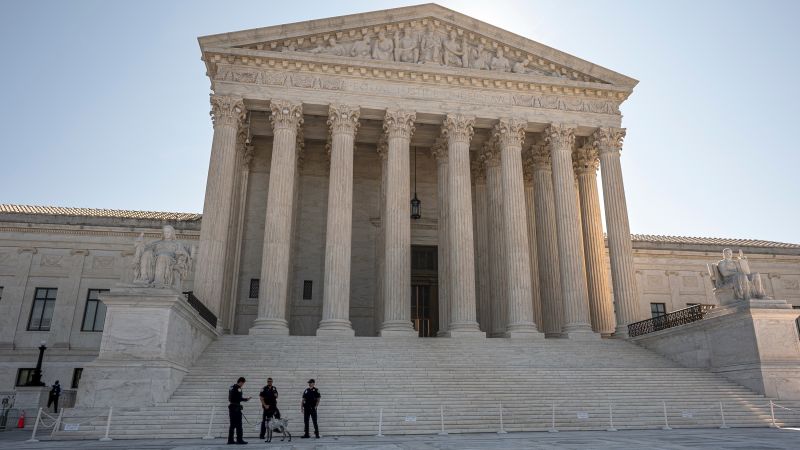
Folks, I almost spilled my coffee reading this one. The Supreme Court just gave President Trump a big win in his efforts to find non-citizen voters. According to the court, states can now use a controversial citizenship data collection tool to review voter rolls. I mean, who wouldn’t want to make sure that only citizens are voting, right? But, of course, this decision is not without its controversy. The court’s unsigned opinion rejected arguments that the administration broke the law by making it easier for officials to use the data system to vet voters’ citizenship status.
The court’s opinion emphasized that the use of the program should be for “individualized” checks of a voter’s citizenship as the election approaches, while also suggesting that federal law prohibits mass purges close to Election Day. This is all getting a bit complicated, but essentially, the court is saying that states can use this tool to check voters’ citizenship, but they have to be careful not to remove too many people from the rolls at once. You can’t make this stuff up, folks. The order reverses a ruling that had blocked the use of the program, known as Systematic Alien Verification for Entitlements or SAVE.
US District Judge Sparkle Sooknanan had previously concluded that the administration violated federal privacy law in how it overhauled the data program so it could be used for sweeping reviews of state voter rolls. But the Supreme Court disagreed, saying that the federal government has an obligation to respond to requests from state and local election officials seeking to verify the citizenship of voters. The three liberal justices dissented from the ruling, with Justice Ketanji Brown Jackson writing that the harm caused by burdening or disenfranchising even a few lawful voters outweighs the nonexistent harm that the government experiences when it is prevented from taking an action that it likely lacks the authority to take.
Bless their hearts, the liberal justices are worried that this decision will lead to disenfranchisement of eligible voters. But the majority opinion referenced prohibitions in the National Voter Registration Act that ban “systematic” removals of voters within 90 days of an election and said the immediate impact of reviving the program was limited because of that “moratorium.” However, the Trump administration has also argued that the 90-day ban on mass removals does not apply to purges targeting non-citizens, and the Supreme Court will review a case considering those arguments in the coming months.
It’s a win for Republicans on the high court’s emergency docket after two significant defeats in recent days. The court’s rejection of new mail ballot rules and an effort by the GOP in Missouri to target a Kansas City-based House district currently held by a Democrat had been a bit of a setback for the party. But this decision is a big deal, folks. State and local election officials have long used SAVE to verify the citizenship status of their voters on a case-by-case basis. But the administration’s expansion of the program invited legal challenges because the data tool can produce flawed results that wrongfully identify eligible voters as non-citizens.
The legal challengers, including voter advocacy groups, a data privacy group, and individual voters, put the blame on the federal government for “recklessly” creating “an error-laden master citizenship database that endangers millions of Americans’ privacy and voting rights.” Still, the administration argued that states are the ones at fault if voters are wrongfully removed when election officials use the program, especially since DHS urges states to conduct additional investigation of the matches. Somewhere in Atlanta, a producer thought this sounded terrifying, and now we’ve got a big ol’ controversy on our hands.
In conclusion, the Supreme Court’s decision to allow states to use the SAVE program to review voter rolls is a big win for President Trump and the Republican Party. While there are concerns about the potential for disenfranchisement of eligible voters, the court’s opinion emphasizes the importance of verifying voters’ citizenship status. As I finish my coffee and wrap up this article, I’ve got to say, it’s been a wild ride. And who knows, maybe this decision will lead to a more accurate voter roll, or maybe it’ll just lead to more controversy. Either way, it’s going to be an interesting few months leading up to the election. And that’s a wrap, folks! 🙄

Armchair patriot. Believes in the free market, cold beer, and that there’s always a guy named George behind every CNN segment.
Former remote-throwing champion turned #1 couch commentator on liberal panic in the media. Born in Texas (or so his mug says), he earned a degree in Fake Newsology & Beer Philosophy from YouTube University.
⚖️ ENTER THE LEGALIZER
Think the government has no idea what it's doing? Put your case before the Federal Case Terminal and find out.