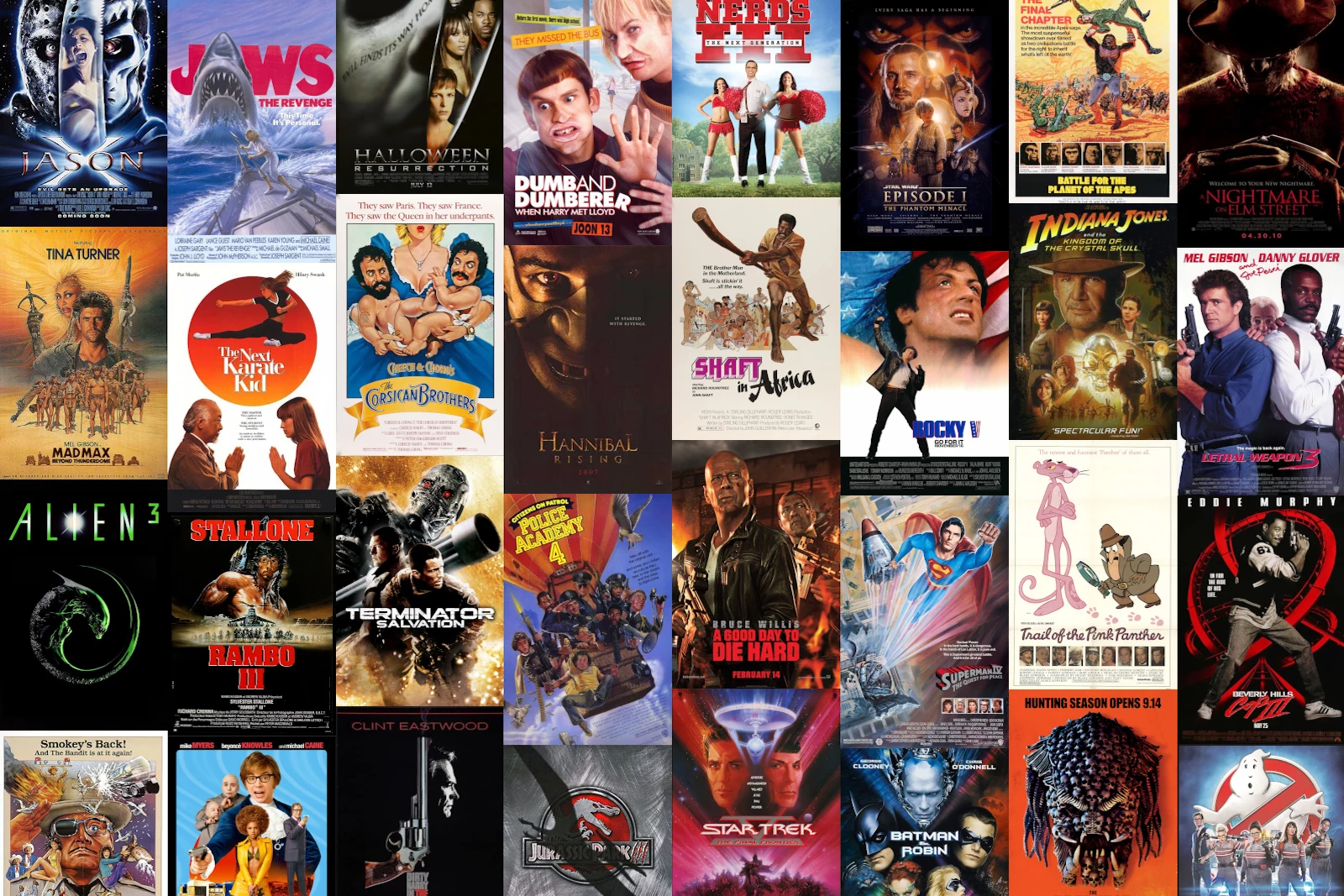
Ever wondered why some movie studios keep pumping out films in long-running series, or constantly rebooting already existing stories and characters before previous iterations have had any room to breathe? More often than not, it’s nothing more than a bid to keep hold of the rights. We’ve had decades of slashers, superheroes, wizards, and Hunger Games, and while studios tend to keep franchises going simply because they’re profitable, they also do it so that the rights to certain stories and characters, which a studio or executive once bought years or decades ago, won’t revert back to their original owners.
This phenomenon is nothing new in the entertainment industry. In fact, it’s a common practice that has become all too familiar. Sometimes these frantic bids to beat the legal system just feel like regular movies. But sometimes they’re much more obvious. In these cases, the industry term for a rush-job made just so an entity can retain the legal right to a property is known as an “ashcan copy,” a phrase that comes from the world of comic books, describing the act of quickly publishing a comic not intended for sale just to keep hold of a certain trademark.
Film franchises are full of ashcan copies, some better received than others. In all of these cases, these movies were made primarily so that a film studio could retain the right to use a character or a franchise in the future—if the film turns out to be a success, that’s a nice bonus. Some of these movies are plenty obvious—of course, the bajillionth Hellraiser movie was made for legal reasons rather than in the service of great works of art—but some may surprise you.
The Ashcan Copy Epidemic
It’s worth noting that the practice of making ashcan copies is not unique to the film industry. However, it’s particularly prevalent in Hollywood, where franchises are often seen as cash cows. The Hellraiser series, for example, has been going strong for decades, with each new installment seemingly designed to keep the rights to the franchise from expiring. And it’s not just horror movies that are guilty of this practice – superheroes, sci-fi epics, and even romantic comedies have all been subject to the ashcan copy treatment.
While it’s understandable that studios want to hold onto their most valuable properties, it’s hard not to feel like the creative well has run dry when we’re seeing the same characters and stories trotted out year after year. Somewhere, a focus group earned another bonus for telling executives that audiences are still hungry for more Spider-Man movies. And yet, despite the cynicism that often accompanies these franchise extensions, it’s impossible to deny the excitement that comes with seeing a beloved character return to the screen.
The Rights Retention Game
So, why do studios go to such great lengths to retain the rights to certain properties? The answer, of course, is money. Franchises like Star Wars and The Avengers are worth billions of dollars, and the merchandising opportunities alone are enough to make executives salivate. It’s no wonder, then, that studios are willing to greenlight even the most questionable projects in order to keep their prized franchises from expiring.
But what about the creative cost of this practice? Are we really getting the best stories and characters when studios are more concerned with retaining rights than with telling compelling tales? It’s a question that has plagued the film industry for years, and one that may never have a satisfactory answer. As the Content Mines remain fully operational, churning out sequel after sequel, it’s hard not to feel like the well of originality has run dry.
In the end, it’s all about the bottom line. Studios will continue to pump out ashcan copies as long as they’re profitable, regardless of the creative cost. And as long as audiences continue to flock to these films, the cycle will continue. Somewhere, an executive is no doubt whispering, “Can this become a trilogy?” – and the Franchise Resurrection Department is already hard at work, searching for the next big thing to resurrect. As the saying goes, “if it ain’t broke, don’t fix it” – but in Hollywood, it seems that even when it is broke, they’ll still find a way to milk it for all it’s worth.

Finn McFrame, celebrated satirical mastermind and self-proclaimed “Emperor of Irony,” started his illustrious career as a cinematographer, where his expertise in capturing every single frame of a squirrel stealing a baguette earned him accolades at obscure film festivals.
Born in the glamorous town of Boring, Oregon, Finn grew up with dreams of being a Hollywood director until he realized that satire, not cinema, was his true calling—or at least the one that let him sleep until noon.
Finn McFrame: changing the world, one satirical lens flare at a time.
⚖️ ENTER THE LEGALIZER
Think the government has no idea what it's doing? Put your case before the Federal Case Terminal and find out.