As a seasoned gamer, I’ve seen my fair share of launch day disasters and server crashes. But have you ever stopped to think about what’s really going on behind the scenes? It’s not just a matter of flipping a switch and hoping for the best. When a game like Final Fantasy XIV: Endwalker launches, it’s like a digital circus, with thousands of players clamoring to get in on the action. And let me tell you, it’s a miracle anything works at all. On 3 December 2021, early access for the game met login queues past 17,000 people and an error code that veterans could recite from memory. The poor souls at Square Enix were left scrambling to explain that they physically couldn’t obtain the machines they needed due to the global semiconductor shortage. Who knew that “the server” was actually a fleet of machines working together in perfect harmony? Or at least, that’s the idea.
As it turns out, a modern online title doesn’t just run on one computer, but rather a complex system of authentication tiers, world simulation nodes, matchmaking, database clusters, and content delivery networks. It’s like a digital game of Jenga, where one wrong move can bring the whole thing crashing down. And when a launch collapses, it’s rarely the simulation that’s the first casualty. Remember Diablo III’s infamous Error 37 in May 2012? That was a login tier refusing new sessions while the game itself sat idle, looking like a digital ghost town. It’s like the game is saying, “Hey, I’m over here, but you can’t come in. Sorry, not sorry.”
Not Every Game Puts the Same Weight on the Machines
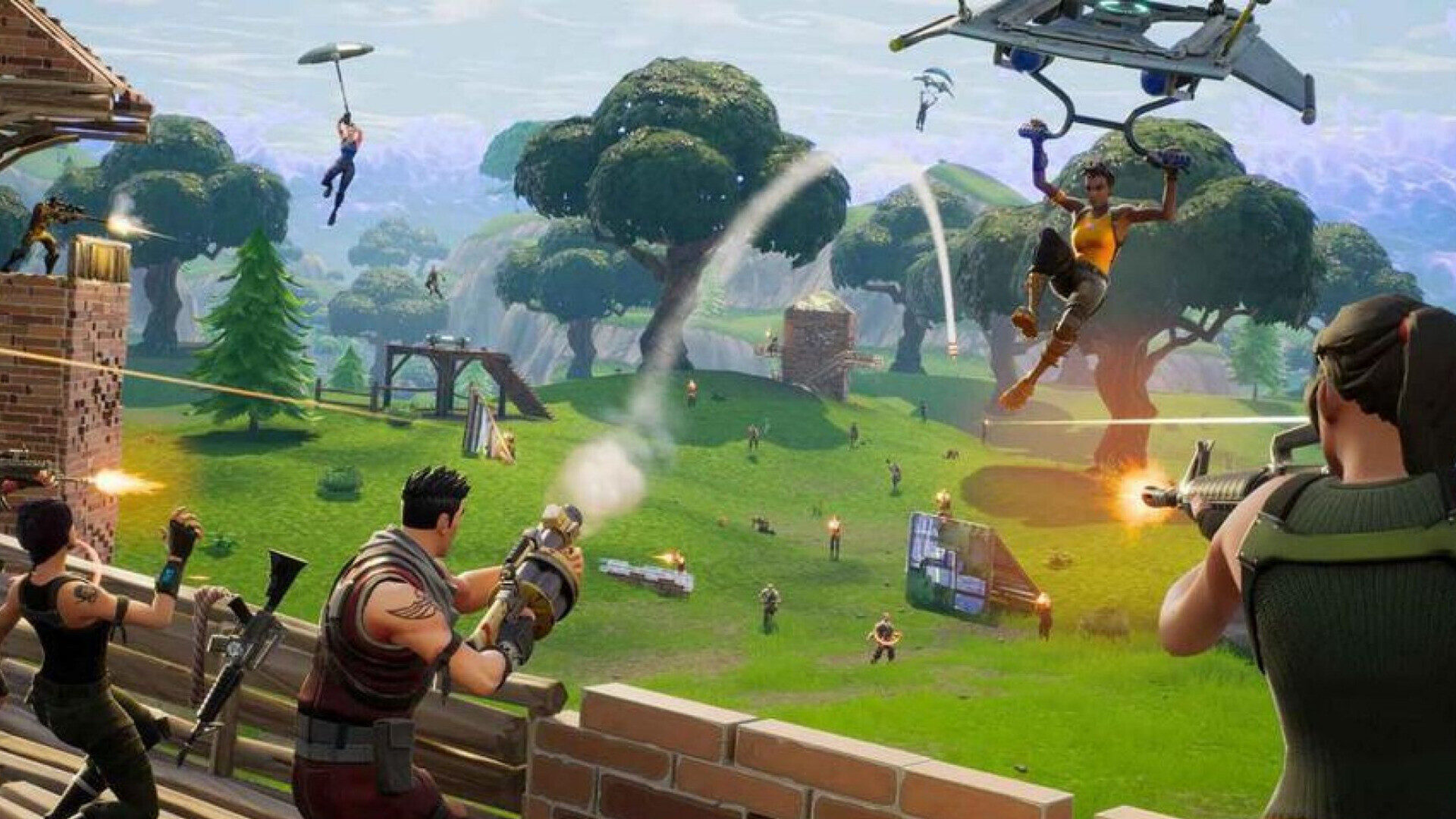
The cost of a player to a data centre isn’t measured in headcount, but rather in state. An open-world session streams position and animation data for dozens of nearby entities at 20 to 60 updates per second, each packet unique to that one client. That’s a lot of data, folks. On the other hand, lightweight browser titles like Aviator work on a different model, with a single authoritative round state that every client renders at the same instant. It’s like the difference between a luxury car and a bike – both will get you where you need to go, but one is definitely more high-maintenance than the other.
The way capacity gets added to a game is also a fascinating topic. Nobody tries to put a million people in one place, because that would be like trying to cram a million clowns into a tiny car. Epic’s Astronomical concerts in April 2020, for example, drew 12.3 million concurrent participants across the first show alone, but the technical trick was that no venue existed – the event ran as tens of thousands of parallel 50-player instances, each a small server process, all playing the same script. It’s like a digital game of telephone, where everyone is on the same page, but nobody is actually in the same room.
Shards, Instances and Layers
Games like EVE Online, on the other hand, keep one universe on one shard. When 7,548 pilots converged on the B-R5RB system in January 2014, CCP’s answer was time dilation – the simulation tick slows to as little as 10 percent of real speed so commands queue instead of vanishing. It’s like the game is saying, “Okay, I know you all want to play, but let’s just slow down a bit, shall we?” The fight ran 21 hours, and everyone experienced it in slow motion together. I mean, who needs real-time combat when you can have slow-motion combat, right?
A Queue Beats a Crash
A login queue is admission control, and it exists to protect the database tier rather than the graphics. Reading and writing character records is the expensive part, so the front door admits people at a fixed rate the storage layer can absorb. It’s like a digital bouncer, saying, “Sorry, buddy, you’ve got to wait in line.” Arrowhead capped Helldivers 2 at 450,000 concurrent players in February 2024 while it repaired backend services, and Blizzard’s Overwatch 2 launch that October left queues above 25,000 as denial-of-service attacks hit at the worst moment. Amazon’s New World spent September 2021 adding worlds and opening free transfers because queue times had settled into hours. I mean, who doesn’t love a good queue, right?
When It Breaks Anyway
Recovery is harder than staying up, folks. When Roblox lost roughly 73 hours across late October 2021 due to a subtle failure in a service discovery component under sustained load, engineers could not simply switch everything back on – a cold fleet accepting every client at once produces a thundering herd that knocks itself over again, so capacity was restored in slices. It’s like trying to put out a fire with a firehose, but the firehose is also on fire. The counter-move is rehearsal, like Diablo IV’s May 2023 weekend, which was named Server Slam and its stated purpose was pushing the live infrastructure until something gave. It’s like a digital game of chicken, where the goal is to see how much stress the system can handle before it breaks. And when it does break, well, that’s when the real fun begins.
In conclusion, the world of online gaming is a complex and fascinating place, full of digital circuses, server crashes, and queues. But hey, at least we can all laugh about it, right? After all, as any seasoned gamer will tell you, a queue number that ticks down steadily is the healthier symptom. So the next time you’re stuck in a queue, just remember – it’s not the end of the world. Unless, of course, the game is actually about the end of the world, in which case, carry on.

Pixel P. Snarkbyte, widely regarded as the “Shakespeare of Sh*tposts,” is a video game expert with a unique knack for turning pixels into punchlines.
Born in the small town of Respawn, Pennsylvania, Pixel grew up mashing buttons on an ancient NES controller, firmly believing that “blowing into the cartridge” was a sacred ritual passed down through generations.
Pixel P. Snarkbyte: proving that life, much like a buggy open-world game, is better with a little lag-induced chaos.
⚖️ ENTER THE LEGALIZER
Think the government has no idea what it's doing? Put your case before the Federal Case Terminal and find out.