Folks, I almost spilled my coffee reading this one. The 2026 election cycle has already seen a whopping $16 billion raised, and it’s not even over yet. According to the Federal Election Commission, most of that money is flowing through political action committees, because, you know, that’s how the game is played these days. And let me tell you, it’s a game of big money, with billionaires like Elon Musk and George Soros throwing around hundreds of millions of dollars like it’s going out of style.
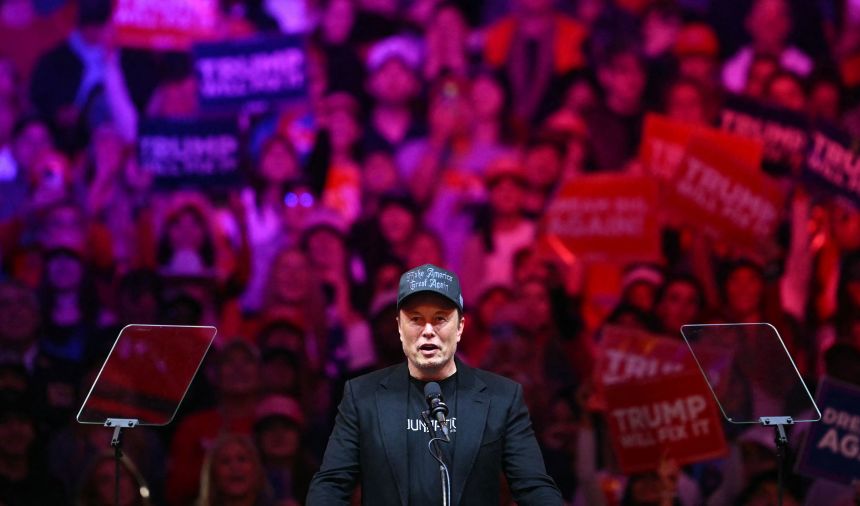
The world’s richest man, Elon Musk, is likely to be the election’s largest spender, trying to save Republican majorities in the House and Senate. Bless their hearts, they’re going to need it. Musk’s spending has already powered past the $400 million mark, and it’s not just him – other rich people on the left, like Michael Bloomberg, are also pitching in. But let’s be real, their spending has been dwarfed by the big-dollar contributions funneled to the political right.
It’s worth noting that there’s a lot of spending by rich people on the left, but it’s just not keeping up with the right. I mean, George Soros and Michael Bloomberg will be among the biggest spenders of the cycle, but they’re not even in the same league as Musk. And then there’s the dark money groups, which are facing even more limited disclosure requirements than PACs – it may be months or years before we get a better accounting of that money.
CNN’s Fredreka Schouten has been following the money trail, and let me tell you, it’s a wild ride. She says that right now, it’s the Republicans who are winning the money race, particularly when it comes to Senate races. But, she notes, individual Democratic candidates for the House and Senate have been outperforming their GOP rivals all year long. It’s just that the big money started arriving this fall to help Republicans, and boy, has it ever.
The two super PACs active in Senate races are a great example of this. The Democratic-aligned Senate Majority PAC has raised $354 million this cycle, which is a record for the group. But the Republican-aligned Senate Leadership Fund has raised over $540 million. That’s a big difference, folks. And then there’s the spending by Elon Musk and groups aligned with President Donald Trump, which is putting tens of millions of dollars into races to help Republicans.
Our colleague David Wright has reported on one advantage for Democrats facing a Republican money onslaught: Democratic dollars are going further. Why? Because the GOP is relying more heavily on super PACs that pay elevated rates for advertising, and they have made their buying decisions later when ad inventory is stretched. It’s a smart move, but it’s not going to be enough to counter the sheer amount of money being thrown around by the Republicans.
The big story in campaign finance this year is, of course, Elon Musk. He’s now a mega-donor unlike anyone this country has ever seen. In September, he gave a total of $158 million to the Senate Leadership Fund in two tranches, and the money appeared to immediately flow to another group, Texas PAC. That group, in turn, has spent heavily to boost Republican Ken Paxton over Democrat James Talarico in a heavily contested Senate race. If Paxton wins, Musk is definitely one of the people he’ll have to thank for it.
Not long ago, Musk was talking about breaking from Republicans and starting his own party, after publicly feuding with the president. But his spending shows that he’s back in the Republican fold. Another big story is the spending affiliated with Trump. His MAGA Inc. super PAC had built big cash reserves all year as Republican fretted about losing their House and Senate majorities. Then in September, the Trump-aligned money started flowing to help Republicans, including Paxton.
MAGA Inc. also funds two new super PACs with innocuous-sounding names, No Going Back PAC and Safety & Affordability PAC, that are active in the midterms. Those super PAC titles don’t exactly scream to voters that the ads they are running are tied to Trump, a president headed into the midterms with historically low approval ratings. The president recently said his political machine is on track to spend $400 million by Election Day to help rescue the GOP majorities in Congress. He has the money to do that.
The GOP outpouring has caused some panic among Democrats on Capitol Hill, as our colleagues Sarah Ferris and Patrick Svitek recently reported. Enter former New York City Mayor Michael Bloomberg, who traditionally gets involved in races late. The billionaire’s team recently announced a last-minute $80 million infusion to help Democrats. It’s a lot of money, but it’s not going to be enough to counter the hundreds of millions being spent by the Republicans.
What about George Soros, you ask? He’s a traditionally major source of funding for Democrats, and his political operation has funneled more than $100 million into Democracy PAC and Democracy PAC II, the super PACs it controls. Those PACs give money to other left-leaning PACs, such as the Fulcrum PAC, which is active in what could be the sleeper race of the election, an unexpectedly competitive US Senate contest in deep-red Mississippi.
It’s a lot of money, but Soros is not the biggest player that we know about in this election. Trump’s war chest is hundreds of millions of dollars, and it’s coming from really rich people and companies. For example, in September alone, just three people accounted for three-quarters of the $24 million that MAGA Inc. took in that month: Casino mogul Steve Wynn, Blackstone CEO Stephen Schwarzman, and Wisconsin roofing billionaire Diane Hendricks.
This is the first big election since the explosion of artificial intelligence, and we’re seeing lots of political ads generated using AI that are cheap to produce but can blur reality. It’s super-easy to show candidates in unflattering situations that never even happened. And the federal government hasn’t caught up with regulation the technology. We recently took a closer look at the trend, and let me tell you, it’s a wild ride.
What won’t we learn till after Election Day? Well, for starters, we’ll come closer to having a final accounting of the publicly disclosed donations, though it’s hard to imagine any single person will top Musk. We’ll also have a better handle on how untraceable money – donations from nonprofits and shell companies — shaped the election, although there’s often a long delay in uncovering that information. Finally, the election outcome itself will tell us who made the smart bets — or maybe just made consultants and others in the political ecosystem rich.
In conclusion, the 2026 election cycle is shaping up to be a wild and expensive ride, with billionaires and super PACs throwing around hundreds of millions of dollars. It’s a game of big money, and it’s not always clear who’s behind the ads and the donations. But one thing’s for sure: it’s going to be a long and interesting night on Election Day. And when the dust settles, we’ll be left to wonder: was it all worth it? Probably not, but hey, that’s just the way the cookie crumbles in politics.
Armchair patriot. Believes in the free market, cold beer, and that there’s always a guy named George behind every CNN segment.
Former remote-throwing champion turned #1 couch commentator on liberal panic in the media. Born in Texas (or so his mug says), he earned a degree in Fake Newsology & Beer Philosophy from YouTube University.
⚖️ ENTER THE LEGALIZER
Think the government has no idea what it's doing? Put your case before the Federal Case Terminal and find out.