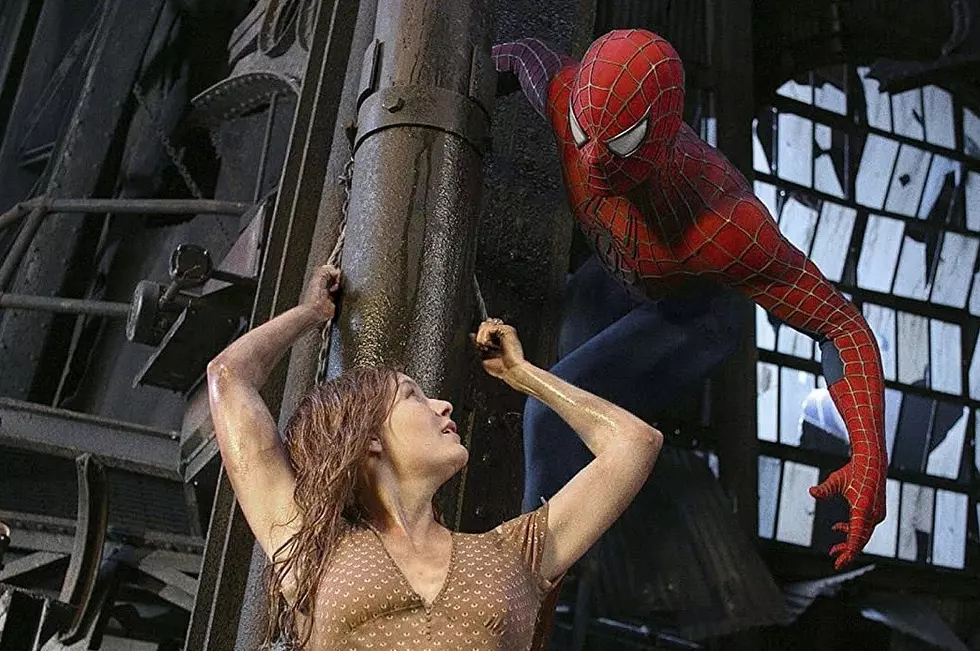
It’s a concept that has plagued philosophers and superheroes alike for centuries: the constraints of time. For Spider-Man, it’s not the Green Goblin or Doctor Octopus that poses the greatest threat, but the relentless ticking of the clock. Peter Parker’s struggles to balance his personal life with his responsibilities as a superhero are a constant reminder that time is the one enemy he cannot defeat.
This central dilemma is what makes Spider-Man 2 stand out as one of the most beloved live-action Spider-Man movies. The film’s focus on Peter’s internal struggle to reconcile his dual identities is a powerful exploration of the human condition. As Peter navigates his relationships, his career, and his duties as Spider-Man, he is constantly forced to make difficult choices that leave him questioning his priorities.
The movie’s portrayal of Peter’s daily struggles is both poignant and relatable. From his job delivering pizzas to his coursework at college, every aspect of his life is affected by his responsibilities as Spider-Man. The film’s attention to detail is impressive, with even the smallest moments – such as Peter’s boss screaming at him for being late with a delivery – serving to illustrate the constant pressure he is under.
The Burden of Choice
At the heart of Spider-Man 2 is the idea that Peter’s victories as Spider-Man are always tempered by his losses as Peter Parker. Every time he saves the day, he must confront the consequences of his actions in his personal life. This is a theme that resonates deeply, as audiences are invited to consider the moral implications of Peter’s choices. Is it right for him to prioritize his duties as Spider-Man over his relationships and his own well-being?
The film’s exploration of this theme is both nuanced and thought-provoking. As Peter’s struggles become increasingly intense, he begins to question whether he can truly make a difference as Spider-Man. The movie’s climax, in which Peter must confront the villainous Doctor Octopus, is a powerful testament to the enduring power of heroism and sacrifice.
Sam Raimi’s direction is a key factor in the film’s success. His willingness to push Peter to the limits of human endurance is a hallmark of his approach to storytelling. As Raimi himself has noted, he loves to torture his heroes – and Peter Parker is no exception. From the hilarious sequence in which Peter is repeatedly bonked on the head by his fellow college students to the poignant moment in which he must choose between attending Mary Jane’s Broadway show and patrolling the city as Spider-Man, Raimi’s touch is evident throughout.
A Masterclass in Superhero Storytelling
Spider-Man 2 is a masterclass in superhero storytelling, with a narrative that is both intimate and epic in scope. The film’s attention to detail is impressive, with every aspect of the story serving to illustrate the central theme of Peter’s struggle to balance his dual identities. From the performances of the cast – including Tobey Maguire, Kirsten Dunst, and Alfred Molina – to the impressive action sequences, every element of the film works together to create a cinematic experience that is both thrilling and emotionally resonant.
And yet, despite the film’s many strengths, it is hard not to feel a sense of cynicism about the state of the superhero genre today. As studios continue to churn out sequel after sequel, it’s clear that the emphasis is on franchise-building rather than storytelling. The fact that Spider-Man 2 remains one of the most beloved superhero movies of all time is a testament to the power of genuine storytelling – and a reminder that, no matter how many reboots and reimaginings we may see, some stories will always endure.
As the studios continue to mine the depths of our collective nostalgia, it’s worth remembering that true greatness is not about the size of the budget or the complexity of the special effects – but about the power of the story itself. And as Spider-Man 2 so eloquently demonstrates, sometimes the greatest stories are the ones that are simplest, yet most profoundly human.
In the end, it’s not the supervillains or the fancy gadgets that make Spider-Man 2 so memorable – but the quiet, unassuming heroism of Peter Parker himself. As we continue to navigate the ever-changing landscape of the superhero genre, it’s worth remembering that true heroism is not about the mask or the cape – but about the person underneath. And as the merchandising departments and focus groups continue to dictate the direction of our beloved franchises, it’s worth asking ourselves: what’s the real value of a hero, anyway?

Finn McFrame, celebrated satirical mastermind and self-proclaimed “Emperor of Irony,” started his illustrious career as a cinematographer, where his expertise in capturing every single frame of a squirrel stealing a baguette earned him accolades at obscure film festivals.
Born in the glamorous town of Boring, Oregon, Finn grew up with dreams of being a Hollywood director until he realized that satire, not cinema, was his true calling—or at least the one that let him sleep until noon.
Finn McFrame: changing the world, one satirical lens flare at a time.
⚖️ ENTER THE LEGALIZER
Think the government has no idea what it's doing? Put your case before the Federal Case Terminal and find out.